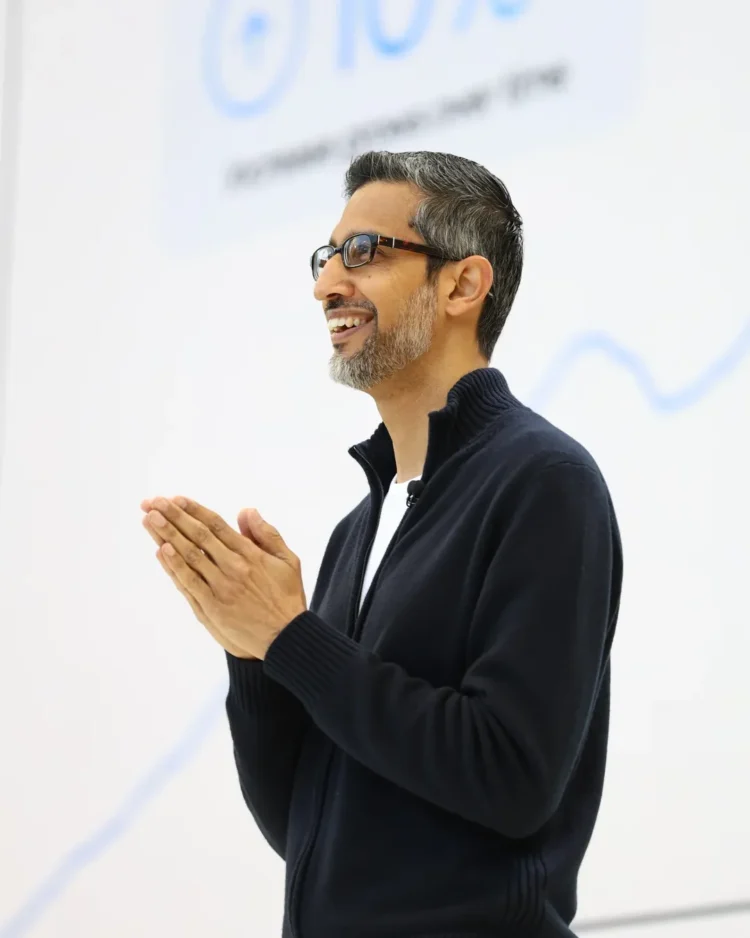
FROM A TWO-ROOM
FLAT TO THE TOP
OF THE INTERNET
Pichai Sundararajan — known globally as Sundar Pichai — was born on June 10, 1972, in Madurai, Tamil Nadu, into a Tamil Hindu family. His father, Regunatha Pichai, was an electrical engineer at the British conglomerate GEC, managing a factory that made electrical components. His mother, Lakshmi, worked as a stenographer before the children arrived. The family of four — Sundar, his younger brother Srinivasan, and their parents — lived in a two-room apartment in Ashok Nagar, Chennai. There was no phone until Sundar was 12. No computer, no television for the early years.
And yet, that cramped flat produced one of the world's most powerful tech executives. The secret weapon? Memory. From an extraordinarily young age, Sundar could recall every phone number he had ever dialled — a human phonebook in a house that didn't have one. That same precise, retentive mind would later absorb Chrome's architecture, Android's codebase, and the machinery of Google Search.
He was captain of his high school cricket team — a fact he shares with casual pride, because cricket, like product management, demands you read the pitch, adapt constantly, and keep everyone calm. He earned a seat at IIT Kharagpur (metallurgical engineering, a silver medal at graduation), a scholarship to Stanford for materials science, and an MBA from Wharton where he was named a Siebel Scholar and a Palmer Scholar. His father scraped together $1,000 from family savings for the airfare to Stanford. The return on that investment now exceeds a billion dollars. Compounding works.
"I did dream of being a cricketer like so many Indians. I always had a dream."
Pichai was captain of his school cricket team and led them into the Tamil Nadu regional tournament. He credits the sport for teaching him calm leadership under pressure. He prefers Test and One-Day formats, not T20 — telling journalists he values the long game. That preference says a lot about how he manages Google: slow, deliberate, and built to last.
When Sundar Pichai won a scholarship to Stanford, his father Regunatha — not a wealthy man — pulled together $1,000 from the family's savings to cover the airfare and initial expenses. It was a monumental sacrifice for a middle-class household in Chennai. Sundar has never publicly forgotten it. Today, when asked about his success, he consistently credits his parents' bet on education as the single most important factor. That $1,000 now translates to over $1.6 billion in net worth. Not a bad return on investment.
The Day Google Became Alphabet
When Larry Page restructured Google into Alphabet in August 2015, Sundar Pichai became CEO of Google itself. Four years later in December 2019, he added the Alphabet CEO role. Two titles. One remarkably calm man. He had been at the company just eleven years — arriving as a product manager, leaving the original CEO's office carrying both keys.
HE CONVINCED ERIC SCHMIDT TO BUILD A BROWSER
When Pichai first proposed the idea of a Google browser to then-CEO Eric Schmidt, it was dismissed. He kept pushing. He kept the project alive quietly, brought it back with a stronger case, and Chrome launched in September 2008. Today it controls 64% of the global browser market. The man who nearly didn't get permission to build it now runs the whole company.
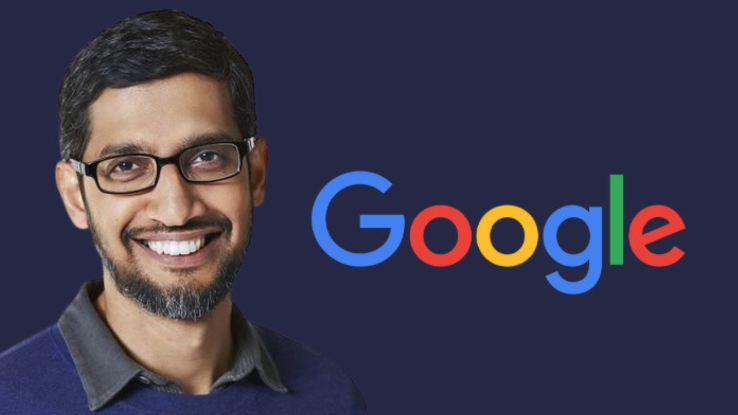
THE MAN WHO
BUILT GOOGLE'S
FRONT DOOR
Sundar joined Google in April 2004, before the company had even gone public. He started on product management for what would become the Google Toolbar — a humble starting point for someone who would eventually oversee a trillion-parameter AI model. But that modesty is the pattern: Pichai has never needed the loudest voice in the room to end up leading it.
Within a decade he had shepherded Chrome, ChromeOS, Google Drive, Gmail, Google Maps, and Android. He ran Google's entire product function. By 2013, Android — the operating system running the majority of the world's smartphones — was under his watch. And in 2015, when Google restructured into Alphabet, the only person Page and Brin trusted to run the world's most-used search engine was the quiet metallurgist from IIT Kharagpur.
In 2011, Twitter reportedly tried to poach Pichai. Google retained him with a reported $50 million in stock. In hindsight: an extremely good investment.
How old is Sundar Pichai?
Born June 10, 1972 — Sundar is 53 years old as of mid-2025. A Gemini (fitting, given the AI model he bet the company on).
Where is Sundar Pichai from?
Born in Madurai, Tamil Nadu. Raised in Ashok Nagar, Chennai. Studied in Kharagpur, then Stanford, then Wharton. Now based in Los Altos Hills, California.
What is Sundar Pichai's real name?
His full name is Pichai Sundararajan. In Tamil convention, Pichai is the family/father's name and comes first. He goes by Sundar Pichai — a reversal that makes him easier to Google.
Who is Sundar Pichai's wife?
Anjali Pichai (née Haryani), originally from Kota, Rajasthan. They met as classmates at IIT Kharagpur. They stayed together across continents — she later joined him in the US, where they married. She works in business operations at Intuit. Two kids: Kavya and Kiran.
What is Sundar Pichai's net worth?
As of early 2026, Pichai's net worth is estimated at approximately $1.6 billion, largely from Alphabet stock holdings and vested compensation. His 2026 comp package is valued at up to $692 million, tied to Waymo and Wing performance targets.
How did Sundar Pichai start at Google?
He joined in April 2004, before the company's IPO. His first project was the Google Toolbar. He then quietly championed the idea of a Google browser despite initial rejections. Chrome launched in 2008. The rest is browser history.
His family didn't have a telephone until Sundar was 12. He compensated by memorising every number he ever dialled. Today he runs the company that stores the world's phone numbers.
Beyond cricket, Pichai is an avid football fan and supports FC Barcelona. He met the team in 2017 and got a photo with Lionel Messi alongside a personalised Barça jersey. Casual.
In 2014, Pichai was reportedly a top contender for the Microsoft CEO role — the job that went to Satya Nadella. Had he taken it, both search and Windows would have a completely different story today.
Pichai is a self-confessed voracious reader. He reportedly reads in bursts — consuming multiple books across genres. His leadership style reflects that: curious, synthesising, never dogmatic.
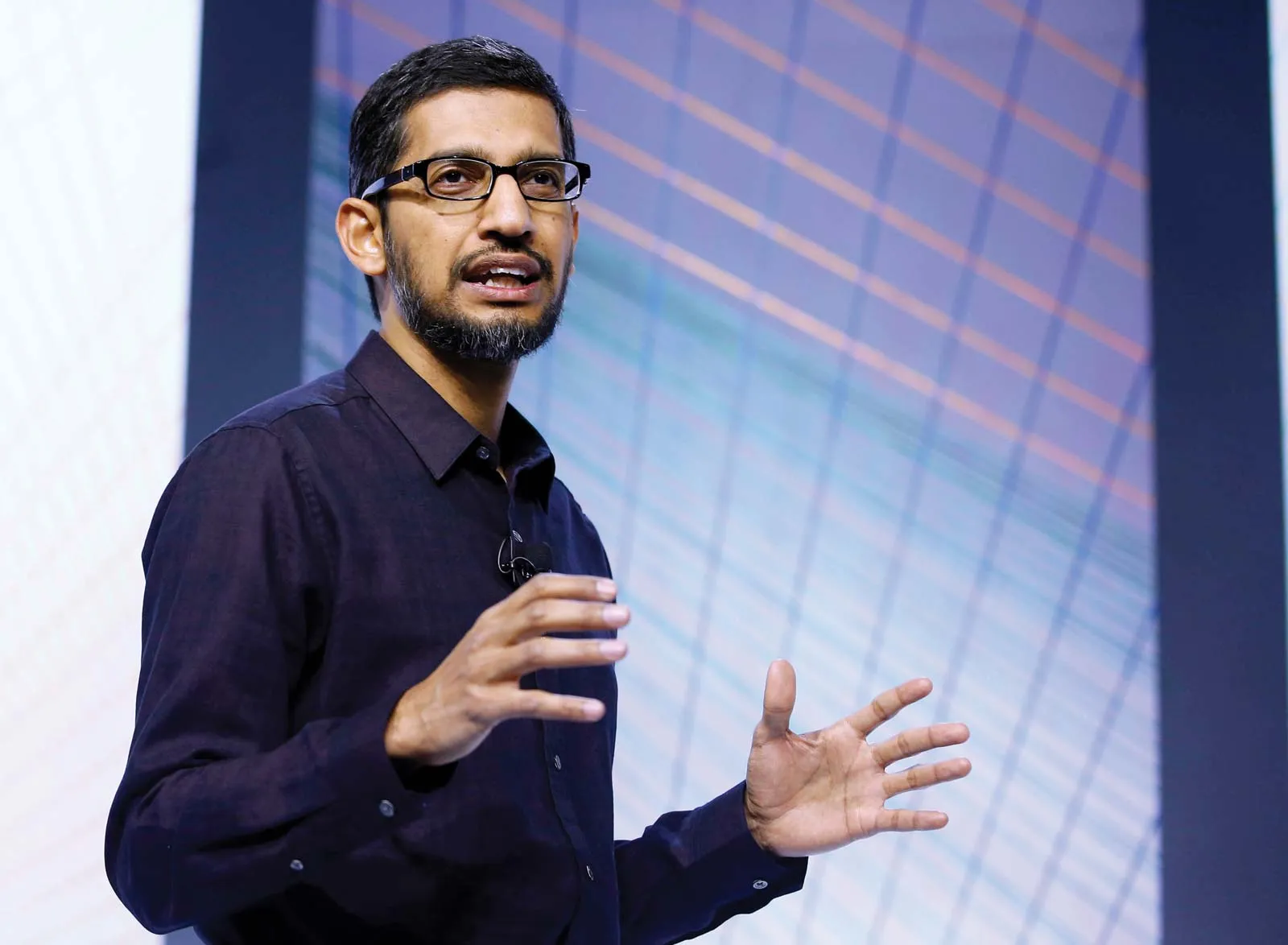
THE QUIET VOICE OF THE INTERNET
Pichai regularly represents Google at government hearings, global summits, and developer conferences. He testified before the US House Judiciary Committee in 2018 on data privacy and political bias. His composure under congressional fire became a case study in calm leadership.
25% OF GOOGLE'S CODE IS NOW AI-WRITTEN
In November 2025, Pichai confirmed that artificial intelligence now generates over a quarter of all new code at Google — with human engineers reviewing and approving every line. That same period saw Gemini 3 launch and Alphabet's market cap surge nearly 70% in a year. The bet on AI is paying off.
Pichai has also announced Project Suncatcher — Google's plan to eventually host data centres in space, powered by solar energy captured outside Earth's atmosphere. The prototype satellites launch in 2027.
SHE TOLD HIM TO STAY AT GOOGLE
When Sundar received compelling offers from other tech companies early in his career, it was Anjali who persuaded him to stay at Google. That quiet counsel, offered over dinner in their California home, may be the most consequential piece of advice in Silicon Valley history. They met at IIT Kharagpur, stayed together across international moves and six months without a phone call (Sundar couldn't afford international calls from the US), and built a private, family-first life together.
"AI is the most profound technology humanity is ever working on, and it has potential for extraordinary benefits. We will have to work through societal disruption."
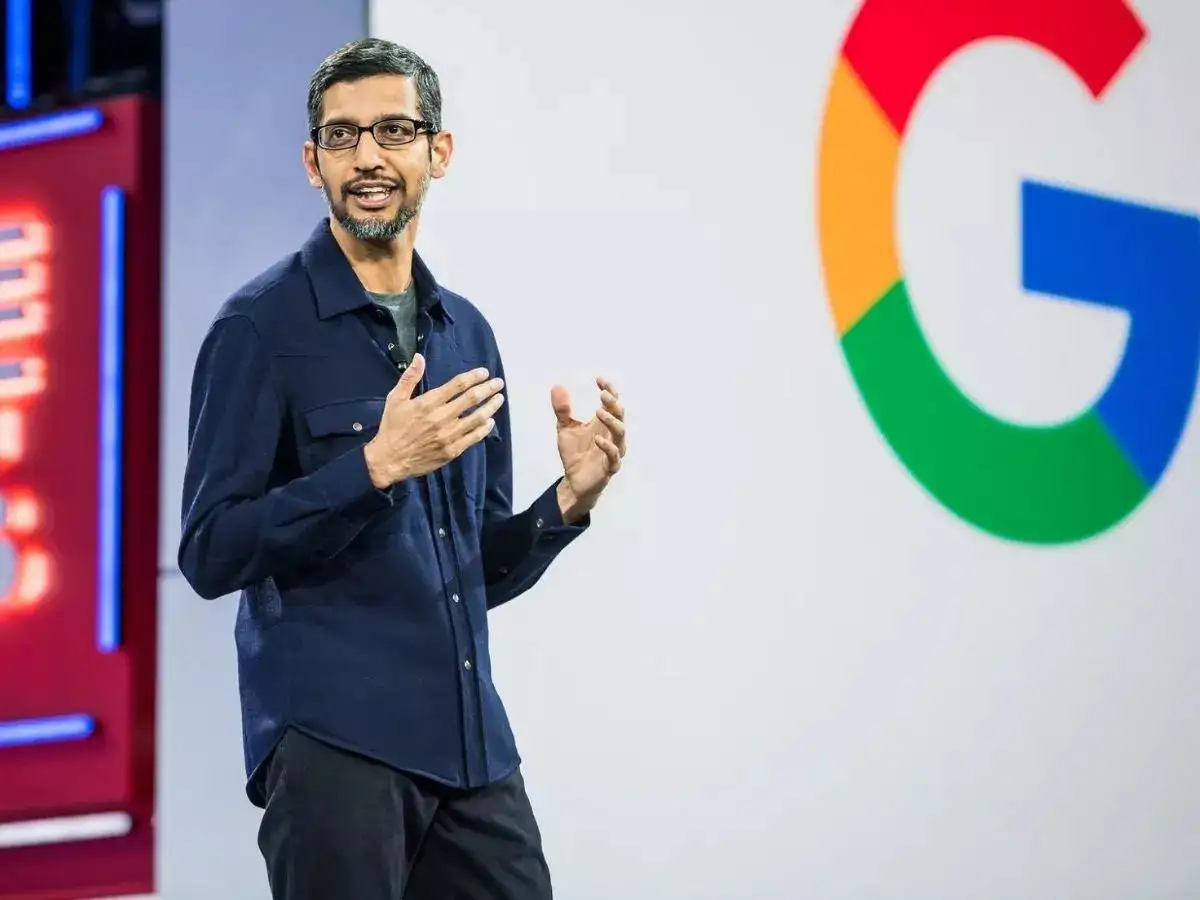
TECHNOLOGY SHOULD WORK FOR ALL 8 BILLION
Pichai's North Star has never been market share for its own sake. He consistently frames Google's mission — organising the world's information — as a human access problem. Android One launched to make smartphones affordable in emerging markets. Google Station brought public Wi-Fi to India. His AI mission carries the same impulse: tools should reach the next billion, not just the last billion.
THE CEO WHO NEVER SHOUTS
Pichai is famously unflappable. Colleagues and journalists who have covered him for two decades consistently describe a leader who modulates his volume downward, not upward, under pressure. When congressional testimony, global antitrust battles, and mass employee walkouts have hit simultaneously, Sundar's register barely shifts. In an industry of theatrical founders, composure is his brand.
TEST CRICKET THINKING IN AN AI SPRINT
He told journalists he prefers Test cricket and One-Day matches to T20 — he doesn't trust formats built purely on speed. It's a revealing preference. Even as Google raced to deploy AI against OpenAI and Microsoft in 2023–2025, Pichai kept insisting on human oversight of AI-generated code. Fast, but not reckless. The $692M compensation package tied to Waymo and Wing — both unprofitable moonshots — suggests the board agrees his long-game instinct is worth betting on.
Hey, Sundar.
Your dad spent $1,000 he didn't really have to get you on a plane to Stanford. That was the bet. And you've spent every year since making sure the whole world gets a version of that same shot — affordable phones, public Wi-Fi, AI tools that work in a dozen languages before they work in English. The kid from the Chennai two-room flat who memorised phone numbers because he didn't have a phone grew up to build the thing that contains every phone number on earth.
Not bad. Not bad at all.
"I would encourage the next generation to embrace technology — learn to use it in the context of what you do. There's going to be a wide variety of disciplines which will end up mattering."
Reach the people who read about the world's most interesting humans. Create your Company Page on YesPress and put your brand right here.
Create Company Page →Another Hyderabad-born engineer who turned a struggling tech giant into a $3 trillion powerhouse. Different company, same "learn-it-all" energy.
The leather-jacketed chip king who saw the AI era coming before anyone else. Google's TPU chips now compete directly with Nvidia for AI dominance.
The man whose ChatGPT forced Google into the fastest AI pivot in its history. Sundar's most consequential rival and the reason Gemini exists.