The Dispatch
The errand nobody sees
Somewhere right now a parent is photographing a crumpled school flyer, squinting at a row of dates, and typing them one by one into a calendar. Sumit Agarwal looked at that exact moment and decided it was a problem worth a company. Ario, the assistant he runs as CEO and co-founder, turns that photo into calendar events on its own. Then it catches the scheduling conflict you missed, nudges you before the return window closes, and remembers what you ordered last time.
He calls the thing it fights "invisible labor" - the unpaid, unending administrative work of keeping a household running. It does not show up on any to-do list because it never ends, and it is the gap Ario was built to close. The pitch is plain: hand off the life admin, keep your time.
A founder who has done this before
This is not Agarwal's first company. Over 25 years in Silicon Valley he has started three of them. The one that made his name was Shape Security, an anti-fraud firm that sat between consumer apps and the armies of bots trying to break into them. F5 bought it for more than a billion dollars. His Ario co-founder, Mengmeng Chen, was on the Shape leadership team too, and the early Ario crew was stocked with people from Netflix, Uber, Amazon's Alexa, and Microsoft's Copilot and Turing groups.
So when Ario talks about privacy, it comes from someone who spent years on the other side of the fraud problem. The promise is unusually specific for a consumer AI product: connect your apps, and Ario does not claim to own what flows through. No selling your data to third parties. No advertising against it. You get to take it with you.
For years, consumers have had to choose between product functionality and maintaining data ownership. Ario is built in a way that will actually save people from the burden of life admin without sacrificing control.
// Sumit Agarwal, on launching Ario
Before the assistant, the adversary
Agarwal's path to a parenting app runs through some unlikely territory. He studied chemical engineering at MIT, then commissioned into the US Air Force - one of the first officers in network warfare at what became Cyber Command. He spent roughly two decades in the National Guard and retired a major. Along the way he ran mobile operations at Google.
Then Washington called. From 2010 to 2011 he served at the Department of Defense as Deputy Assistant Secretary of Defense and Senior Advisor for Cyber Innovation - by several accounts the youngest person ever to hold that title in the Pentagon. He helped shape the department's approach to social media and to telling real online actors from fake ones, a question that has only grown louder since.
His view of the cyber landscape back then was blunt, and it explains a lot about the products he keeps building. The government, he argued, protected its own and left everyone else exposed.
It's as if the military said, "Hey, we protect U.S. citizens as long as they're hanging out on a military base."
// Sumit Agarwal, on the gap in civilian cyber defense
Shape Security was, in a sense, his answer to that gap - protection for the apps ordinary people actually use. Ario is the same instinct pointed at a different enemy. Not bots this time. Chores.
Why the assistant has to know you
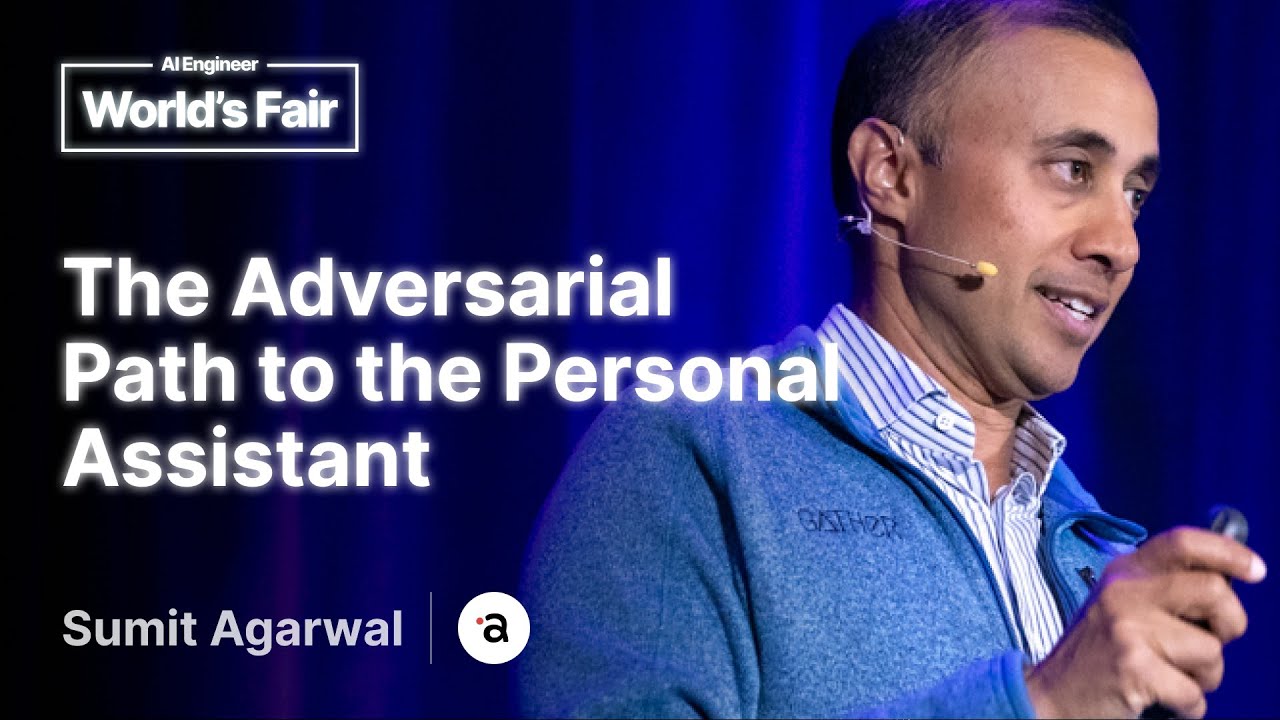
In a 2025 talk titled "The Adversarial Path to the Personal Assistant," Agarwal put his finger on what makes a personal assistant hard. The big models, he pointed out, have been trained on trillions of tokens and still cannot answer a single question about you as a specific person. They know everything in general and nothing about your Tuesday. Closing that gap - the personal context, held privately - is the whole game Ario is playing.
It is a long way from a network-warfare console to a meal plan. But look closely and the thread holds: every company Agarwal has built works quietly in the background, handling the thing you would rather not think about, on your side.