Consider the problem of Cartel Tycoon. The game was provocative by design: a business simulator about building a narcotics empire. This was not, its publisher tinyBuild conceded, the easiest thing to advertise or sell. The premise could trigger curiosity, confusion or an editor's swift journey toward the delete key. Around the official reveal, Stride PR entered the picture. The agency helped frame the announcement, and tinyBuild later credited that opening push with an initial surge of attention that kept the campaign moving.
This is the peculiar economy Stride inhabits. Developers spend years making systems, worlds and jokes. Then someone must compress all of that labor into a subject line a busy journalist can parse between meetings. The work appears trivial precisely when it is done well. A game arrives in the correct inbox, on the correct afternoon, wearing a sentence that makes its oddness feel irresistible rather than exhausting.
The useful reductionThe product is a chain of judgments
A PR agency's visible artifact is often a release. Stride's actual menu is more revealing. The team advises on positioning, launch timing, trailer edits, Steam-page copy and the sequence of a campaign. It drafts pitches, public statements, community posts, talking points and even award-show scripts. Then it carries those materials into media relations, review programs, creator outreach, trade-show calendars and social feeds.
The order matters. If the positioning is muddy, a larger media list only distributes the mud. If the trailer hides the hook, a sharper email cannot rescue the first thirty seconds. If a cozy farming game lands with a reporter who only wants tactical shooters, the problem is not prose. It is fit. Stride's advantage is not merely knowing many people. It is knowing what those people tend to care about.
The attention route
Sometimes their press releases are so good I don't have to edit them! I still do, just because of who I am as a person.Jerry Holkins, president of Penny Arcade
The newsroom in the agencyPeople who remember the other side of Send
Stride describes a team that includes graduates of gaming media. That biographical detail explains much of the proposition. A former journalist knows that an inbox is not an empty bucket awaiting content. It is a triage machine. Relevance, timing, evidence and trust decide what survives. The best pitch does not feel like a demand for coverage. It feels like useful material arriving just before someone needed it.
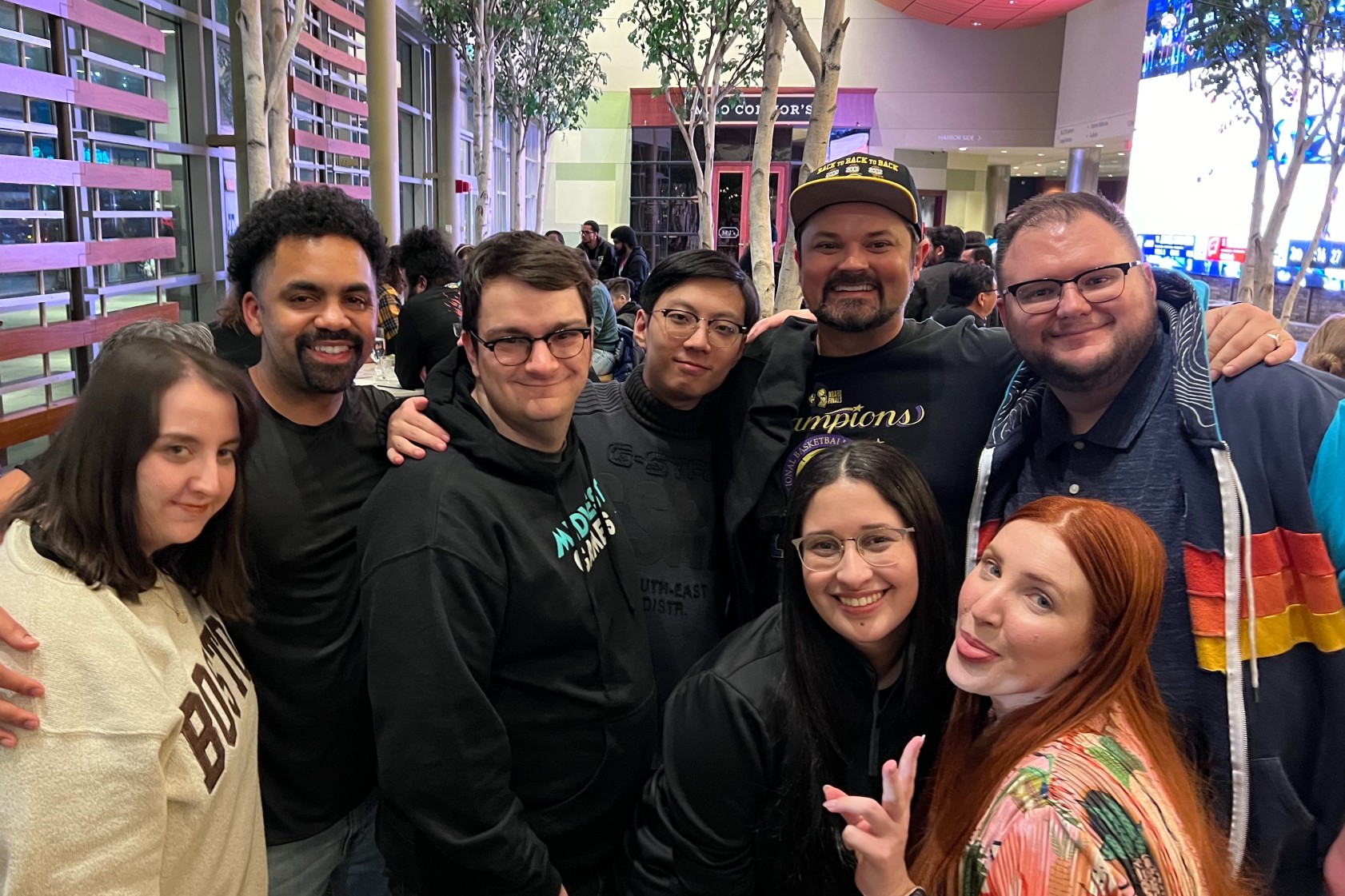
That perspective travels across formats. Traditional reporters want a clean news peg and credible access. Reviewers need the right build, enough time and a game suited to their beat. Streamers and video creators need an experience that works in motion and makes sense to their audience. Stride offers both organic and sponsored creator campaigns, plus key management and reporting. On social media, it fills the quiet spaces between announcements with daily posts, giveaways, community replies and wishlist prompts.
The customers range from self-publishing solo developers to international publishers. Public testimonials name tinyBuild, Ysbryd Games, SkyBox Labs and RocketWerkz/Ahwoo. The International Game Developers Association says Stride has handled media opportunities, trained leadership and advised on public communications for years. Public credits connect the agency to The Gardens Between, ToeJam & Earl: Back in the Groove!, Floppy Knights, Salt and Sacrifice, Ravenlok and other releases. This is a portfolio defined less by genre than by translation difficulty.
What changed in the marketThe gatekeeper became a crowd
When Stride began in 2014, specialist websites and YouTube already mattered. Since then, discovery has fragmented further. A launch now passes through store algorithms, streamers, short-form clips, Discord communities, newsletters, events and familiar publications. The old press list did not disappear; it acquired noisy neighbors. Stride's five-part public offering - strategy, media, influencers, materials and social - is an answer to that fragmentation.
Its business model is conventional: clients buy tailored agency services, likely varying with campaign scope. The published pitch is boutique attention without unnecessary overhead. Rates are not posted. The more important distinction is what a client is buying. Not guaranteed affection. Not a favorable review. Not an obedient audience. The purchase is preparation and access: a clearer argument, a better-matched recipient, a disciplined calendar and someone awake when the plan meets reality.
The first rule worth stealing
Do not begin with outreach. Begin with the smallest honest sentence that makes the project distinct. Test it against the store page, trailer and creator pitch. If those tell three different stories, the campaign is not ready.
The honest boundaryAttention is rented, never commanded
Game publicity has a stubborn limit: exposure cannot repair a weak product, and an agency cannot require an editor to enjoy one. Stride's own review language is careful. It gets games into the hands of suitable editors so those editors can decide whether to recommend them. That last decision belongs elsewhere. A campaign is also less likely to work when the studio has no clear audience, no playable proof, no time for reviewers or no willingness to revise confused messaging.
This is where the agency's seemingly small services become sensible. Trailer feedback can prevent a reveal from burying the most interesting mechanic. Media training can keep an executive from turning an interview into a crisis. Sentiment monitoring can catch a community's objection before the social calendar marches across it. Trade-show booking converts an expensive booth into actual appointments. None of these tasks is glamorous. Each removes one way a promising project can become illegible.
The transferable playbook is plain. Define the hook before drafting the announcement. Match people by beat, not follower count. Give reviewers time. Treat creators as distinct from reporters. Keep the store page, trailer and pitch in agreement. Measure what happened, then adjust the next beat. It sounds like common sense, which is the camouflage worn by most professional skill.
Stride PR is not really in the business of making games famous. Fame is too fickle a deliverable. It is in the business of making games understandable at the moment understanding matters. Somewhere in Torrance, a peculiar simulation, tender adventure or alarming horror game is being reduced to one clean sentence. If that sentence reaches the right desk, the world inside the game gets a chance to expand again.