The executive biography has a reliable itinerary: university, employers, promotions, awards. Stacey Bernstein’s includes a less conventional journey, a sailing trip from the Virgin Islands to the coast of South America. It is a pleasing interruption to the parade of job titles. Here is someone whose travels have involved an actual horizon, rather than the one executives are forever promising to expand.
But the more revealing journey runs through her work. Long before she became CEO of M Booth Health in January 2022, Bernstein was helping organizations work out how to communicate online. The problem she identified was partly inside their own walls. People needed to understand a medium, agree on a strategy and have enough confidence to participate. Buying access to an audience was easier than getting everyone in the company ready to address it.
That gives her career a thread worth following. A digital practice, a Boston office, an agency: each new responsibility enlarged the group of people she had to bring into the conversation. The title at the end is familiar. The route to it makes a better story.
The meeting before the message
In 2013, Bernstein was directing Weber Shandwick’s U.S. digital practice in her specialist sector. Research published by the firm that year examined organizational obstacles to social media. Its findings drew attention to internal alignment, staff confidence and the allocation of resources. For a communications business, this was a useful complication. The answer to an external problem could begin with an internal meeting.
Consider the implication. A company can approve a channel without equipping the people responsible for it. It can admire another organization’s output while leaving its own team uncertain about who makes decisions. An account exists; a working system still has to be assembled. The distinction sounds administrative until the deadline arrives.
The study’s recommendations included supporting the people assigned to social work, bringing colleagues into planning and investing in internal education. These were organizational tasks, with consequences for what an audience would eventually see. They also placed digital communications within the ordinary business of managing people, rather than treating a new platform as a self-operating machine.
Read as a chapter in Bernstein’s career, the research establishes an early interest in the conditions around the work. The message matters. So do the people who must agree to make it possible.
“You need to give people content that they actually want to read.”Stacey Bernstein, 2014
The press release at the party
A year later, Bernstein was making a more direct point about the writing itself. In a 2014 interview, she criticized companies producing social content that sounded like a press release. Her advice was to write something people wanted to read and to keep it personal and genuine.
It is a modest demand with expensive implications. Organizations devote considerable energy to what they want to say. Readers bring a different concern: whether the next sentence deserves their time. A piece of copy can survive every internal approval and still fail that test. The audience was never in the meeting.
The press release has legitimate uses. Trouble begins when its habits travel everywhere: the ceremonious opening, the self-congratulation, the adjective wearing a borrowed medal. On a social feed, such writing arrives at a party with a lectern. Everyone else has already moved to the kitchen.
Bernstein’s observation offers a practical editorial standard. Read the message from the receiving end. Would it make sense to someone outside the organization? Is there a reason to continue? Her enthusiasm for the creative possibilities of social media sat alongside this attention to the reader. Creativity had a job to do: earn attention in a crowded setting.
The advice also ages better than a platform tutorial. Buttons move. Audiences retain the privilege of leaving.
Two seats at Cannes
By June 2015, Bernstein was taking these questions onto the Cannes festival stage. She presented alongside Jeordan Legon, then Novartis’s global head of digital and social media. Their session explored authenticity in digital strategy and how creative approaches could encourage engagement. It put an agency practitioner and a client-side leader in the same conversation.
That pairing matters. Agency ideas have to make their way into client organizations, where the people receiving them have their own responsibilities. A conference appearance together is a public instance of a relationship central to communications work: one side proposes and develops, the other must be able to use and support what emerges.
In 2017, Bernstein returned in a different capacity, serving on a Cannes Lions jury. Speaking asks someone to explain a position. Judging asks them to weigh work against other work. The responsibilities overlap, but the view changes. A presenter has the floor; a juror has a decision to make.
Her career includes both roles. They belong beside the operational jobs, rather than floating above them as glamorous decorations. Public appearances can show what an executive argues for. Jury service adds a record of being trusted to assess the arguments and executions of others. Neither substitutes for running a team, but each brings another perspective to it.
Boston changes the brief
On October 29, 2019, Weber Shandwick announced Bernstein’s promotion to general manager of its Boston office. She was an executive vice president who had most recently held the global director role in her digital specialty. Her new reporting line ran to Joy Farber Kolo, the firm’s North America president.
A specialty and an office are different units of responsibility. A practice has a particular offering to develop. An office puts several kinds of work and several kinds of expertise under one local leadership arrangement. The promotion moved Bernstein across that boundary.
The announcement paired her appointment with Michael Wehman’s move into the general-manager role in New York. That detail places the Boston change within a wider reshaping of the agency’s North American leadership. It also gives the event a firm date, rather than leaving the career suspended in a succession of undated senior titles.
Boston remains Bernstein’s publicly listed base. Her work has included global responsibilities, but a place gives an otherwise expansive biography some scale. There is the international practice, the festival stage and the city office. Each asks for communication with a different group. The career becomes easier to understand when those changes in audience are kept in view.
A new chair, an existing company
When M Booth Health named Bernstein CEO on January 11, 2022, it was appointing a leader to an established operation. Tim Bird, the outgoing CEO, moved into a chairman role during the transition. Bernstein would report to M Booth CEO Dale Bornstein. The arrival involved continuity as well as change.
Bornstein’s description of the incoming executive brought together entrepreneurial thinking, contemporary marketing and the integration of analytics, strategy, creative and digital work. She also singled out kindness and humanity. Bernstein’s own statement emphasized a values-driven culture and a nimble environment for serving colleagues and clients.
Appointment language is a statement of intention. Its interest here lies in what the leaders chose to emphasize. Alongside disciplines and commercial responsibilities came the manner in which people would work together. The human considerations were part of the announced brief.
For Bernstein, the move gathered earlier responsibilities into a larger job. She had built an offering and managed an office. Now she would oversee a firm with an existing leadership team and an outgoing chief executive helping with the handover. The organizational question from her earlier digital work had acquired a new scale: how to get people with different responsibilities ready to act together.
The people get a ballot
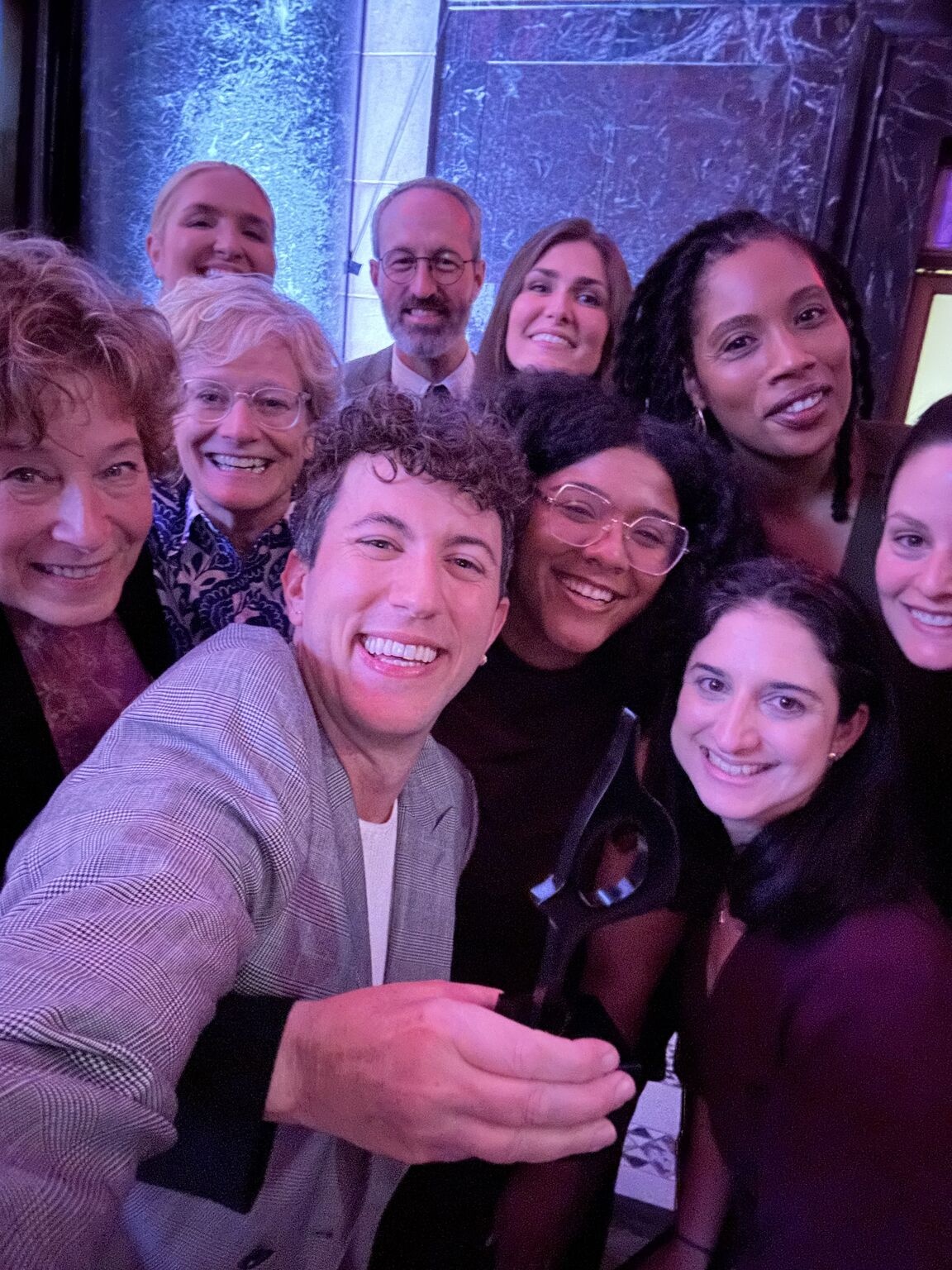
In April 2025, M Booth Health was named PRovoke Media’s Best Small Agency to Work For in North America. The recognition came from employee survey responses. Across the survey, more than 2,400 people from more than 30 agencies assessed their employers on matters including leadership, professional development, compensation and inclusion.
Within Bernstein’s firm, respondents most often described the culture as collaborative, alongside descriptions of kindness, inclusion and empowerment. The award belongs to the organization and the people who work there. It provides one public measure of the workplace during her tenure.
That is a more specific claim than declaring a culture successful in every respect. A survey records the answers of its participants at a particular moment. Here, those answers offer a useful companion to the priorities expressed at her appointment three years earlier. The language about people had acquired an employee assessment.
The photograph accompanying colleague Chaz Cox’s celebration shows another side of the same organization: a group crowding into a frame, smiling under purple light. An executive portrait has room for one person. The celebration makes the arithmetic of agency work visible. Whatever title sits at the top, the work keeps bringing more people into the picture.
The less photogenic numbers
A workplace award is one way to examine an agency. Its business figures offer another. PRovoke Media’s 2026 global rankings report M Booth Health’s 2025 fee income at $24,479,441, compared with $27,173,082 for 2024. The table lists 70 employees and a decline rounded to 10 percent.
These are agency figures, measured as fee income under the ranking’s methodology. They make the scale of Bernstein’s current responsibility more concrete. They also interrupt the easy shape of a promotion story, in which every subsequent year obligingly becomes larger than the last.
Leadership involves both sets of evidence: what colleagues say about working together and what the business reports. Neither number explains a person by itself. Put beside the career dates, however, the figures show the organization that Bernstein is responsible for today, with ordinary commercial fluctuations included.
Her route to that responsibility has passed through a recurring problem: communication requires other people’s participation. The colleagues who must support a plan. The client who must put it into practice. The reader who can leave. Getting them on board remains a substantial job, even when the boat is figurative.