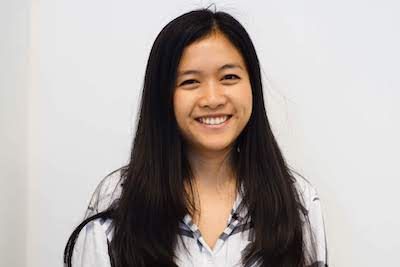
Formation's platform can tell within the first few problems whether an engineer will pass a Google interview. Not because it's reading resumes - because it's watching how they think. Sophie Novati built the company around a simple observation: most engineers who fail technical interviews aren't failing because they can't code. They're failing because they've never been shown how the game actually works.
Novati arrived at Carnegie Mellon from the traditional path, studied computer science, and joined Facebook as an engineering intern in 2011. The company was still in its "move fast and break things" era. "The energy was buzzing," she said later. By the time she left, she'd reached staff engineer level - first at Facebook, then as the second iOS engineer at Nextdoor, where she launched the New Hire Buddy Program and dragged unit test coverage from 17% to over 50%.
The problem she kept running into was hiring. From the interviewer's side, the process was frustrating: there were genuinely talented engineers who couldn't make it through technical screens. From the candidate's side - which she knew from mentoring over 100 engineers - it was opaque and arbitrary. "Coding interviews are only maybe 40% about coding," she said. "So much of it is about how you're exploring the problem space, understanding what the constraints are."
Before Formation had a pitch deck, it had a solo operation. Novati ran everything herself - recruiting, instruction, grading - for nearly two years, spending down personal savings. "It was just a complete one person show," she said. The intensity of that period gave her something no case study could: a granular understanding of which parts of engineering education were actually broken and which were merely inefficient.
Co-founded with her husband Michael Novati (also a former Facebook engineer), Formation launched in 2019 - the same year Sophie co-founded Allo, a Y Combinator W19 company. Formation combined AI-driven adaptive learning with structured mentorship from senior engineers at companies like Facebook, Google, and Apple. It was aimed squarely at the gap between bootcamp graduates and the hiring bar at elite tech companies.
The pitch to Andreessen Horowitz worked. In April 2021, Formation closed a $4M seed round led by Connie Chan at A16Z, with participation from Designer Fund, Combine, Lachy Groom, and Slow Ventures, plus angel investors from Airbnb, Notion, and Rippling. The pitch wasn't abstract: Formation's first cohort had already placed 30+ engineers at Facebook, Microsoft, and Lyft, with an average starting salary of $120,000. And 44% of fellows identified as non-male. Black and Latinx graduates were landing at nearly double the national university rate.
By 2023 the total raised hit $9M. By 2024, Formation's alumni were collectively earning $50M a year in compensation - up from $25M the year prior. One fellow landed an offer of $647,000 in their first year out of the program. The average compensation increase for fellows is over $100,000.
Novati is direct about what formation is not trying to do. "Programs today get nowhere near the engineering rigor that my teams were looking for," she said. The problem with most bootcamps, in her view, was scale without standards - "getting too big, too fast, churning hundreds or thousands of students through fixed curriculums." Formation's platform adapts to each individual: identify the gap, build the specific skill, track mastery. It mirrors how a great mentor would actually work, if you had a great mentor.
The AI layer matters here. Formation uses adaptive algorithms to assess where a candidate is weak and dynamically adjust the curriculum. Novati's most recent public writing has focused on how AI is reshaping technical interviews themselves - and what that means for engineers preparing for them. "Your ability to lead alongside AI is the real test," she has written.
Formation's corporate partners now include Netflix, Google, Twitch, Dropbox, and Adobe - companies that use the platform as a pipeline for diverse engineering talent. For Novati, the partnership model is the point: instead of hoping companies change their hiring, give them a pool of candidates who are already prepared to the right bar.
She has thought carefully about what makes a sustainable business in this space. "If your business is, I'm going to give you $10 and you give me $5 back, then of course people are going to be happy with you. But that's not actually a business model." Formation charges $10,000-15,000 per fellow for a service that generates an average $127,000 increase in annual compensation. The math is not subtle.
Five years in, Novati is thinking about what Formation's platform can do beyond software engineering. The adaptive learning infrastructure works for any subject where there's a skills gap between where candidates are and where employers need them to be. The mission may be specific to tech. The platform doesn't have to be.