01The alert needs an owner
Imagine a hospital’s connected device turning up in a security finding. The scanner has done its duty. Someone must now discover what the device supports, who runs it, whether a change could interrupt care, and who can approve that change. A beautifully ranked alert is still an unfinished job.
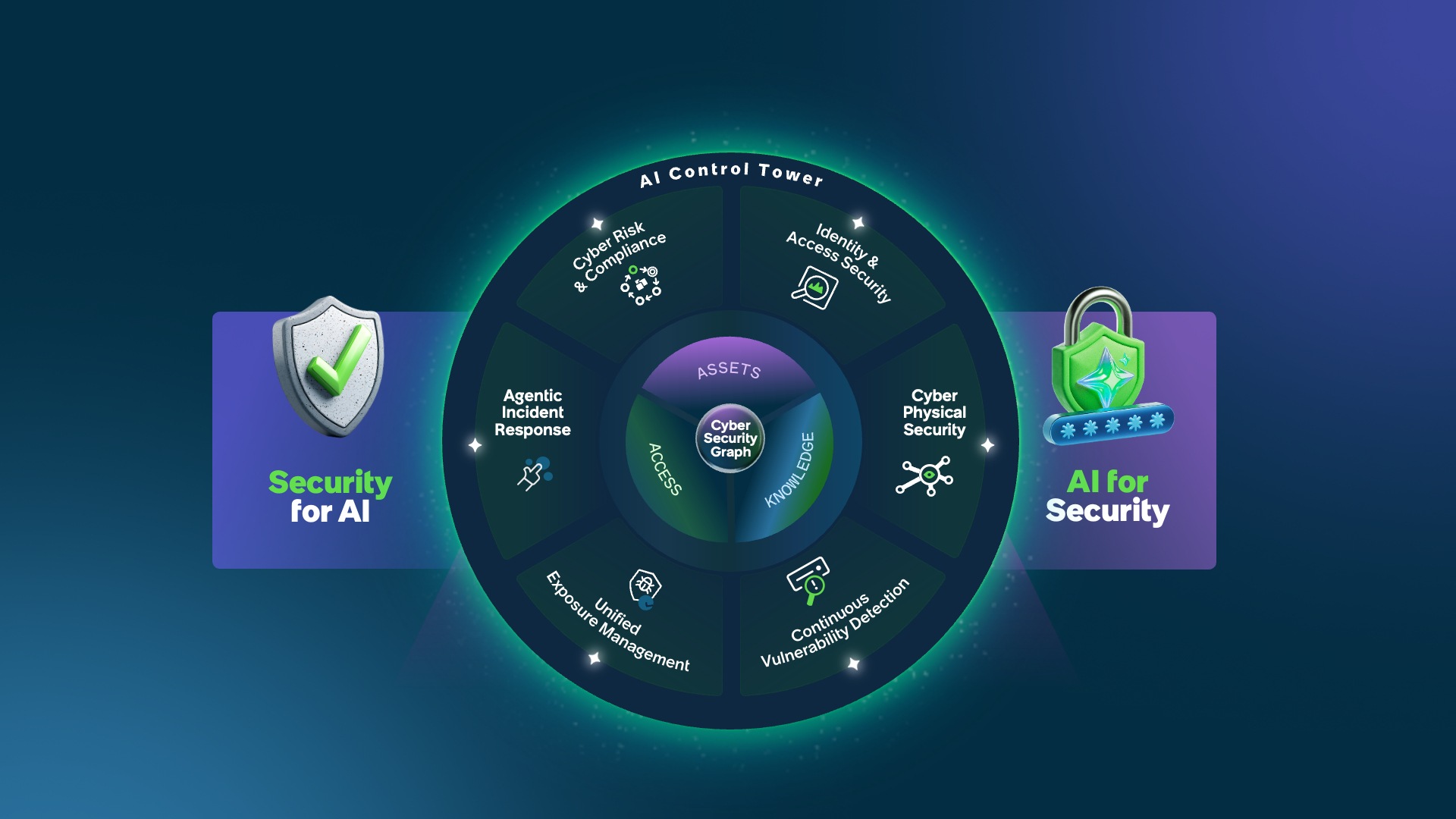
ServiceNow’s August 4, 2026 Autonomous Security announcement aims at that awkward interval between knowing and doing. It gathers six security disciplines around a shared workflow: exposure management, vulnerability detection, cyber-physical security, identity and access, incident response, and risk and compliance. The interesting promise is that a finding can acquire context, an owner and a route to resolution.
The launch comes with a calendar complication. Several capabilities were listed as available at announcement; four AI and compliance offerings were expected in December. A buyer evaluating the package in October needs both dates on the table. A future specialist cannot clear today’s queue merely by appearing in today’s presentation.
Listed as available
- Agentic Exposure Management
- Autonomous Remediation Agents
- Application Security
- Dynamic Application Security Testing (DAST)
- External Attack Surface Management (EASM)
- Agentic AI for Cyber Physical Security
- AI Agent Access Security
- Non-Human Identity Remediation
On the announced schedule
- Tier 2 SOC AI Specialist
- Vulnerability Resolution AI Specialist
- Agentic AI for Continuous Control Monitoring
- Cryptography Asset Compliance
Availability at announcement, not a licensing matrix. Source: August 4 release.
02Two acquisitions, one practical question
Armis and Veza supply different pieces of the answer. Armis brings visibility into connected assets, including operational technology and medical equipment. Veza’s Access Graph maps effective permissions across people, machines and AI agents. Effective access matters because the permission an identity actually holds can be more revealing than its job title or intended role.
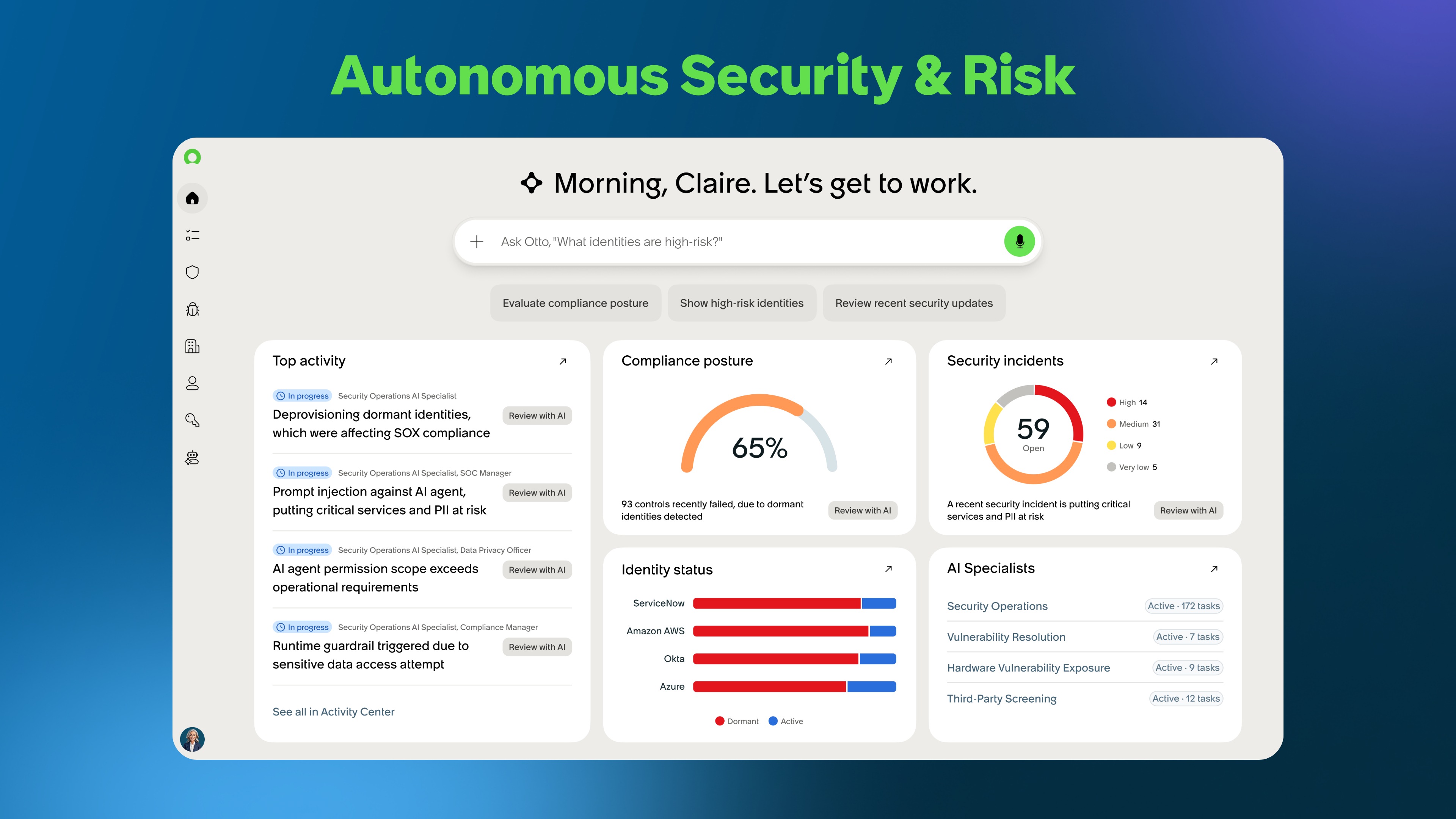
In ServiceNow’s account, those observations feed its AI Control Tower, Context Engine and orchestration layer. The operational value lies in connecting a vulnerable asset to the identities that can reach it, the business service it supports and the team responsible for changing it. Two extra dashboards would leave the hospital’s original problem intact.
For a buyer, the useful demonstration starts with an unfamiliar device and ends with an accountable person. Ask the vendor to show what happens when asset records disagree, when an identity has no owner, or when the assigned team rejects the task. Governance earns its keep in the inconvenient cases.

03How a finding becomes someone’s work
Here is a buyer’s acceptance scenario, rather than a claim that every installation arrives configured this way. Import a finding, reconcile it to the correct asset, enrich it with business importance and access context, then use that context to select a remediation owner and deadline. A task without a responsible team is a notification wearing a better suit.
Next comes the action boundary. The workflow should distinguish a recommendation from an approved change and an executed change. A permitted routine fix can follow a pre-authorized route; a disruptive change should reach the appropriate human decision maker. Execution must leave a record, and closure should depend on evidence that the exposure was resolved, not merely that a command returned successfully.
ServiceNow’s existing exposure-management documentation makes part of this machinery concrete. Remediation owners can submit approval requests. Deferrals use a default two-level approval workflow, while false-positive requests require the relevant approver roles or group membership. Administrators must put users in approval groups before requests are submitted. Those controls concern finding disposition; buyers should separately establish the approval policy for actions that alter production systems.
- 01FindImport the security signal
- 02UnderstandAsset + access + business context
- 03AssignOwner, deadline, action policy
- 04ActExecute or request approval
- 05VerifyRetest and retain evidence
A buyer’s acceptance scenario. Configure and verify each step in your deployment.
“A task without a responsible team is a notification wearing a better suit.”From this feature
04What buyers can start with
The August availability list includes Agentic Exposure Management, Autonomous Remediation Agents, AI Agent Access Security and Non-Human Identity Remediation. It also lists Application Security, Dynamic Application Security Testing, External Attack Surface Management and Agentic AI for Cyber Physical Security. Availability is the start of a deployment conversation, not its conclusion.
For exposure management, buyers should choose the incoming finding sources, reconcile asset identifiers, define business priorities and set assignment rules. For remediation agents, request the exact supported action catalogue and configure the credentials, permitted targets, change windows and approval triggers for each action. The announcement does not spell out that catalogue or a universal approval configuration.
For AI-agent access, identify each agent’s operational owner and decide which resources and privileges it needs. Define who can grant additional access and what should happen when its purpose changes. For non-human identities, the stated actions include rotating keys, deprovisioning identities and revoking permissions. Before enabling them, establish dependency checks, recovery procedures and the human approvers for changes that could break a service.
These are buyer configuration decisions, not undocumented claims about product defaults. ServiceNow’s agentic-workflow documentation also says access depends on licensing and product tier and describes configurable triggers. A procurement meeting should produce a list of licensed workflows and executable integrations, with named owners beside them.
05December has a separate job description
Four offerings remain on the announced December 2026 schedule: Tier 2 SOC AI Specialist, Vulnerability Resolution AI Specialist, Agentic AI for Continuous Control Monitoring and Cryptography Asset Compliance. The release uses “expected,” which belongs in any purchasing plan that depends on them.
Their proposed jobs are substantial: more autonomous incident investigation and response, vulnerability triage and resolution, ongoing control evaluation, and discovery and migration planning for cryptographic assets. Treat these as planned functions. In particular, the announced Vulnerability Resolution AI Specialist is separate from the Autonomous Remediation Agents already listed as available.
Ask for a dated delivery commitment, licensing details and acceptance criteria for each December dependency. Where a deployment needs one of those specialists, decide who performs its work in the interim. A roadmap can be useful; it makes a poor substitute for an operating procedure.
What acted?
Why did it act?
Who is accountable?
06The proof belongs in the record
ServiceNow presents “most complete” and “zero exposure” as part of its security ambition. Neither phrase, by itself, demonstrates comparative superiority or an exposure-free customer environment. The buyer’s test is smaller, sharper and harder to charm: show one action and its complete history.
That history should identify the triggering finding, the context used, the policy that permitted the action, any human approval, the executing identity and the outcome. It should also name the person accountable when the automation fails or the data proves wrong. Ask to inspect rejected actions and unresolved tasks alongside successful ones.
Run the demonstration twice: once with a routine change that qualifies for automatic execution, and once with a high-impact change that must stop for approval. Then check whether the record explains why the two paths differed. Measure completed, verified remediation and approval delays rather than the volume of generated advice.
The hospital’s device is still the right ending. Someone must understand what it does, decide what may happen to it and prove the result. ServiceNow’s opportunity is to make that chain faster without losing its owner. December may add specialists. Accountability needs to be installed on day one.
Questions buyers are asking
What did ServiceNow announce on August 4, 2026?
An Autonomous Security offering organized around six areas: exposure management, vulnerability detection, cyber-physical security, identity and access, incident response, and cyber risk and compliance.
Which tools were available at announcement?
The release lists Agentic Exposure Management, Autonomous Remediation Agents, Application Security, DAST, EASM, Agentic AI for Cyber Physical Security, AI Agent Access Security and Non-Human Identity Remediation.
What was expected in December 2026?
Tier 2 SOC AI Specialist, Vulnerability Resolution AI Specialist, Agentic AI for Continuous Control Monitoring and Cryptography Asset Compliance. These are announced expectations, not a claim of current availability.
How do Armis and Veza contribute?
Armis contributes connected-asset visibility and operational context. Veza maps effective permissions across human, machine and AI identities. ServiceNow says this intelligence feeds governance and orchestration.
What should buyers configure before autonomous actions?
Define asset and identity owners, supported integrations, permitted actions and targets, execution credentials, approval boundaries, recovery procedures and evidence required to verify closure. Confirm license and product-tier access.