A small request, a large detour
An employee wants to make a request. The company would like that request to be simple. Between these two agreeable intentions sits the employee portal: a place where knowing what you want can be considerably easier than knowing where to ask for it. The elegance of a menu is seldom appreciated by someone on their fourth menu.
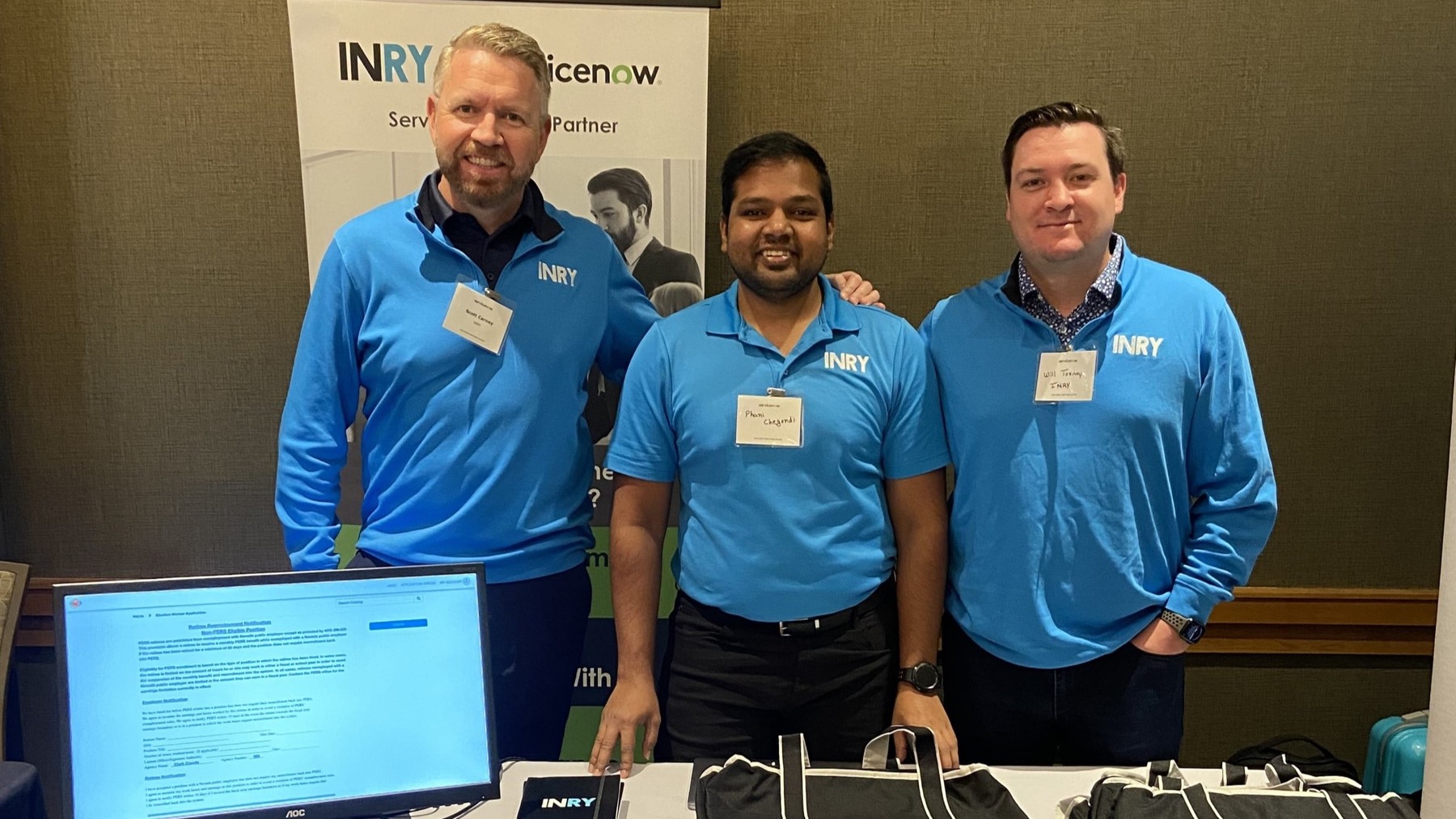
INRY has changed that entrance. In a September 23, 2026 announcement, the ServiceNow partner and Cprime company said it bought EmployeeWorks in March and brought it into production internally in six weeks. A conversational interface replaced its legacy portal. The people who would sell the experience had first become its users. Deployment announcement ↗
The more revealing detail comes after the stopwatch. INRY reports that self-service allocation requests took 60% less time to submit at the median. That is a useful, specific improvement. It gives the story a task, a measurement and a boundary—three things an impressive percentage ought to travel with.
INRY’s internal go-live
Lower median allocation-request submission time
Reported request completion; scope unspecified
The number earns its nouns
Submission time measures the journey to filing a request. It does not, by itself, measure the wait for a decision, the delivery of a service or the amount of time saved across an employee’s working day. A quicker entrance can be valuable while the rooms beyond it still have their own clocks.
Think of the reported reduction as an index. Set the previous median submission time to 100; a 60% reduction leaves 40. This comparison preserves the reported relationship without inventing a baseline in minutes. The announcement supplies neither the absolute times nor the sample size or detailed measurement method.
It also reports a request completion rate of 97%. The release does not spell out that metric’s denominator, process coverage or operational definition. It therefore cannot establish that 97% of every kind of employee request reached its final downstream outcome. Buyers need to know where a measurement starts and where it stops before comparing it with their own.
Precision makes the result more interesting. A named process with a shorter submission journey is something an operations team can investigate. A claim that every task has become faster gives that team very little to work with.
Less time to submit
The conversation has to go somewhere
The deployment connects with Microsoft Teams, Jira and SharePoint. The announcement describes employees opening and tracking tickets, requesting PTO and filing expenses from a common conversational entry point. The systems behind those activities still matter; the attraction is reducing the navigation an employee must perform to reach them.
That distinction is the heart of the design. In an illustrative PTO journey, asking for a leave balance retrieves information. Asking to take Friday off begins a transaction. Receiving approval finishes a further stage, which may depend on a manager, a policy and a system update. A sentence in a chat window can initiate that journey; it cannot make the stages interchangeable.
INRY’s own EmployeeWorks description emphasizes connecting knowledge, requests, approvals and execution across enterprise workflows. It says existing access and approval controls remain part of that execution. The employee sees a convenient entrance. The business still needs an accountable route through the building. INRY product description ↗
For an expense request, that means the conversation must eventually produce the right record, in the right destination, with the right status. A charming answer is inexpensive. A correctly filed transaction is where the machinery earns its keep.
Three stages. Three different outcomes.
- 01 / AnswerRetrieve the leave balance.
- 02 / SubmitCreate a valid leave request.
- 03 / FulfillApply approvals and update the record.

Six weeks, with a particular cast
A short deployment makes a fine headline. Its meaning depends on who was doing the deploying. INRY is a ServiceNow implementation partner using the product inside its own business, and the announcement identifies it as an early-access customer. That setting belongs beside the six-week figure whenever the figure travels.
An internal partner deployment offers a useful reference case. It does not create a delivery promise for an organization with different integrations, data quality, approval rules or rollout scope. The announcement does not provide enough project detail to compare those conditions directly. Expertise is part of the story, even when it does not fit into the stopwatch.
“we didn't want to sell something we hadn't lived with ourselves.”Matt Robinett · INRY
Vice president & ServiceNow practice lead
Living with a product changes the questions a seller can answer. Where does a request stall? What does an employee do when the conversation misunderstands? Who handles an exception? The announcement does not answer each of those questions, but an internal deployment gives a partner a place to encounter them before a client does.
Where Otto fits
ServiceNow’s current Otto product page describes a single assistant bringing together Now Assist, Moveworks and AI Experience. Its stated scope includes interactions across systems and workflows, with actions grounded in organizational policies and approval chains. That is the broader assistant proposition surrounding the employee entrance. Otto product page ↗
EmployeeWorks names the experience deployed in INRY’s announcement; Otto describes ServiceNow’s wider assistant offering. The relationship helps explain the direction of the product story. It does not establish which individual Otto capabilities were present in INRY’s measured allocation-request process, or what each contributed to the result.
A product’s current ambitions and a customer’s reported measurements answer different questions. The former explains what ServiceNow is offering. The latter tells us what INRY says improved in a particular deployment. Keeping that chronology straight lets both accounts stand on their own evidence.

The next test is behind the door
For another employer, the useful starting point is a recurring request with a clearly visible journey. Measure the time to submit it, then separately measure approval time, fulfillment time and the number of exceptions someone must rescue. A beautiful entrance deserves a destination that can be found.
A practical comparison would also record how many requests begin, how many are successfully filed and how many reach the agreed business outcome. Those counts expose whether convenience at the front is translating into progress further along. They also give the completion percentage a meaning that colleagues can inspect.
The strongest reading of INRY’s experience is quite concrete: a familiar employee process became quicker to enter, inside a partner’s own operation. The next achievement will be measured wherever the request goes after the conversation ends. An employee who asks for Friday off will eventually want Friday off.