Person / Founder / Space
Saurav Shroff
He looked at the cost of making rocket fuel on the Moon, ran the math, and decided he could do it. Then he started invoicing for it.
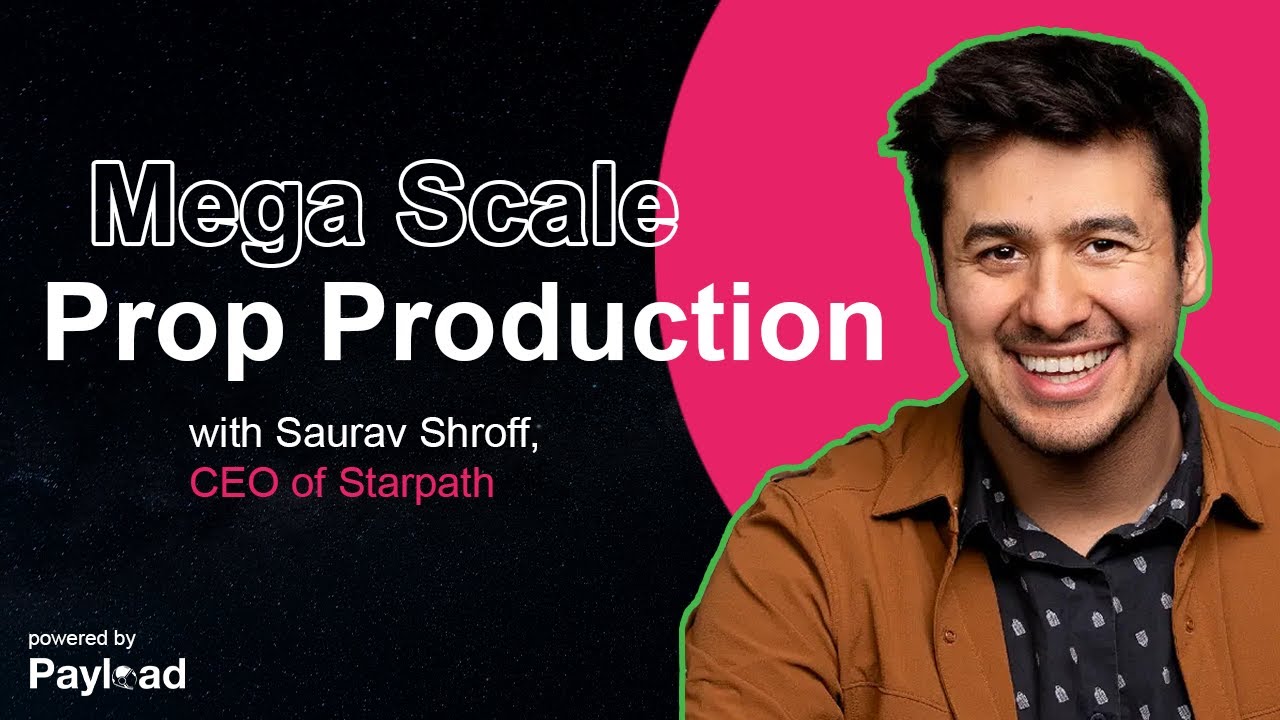
He looked at the cost of making rocket fuel on the Moon, ran the math, and decided he could do it. Then he started invoicing for it.
Saurav Shroff runs a company in Hawthorne, California that is trying to do something most people file under science fiction: dig water ice out of the lunar south pole, refine it into liquid oxygen, and sell that oxygen as rocket propellant to whoever is flying past. The company is called Starpath. He is the co-founder and CEO. The plan is to never haul fuel up from Earth again when you can simply make it where the rockets are going.
The logic is almost rude in its simplicity. Hauling propellant out of Earth's gravity well is the most expensive part of going anywhere. A rocket spends most of its fuel carrying the fuel. If you could refill a Starship in orbit or on the lunar surface with oxygen mined locally, the economics of deep space stop looking like a moonshot and start looking like a supply chain. Shroff likes supply chains.
Most of liquid bipropellant by mass is oxygen. Methane, the other half of the Starship recipe, you still bring along. But if the heavy part of the tank can be filled on site, the cost per kilogram to move anything beyond Earth drops by orders of magnitude. That is the entire bet, and Shroff has been remarkably consistent about it since the company came out of stealth in September 2023.
Shroff studied engineering at UC Berkeley. After graduating he joined SpaceX as an avionics engineer and stayed roughly four months. It is the kind of resume line that would make a recruiter wince and a venture capitalist lean forward. He did not spend a decade climbing a ladder. He learned what he needed about how hard rockets are built, then left to build the thing that fuels them.
He co-founded Starpath in mid-2022 with Mihir Gondhalekar, now the CTO and also a SpaceX alum, and Jason Zang. The founding team was young and short on the kind of grey-haired aerospace pedigree the industry usually demands. They raised a $2.5 million pre-seed from Hummingbird Ventures and Valhalla Ventures and got to work designing rovers, refineries, and storage systems for a place no human has ever run a factory.
Starpath's system reads like the org chart for a colony. A fleet of around 50 mining machines excavates regolith at the lunar south pole, where ice hides in permanently shadowed craters. A refinery purifies the extracted material into water and splits it into hydrogen and oxygen. A large deployable solar array, parked where the sun almost never sets, supplies the power. And the liquid oxygen gets stored underground in Teflon bags, because the Moon does not come with tank farms.
The hard part is not the chemistry. It is the autonomy. As Shroff has put it, the robot has to mine thousands or hundreds of thousands of unique sites without a human nearby, because nobody knows in advance which patch of dirt, down to the centimeter, actually holds water. Build a machine clever enough to figure that out alone, and you have built the foundation of an off-world economy.
The business model has a counterintuitive elegance. Size your factory to feed a Starship, which gulps hundreds of thousands of kilos, and your cost per kilo collapses. Once it has collapsed, you can also sell a hundred kilos to a small water-focused customer who is happy to pay seven or eight figures for it. The same plant serves Blue Origin's Blue Moon landers in the middle and the little guys at the edges. Build for the giant, profit on everyone smaller. It is economies of scale pointed at the vacuum.
That ambition has a number attached. Shroff's stated near-term target is making 1,000 tons of liquid oxygen on the Moon, the foundation for what he describes as eventually supporting a million-person city on Mars. In his February 2025 Congressional testimony he sharpened it further: a system that, in under four years, could be large enough to support a city of 10,000 inhabitants on Mars, built for less than $100 million per mine.
In September 2025 Starpath did something founders rarely do gracefully. It shipped a product that pays the bills today. The company launched "Starlight," space-rated solar panels priced around $11 per watt against an industry standard of $75 to $250. That is roughly a 90% discount on power in orbit. Engineering models go for under $10 a watt. Lead times that the rest of the industry measures in months, Starpath aims to measure in days.
Here is the tell about how Shroff thinks: the company plans to consume something like 98% of those panels itself, to power its own off-world infrastructure. The solar business is not a pivot away from mining the Moon. It is the power plant for mining the Moon, with a storefront bolted on. By 2026, Starpath claims its automated line could produce more space-rated solar than the rest of the world combined.
Whether the timeline holds is the open question that hangs over every space startup. Lunar launches slip. Refineries on the Moon have never existed. But Shroff has been doing the unglamorous work in public: raising money, winning NASA's Break the Ice Lunar Challenge prize, testifying to lawmakers, and shipping hardware that customers can actually buy. The vision is enormous. The receipts, so far, are real.
Starpath is headquartered in Hawthorne - the same town as SpaceX, the company Shroff left after four months.
He has likened the lunar opportunity to becoming "the Aramco of the Moon." Oil baron, but make it regolith.
Shroff says the planned refinery would be roughly twice as powerful as the International Space Station.
Liquid oxygen on the Moon gets stored in underground Teflon bags. The future is high-tech and also a giant ziplock.
About 98% of Starpath's cut-price solar panels are meant for its own off-world use, not for sale.
Sources: TechCrunch (2024) · TechCrunch (2023) · TechCrunch (2025) · Payload Podcast · Payload · LA Business Journal · Sourcery · U.S. Congress