A machine built for a hill
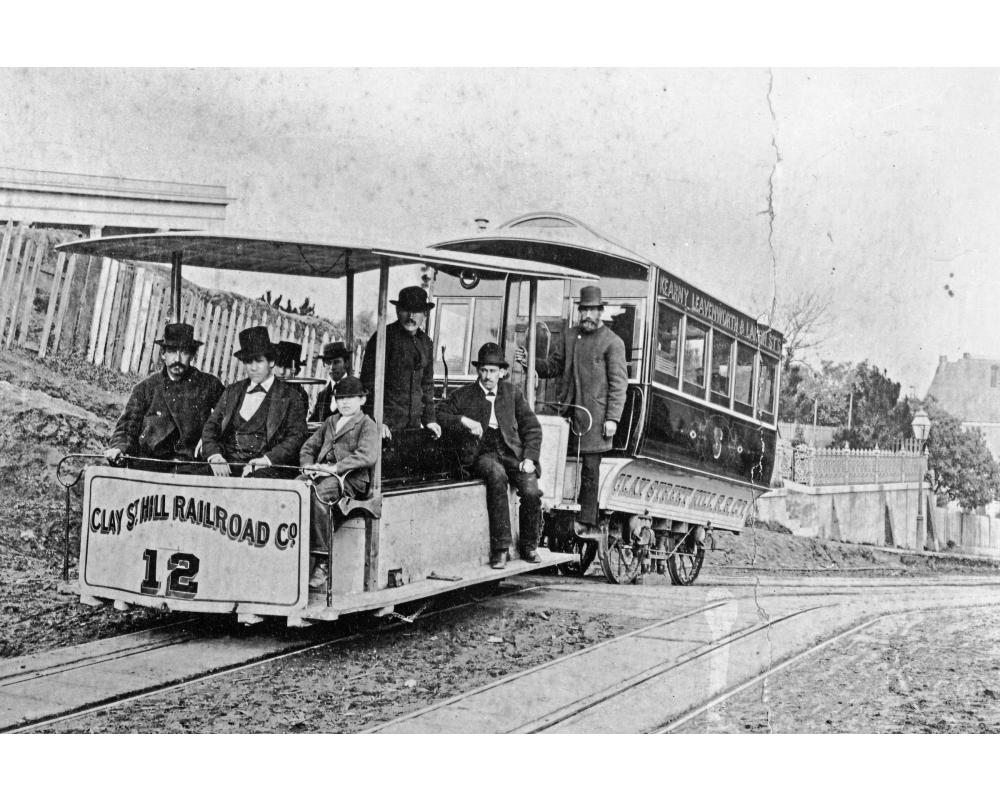
At four in the morning on August 2, 1873, Andrew Smith Hallidie tested a strange proposition on Clay Street: that a moving wire rope beneath the road could pull a passenger car up a San Francisco hill. The mechanism came from the mining world. Hallidie, a Scottish immigrant whose father had patented wire rope in Britain, had used cable systems to haul ore and build suspension bridges. His urban adaptation put a steam-powered engine in a stationary powerhouse and ran a cable continuously through a slot between the rails. A grip operator could seize that cable to move and release it to coast or stop.
The idea was born, according to the SFMTA’s history, after Hallidie saw horses being whipped as they struggled on wet Jackson Street cobblestones. His Clay Street Hill Railroad missed its contractual opening date by a day, but public service began on September 1 and the system was an immediate success. It solved a brutally local problem: the hills.
Competitors noticed. The Clay Street company enjoyed four years alone before rival systems appeared in quick succession. By the end of the 1880s, eight companies had entered the business. Together, San Francisco’s operators laid 53 miles of cable track, reaching from the Ferry Building to the Presidio, Golden Gate Park, the Castro and the Mission. The invention did not become beloved because it was quaint. It became ubiquitous because, for a young vertical city, it worked.
The future arrives cheaper
The cable car’s first existential threat was not a hostile mayor. It was a better spreadsheet. Frank Sprague’s electric streetcar, perfected in 1888, was faster, could reach more places and, according to the SFMTA, required roughly half the investment to build and maintain. Cable traction depended on a costly hidden anatomy—powerhouses, pulleys, channels and miles of moving wire—whether a car was gripping the line or not.
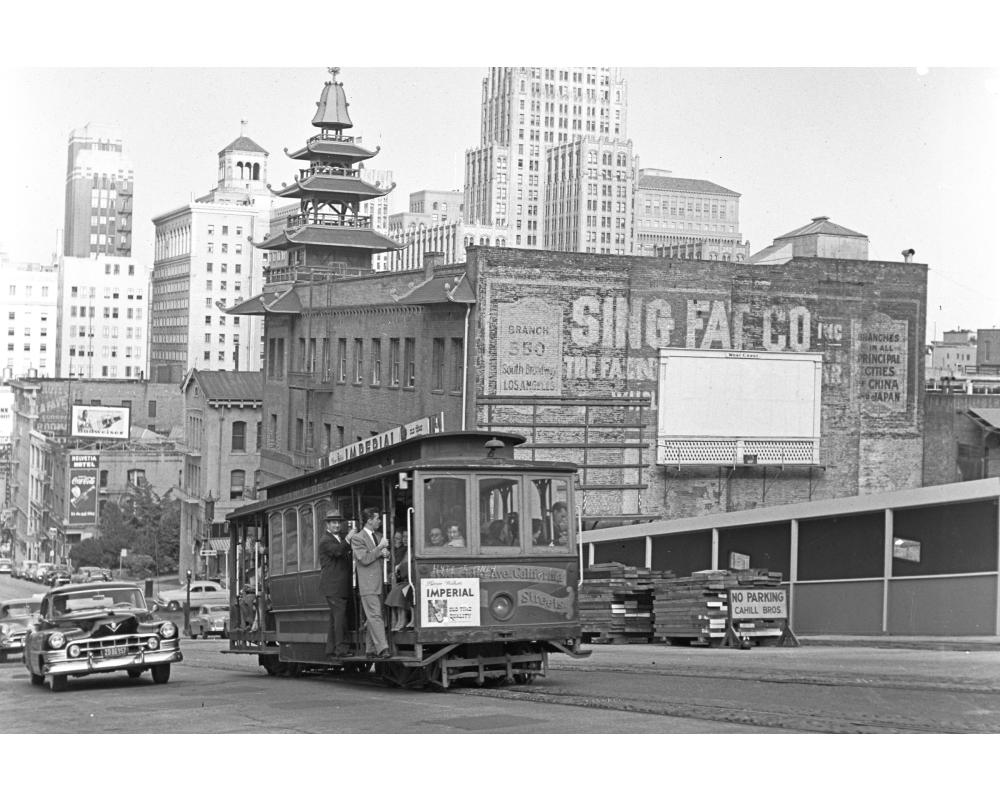
Then San Francisco broke open. The earthquake of April 18, 1906, and the fires that followed devastated power and transit infrastructure. Reconstruction presented a choice: rebuild the intricate cable network or install the more economical electric alternative. Much of the old trackage returned as electric streetcar track. Cable cars survived mainly where their peculiar strength still mattered, on grades electric cars could not comfortably master: parts of Nob and Russian hills, Castro, Fillmore and Pacific Avenue.
This is how useful systems become heritage systems. First they spread because they beat the alternatives. Then a new technology beats them almost everywhere. What remains looks eccentric precisely because it occupies the difficult edge cases where it still excels. By the middle of the 20th century, San Francisco’s cable cars had gone from citywide infrastructure to a stubborn archipelago of steep routes. Their technical advantage saved a remnant. It would take politics to save even that.
How an invention became a promise
City Hall reaches for the bus
World War II left Muni heavily used and under-maintained. After the war, San Francisco faced a population boom, housing shortages, deficits and pressure to modernize. The cable cars were rickety, slow and expensive. Mayor Roger Lapham saw the bus as flexible, contemporary and cheaper. In his January 1947 message to the Board of Supervisors, he acknowledged the cars’ sentimental appeal, then dismissed it with a line sharp enough to frame the whole dispute.
“The fact remains that the sentimentalists do not have to pay the bills.”Mayor Roger Lapham, 1947
Lapham’s proposal was not irrational. New Fageol Twin motor coaches were advertised as hill climbers, and city officials argued that the Powell Street cable lines could not deliver adequate service without costly repairs. Downtown business interests backed modernization. The mayor stated the conclusion plainly: “the city should get rid of all cable car lines as soon as possible.”
The language matters. Once a public asset is labeled an obsolete expense, removal can sound like housekeeping. Lapham’s case reduced the cars to an operating account: worn equipment plus high maintenance minus cheaper substitute. What it left out was harder to enter in a ledger—the machinery’s uniqueness, the city’s authorship of it, the pleasure of the ride and the future value of a moving landmark. Friedel Klussmann’s genius was to make those invisible assets politically legible.
City Hall counted
- Repairs and deferred maintenance
- Operating cost
- Speed and capacity
- Cheaper replacement buses
The committee added
- Singular engineering
- Civic identity
- Visitor appeal
- A living link to the city’s past
The Cable Car Lady builds a constituency
The opposition came from the San Francisco Federation of the Arts, a women’s organization that created the Citizens’ Committee to Save the Cable Cars. Friedel Klussmann took the wheel. Later known as the “Cable Car Lady,” she did not merely insist that the cars were charming. She and the committee investigated the system, gathered facts, circulated petitions, ran contests and built a public campaign around a larger claim: the cable cars were worth more to San Francisco than their operating cost suggested.
That framing traveled. Newspapers amplified the fight. Life magazine photographed the grip operators. Celebrities joined in, including actor Irene Dunne. Business owners recognized an obvious truth that the balance sheet had missed: visitors did not travel to San Francisco to ride an ordinary bus. Every argument over the cars raised their symbolic value. The campaign was, in effect, manufacturing the icon it sought to preserve.
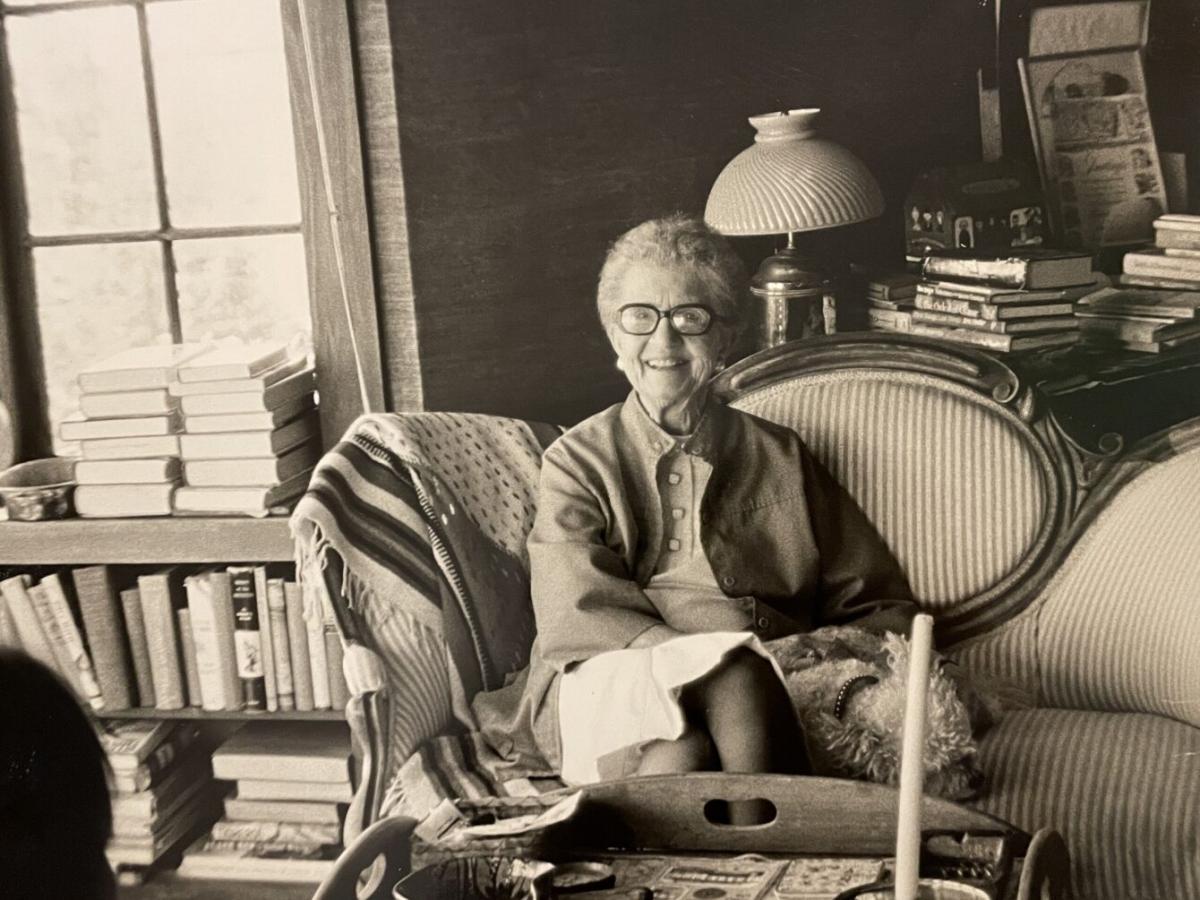
There was another quiet revolution inside the loud one. Klussmann and a women-led committee were taking on a mayor, transit officials and powerful businessmen in a political culture run largely by men. They learned the machinery in both senses—what moved the cars underground and what moved votes above it. A photograph of Klussmann inspecting the works beneath the Powell and Market turntable captures her method. Affection opened the door; fluency made the case.
“They learned the machinery in both senses—what moved the cars underground and what moved votes above it.”
San Francisco chooses what to keep
The committee converted attention into law. Proposition 10 went before voters on November 4, 1947. The charter amendment required the Public Utilities Commission to maintain and operate the existing cable car system. It passed with 77% support—a landslide that forced the city to retain the Powell Street lines. Two years later, voters approved the city’s acquisition of the private California Street Cable Railroad.
Victory did not freeze the network in amber. Preservation is usually a negotiation with loss. A five-line system was cut and reconfigured into the three lines operating today, a consolidation completed in 1957. The cable cars later underwent major repairs, entered the National Register of Historic Places and survived a full system rehabilitation from 1982 to 1984. In 1997, the Powell-Hyde turnaround at Hyde and Beach was dedicated to Klussmann.
But the 1947 vote changed the presumption. Before it, cable cars continued at the pleasure of administrators weighing annual costs. After it, continued operation carried the authority of the electorate. Today, both operation and a minimum level of cable-car service are written into San Francisco’s City Charter. The city did not simply save some handsome vehicles for display. It protected the act of running them.
A landmark that still has to work
San Francisco’s system is now one of only two operating National Historic Streetcar Landmarks in the United States; New Orleans’ St. Charles streetcar line is the other. That distinction is easy to misread as a trophy. The more interesting achievement is that the landmark remains infrastructure. Cables still move under the street. Grip operators still listen and feel for the machinery. Riders still use the cars to cross hills, even as visitors treat the same trip as theater.
The lesson of 1947 is not that every old thing deserves rescue. It is that public value is often larger than the line item assigned to it. Klussmann’s committee won by widening the accounting. They joined utility to identity, tourism to engineering, and private affection to binding public action. They made preservation concrete: petitions, publicity, a ballot number, a charter clause.
Cities regularly discover that their most shareable features are the ones an earlier generation nearly streamlined away. San Francisco’s cable cars survived because residents refused to let efficiency have the only vote. The clang heard on Powell Street today is not just the sound of a 19th-century machine. It is the sound of a city decision, renewed every time the cable catches and the car climbs.
Primary sources: SFMTA Muni History, Cable Car History, Friedel Klussmann and the Fight to Save the Cable Cars, and 75 Years After the Battle.