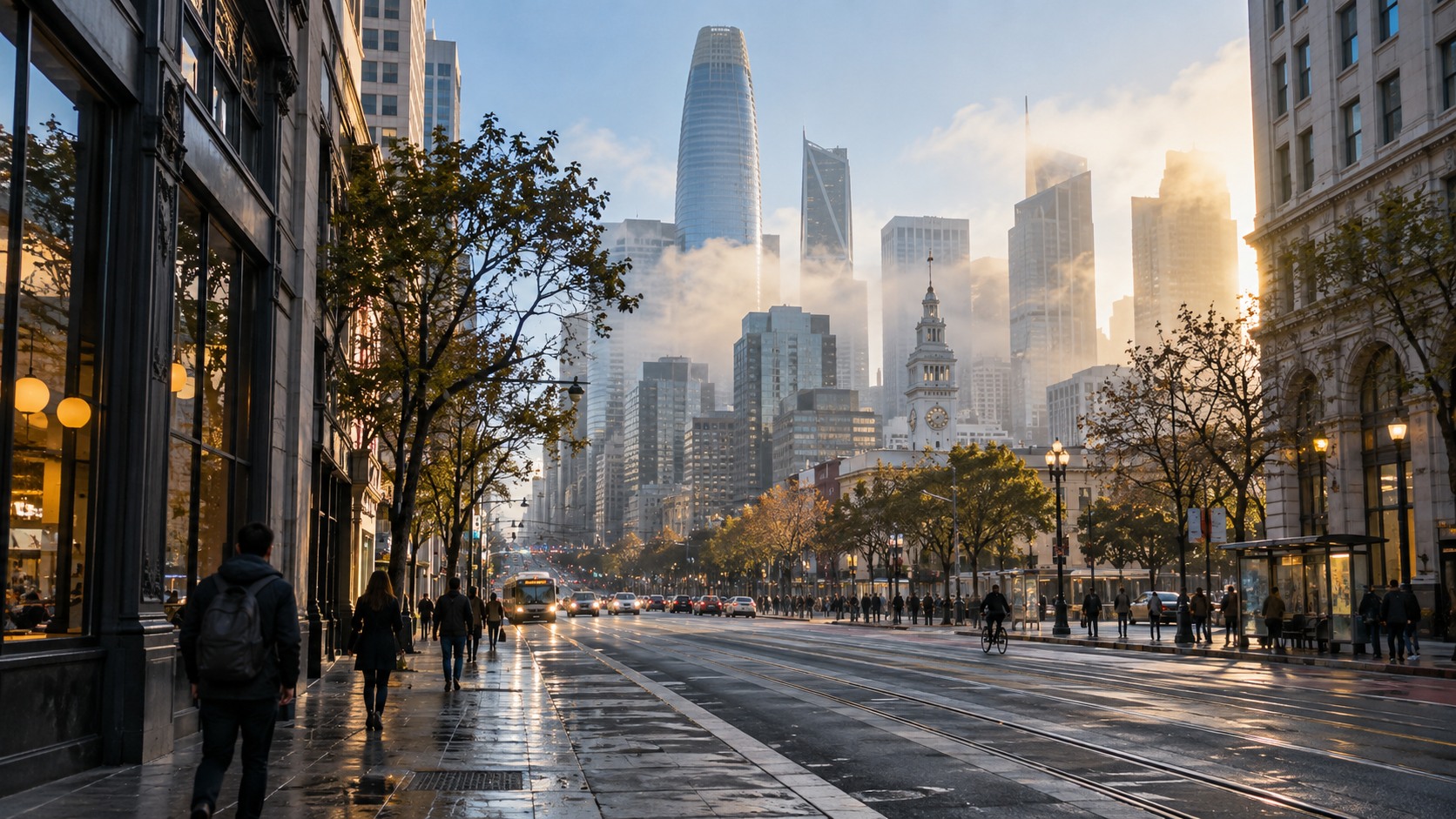
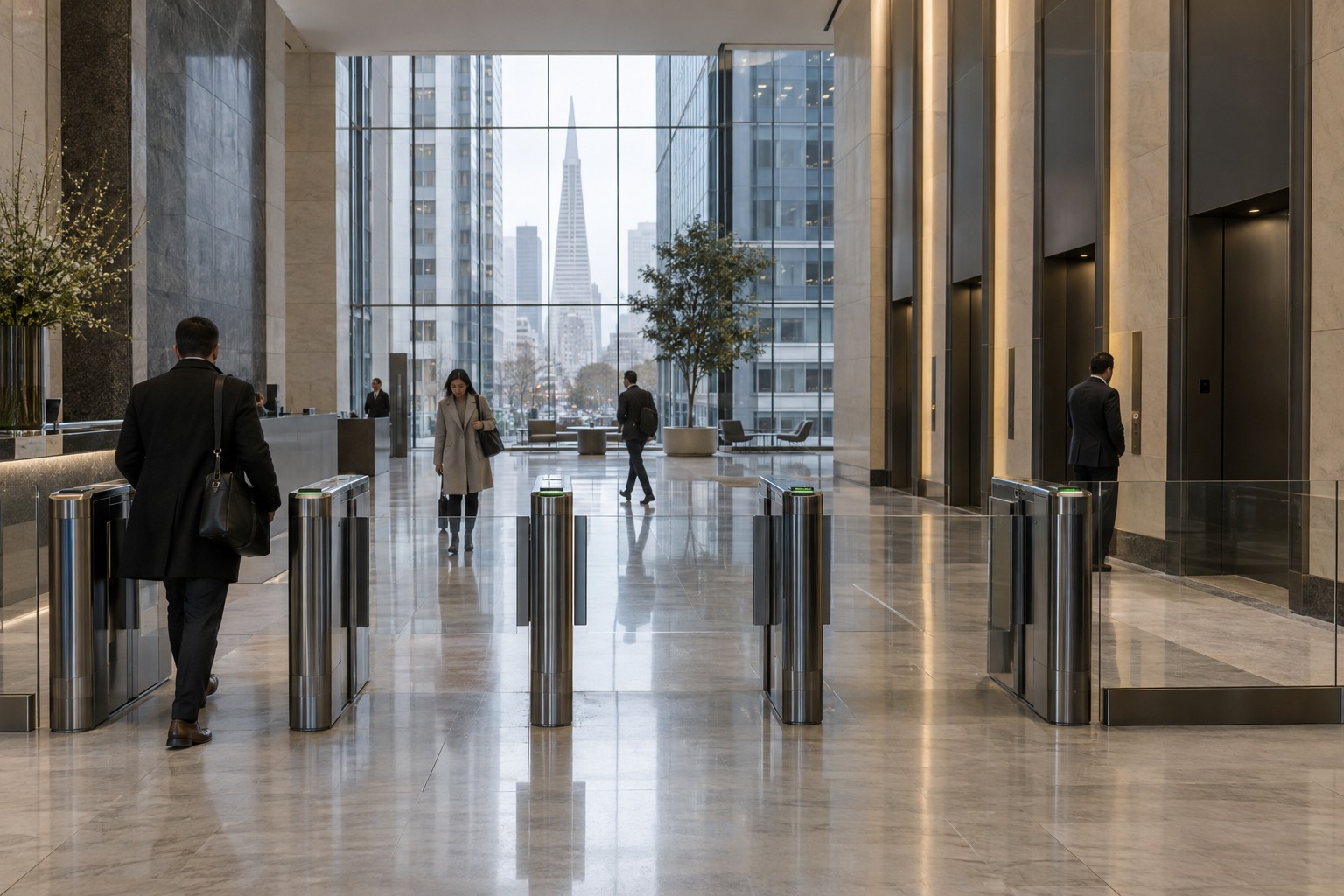
On a weekday morning, downtown San Francisco can produce two contradictory impressions before the first cup of coffee. In one window, a small team is trying to teach a machine to reason. Across the street, an office lobby has more polished stone than people. The future is being built here; the present still has empty chairs.
That contradiction is the real story of San Francisco’s AI boom. According to the city, San Francisco generated an estimated $250 billion in gross domestic product in 2022, nearly one-quarter of Bay Area output. In 2023, companies based here attracted $34.3 billion in venture capital—more than half of the region’s total and, the city says, more than any other market in the world.
More than 20% of American AI job postings were concentrated in San Francisco, along with eight of the country’s 20 leading generative-AI firms. By the usual measures of a technology cluster—money, talent, founders and proximity—the city is not merely participating. It is setting the pace.
Then there is the other number: 40.9%. That was average weekly office attendance in fiscal year 2024–25 as a share of the pre-pandemic average, according to Kastle Systems data cited in San Francisco’s December 2025 financial plan. Attendance had been 42.6% the year before. Visitor foot traffic improved during the year, from 72% to 80% of its old average, but workers did not follow at the same rate.
A cluster can be hot while the district around it remains cold.
This is the downtown problem in a single frame. AI can fill a venture round overnight. It cannot, by itself, fill five days of lunch counters, trains, towers and sidewalks.
The downtown divergence · FY 2024–25
40.9% office attendance
A boom built for fewer desks
Past technology booms arrived downtown with an obvious physical signature. Companies hired armies, leased floors and packed commuters into trains. At the height of the dot-com rush in 2000, the city recalls, downtown BART stations became so crowded that operators blocked sidewalk escalators to control the flow. The business model and the street life reinforced one another.
AI may be different. Its marquee companies can create enormous valuations with relatively compact teams. Its tools may also allow every other company to do more with fewer people. That is terrific arithmetic for a software margin and uncertain arithmetic for a central business district designed around density at nine in the morning.
The important question is not simply how much wealth AI creates. It is how much of that wealth touches the city: in occupied floors, transit fares, restaurant tabs, tax receipts and nights spent downtown.
The city’s own fiscal report makes the dependency plain. Interest rates have an outsized effect on San Francisco because venture capital finances so much technology hiring. Borrowing costs had eased from their 2023 peak by late 2025, but remained elevated relative to earlier years. A funding cycle can therefore become a hiring cycle, which becomes a leasing cycle, which becomes a municipal revenue cycle. AI is a powerful new engine connected to an old chain of consequences.
This does not make the boom imaginary. It makes it narrow. The city has 86 million square feet of commercial office space, a legacy asset too large to be rescued only by a handful of celebrated labs. Downtown needs the AI economy to generate customers, suppliers, services and new reasons to gather—not just exceptionally valuable companies behind a few doors.
San Francisco’s oldest startup
San Francisco’s favorite story about itself is that reinvention is instinct. History suggests something more demanding: reinvention is construction.
After the 1906 earthquake and fire destroyed much of the urban core and killed thousands, the city was largely rebuilt within a decade. But the comeback was not an app appearing spontaneously. It came with electric streetcar lines, a consolidated municipal railway, a new City Hall and Civic Center, and the 1915 Panama-Pacific International Exposition.
During the Depression, the Bay Bridge and Golden Gate Bridge put people to work and remade regional movement. After the war, suburbanization and disinvestment helped drain roughly 100,000 residents between the 1950s and 1980. The response included the freeway revolt and BART, public decisions that shaped the next downtown.
The pattern repeated after the 1989 Loma Prieta earthquake. Removing the Embarcadero Freeway reunited downtown with the waterfront. Restoring the Ferry Building created a civic destination rather than merely repairing a damaged structure. After the dot-com collapse emptied offices, plans around Rincon Hill and the Transbay district helped prepare the ground for the next expansion. Following the Great Recession, the city added more than 30,000 housing units over a decade as technology and knowledge businesses moved north from the Peninsula.
Private capital supplies velocity. Civic decisions determine direction.
The lesson is easy to flatten into optimism: San Francisco always comes back. The sharper lesson is that it comes back differently, and usually because crisis forces choices about transportation, housing, public space and land use. AI can be the spark in the latest chapter, but a spark is not an urban policy.
The spillover test
A downtown is a machine for productive accidents. Two people meet after a conference. A designer leaves one firm and joins another three blocks away. A customer walks from a hotel to a restaurant and sees a gallery on the way. The value is not any single building. It is the number of useful connections among them.
AI strengthens San Francisco because the city already has those connective ingredients: research institutions, venture networks, experienced operators, transit, cultural openness and the peculiar magnetism that keeps ambitious people tolerating small apartments and cold summers. The clustering is real. So is the possibility that it becomes an enclave—an archipelago of well-funded rooms separated by half-empty streets.
The practical scorecard should therefore be spillover. Are AI firms leasing and reusing older offices, or concentrating in a few trophy buildings? Are their workers riding transit and spending locally? Are new suppliers, events and training programs widening access to the boom? Is downtown adding homes, schools, groceries, arts and nighttime uses that make it resilient when the next hiring cycle turns? The answer cannot be read from a funding announcement. It shows up in ordinary transactions.
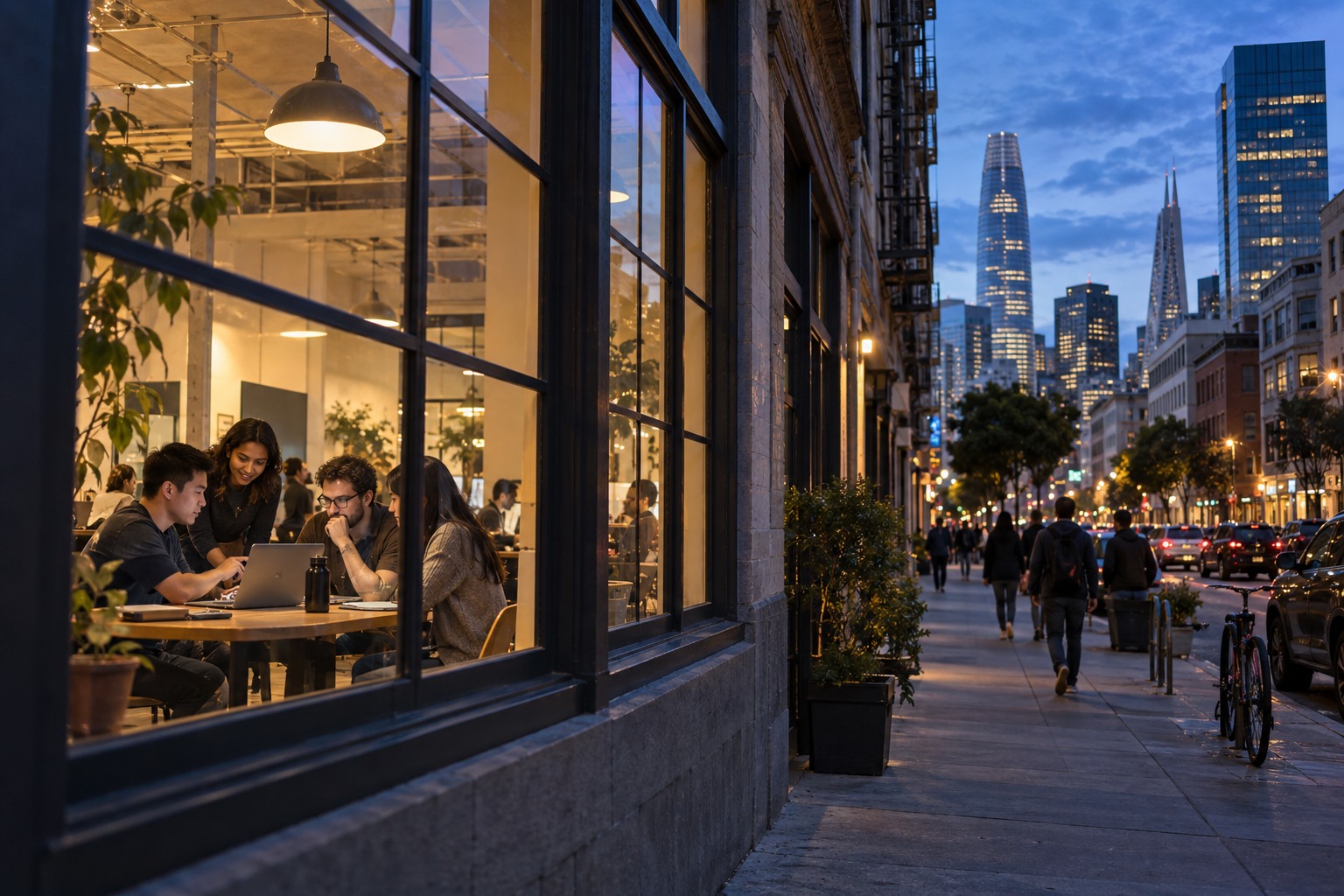
There is already a faint positive signal in visitor traffic reaching 80% of its pre-pandemic average by the end of fiscal 2024–25. People will come downtown even when they are not ordered to sit at a desk. That points toward a more durable proposition: make the district worth choosing. A recovery built only on mandatory attendance is hostage to the next change in workplace fashion. One built on many overlapping reasons to be present can absorb shocks.
The paradox is that AI’s greatest gift to downtown may not be a return to the old office week. It may be the capital and urgency to finish a transition the pandemic exposed—from a business district that empties after work into a mixed neighborhood that keeps generating encounters all day.
A wager, not a rescue
The bullish case is unusually strong. Few places can match San Francisco’s density of AI talent and investment. Its economic base remains massive. Its downtown is compact, walkable, connected by regional transit and stocked with buildings whose low utilization is also latent capacity. A young company can find investors, recruits and office space within the same few miles. That combination is difficult to copy.
The caution is just as strong. The city’s financial plan warns that local activity taxes such as sales, hotel and parking are expected to grow only modestly through fiscal 2029–30. Property values have reset. Interest rates still matter. Technology hiring remains cyclical. A boom concentrated in equity values and worldwide sales can strengthen balance sheets without restoring the daily metabolism of Market Street.
So can AI reinvent downtown San Francisco again? The word “again” carries the answer. Technology may supply the new industry, as it has before. But every durable recovery in the city’s own history joined economic change to physical change: a railway, a bridge, a boulevard, housing, a waterfront, a new district. The next version will require the same translation—from private breakthrough to public life.
That means judging success less by whether San Francisco wins the title of AI capital and more by what that title buys: occupied storefronts, reliable transit, converted buildings, attainable homes and streets that feel useful after five. It means treating the boom as leverage rather than salvation.
On Market Street, the windows tell both stories at once. Behind one, a small team is building something with global reach. Behind another, the lights are still off. San Francisco has the rarest ingredient: a reason for the world to come back. Now it has to turn that reason into a place people choose to stay.