Profile / Founder
Samuel
Samuel
Adeyemo
He made solar design a software category. Now he wants the same for the people who mow, plant, and pave.
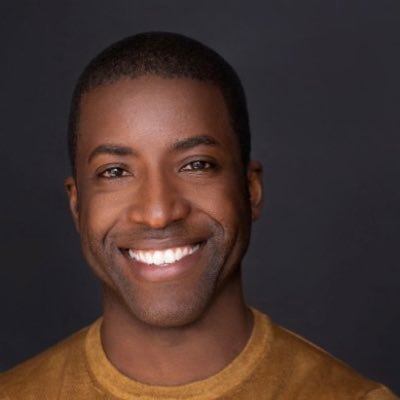
SAMUEL ADEYEMO — Co-Founder & CEO, Duranta · Seattle, WA
He made solar design a software category. Now he wants the same for the people who mow, plant, and pave.
Walk into a landscaping company and you will often find a multi-million-dollar operation running on a tape measure, a truck, and a stack of paper estimates. Samuel Adeyemo looked at that and saw the same thing he saw a decade earlier in solar: a giant, physical-world industry that nobody had bothered to build proper software for. So in 2024 he co-founded Duranta in Seattle, and in July 2025 he raised a $7 million seed round to go after it.
Duranta's pitch is deceptively simple. Its proprietary AI model, named AIdan, can automatically measure every detail of a property - the lawn, the beds, the hardscape, the boundaries - and turn that into an accurate, attractive proposal. Bolt on design tools, invoicing, payment processing, and a CRM, and a crew that used to spend a morning driving to a site to eyeball a quote can do it from a screen in minutes.
"We've seen customers eliminate time-consuming site visits and close major contracts using our product," Adeyemo says. The product is unglamorous on purpose. The margin it unlocks is not.
What I have always wanted to do is make a bigger impact - something I would be proud of.Samuel Adeyemo
Adeyemo was born in Nairobi to a professor and a teacher, a household where the default setting was learning. He carried that to the University of Chicago, where he graduated Phi Beta Kappa with a degree in economics, then to Wall Street, where he spent the better part of seven years at JP Morgan and rose to Vice President in the Chief Investment Office - the team responsible for investing the bank's own balance sheet.
It was a good job. It was also not the bigger impact he kept talking about. He left for Stanford, picking up an MBA and a master's in engineering, and started spending time on something closer to home: getting electricity to places that did not have reliable power. Through Vituo Technologies he worked on small commercial solar systems in emerging markets.
The turning point was a solar project for a school in East Africa. The panels were the easy part. The design, the paperwork, the sales and permitting work around them - the industry calls it "soft cost" - was where everything bogged down. That frustration became the thesis for his next company.
The company he built with Christopher Hopper attacked the soft-cost problem head on: software to design and sell solar without climbing on a roof.
Same playbook, new industry. Take a sprawling trade that runs on guesswork and give it AI-native tools to measure, design, quote, and get paid.
When the people who build developer tools and incident response platforms write you a personal check to go build landscaping software, it says something about the founder more than the lawn. Duranta's seed drew institutional leads and a set of operator-angels who have shipped at scale.
Everyone should have access to renewable energy, regardless of background and income.Samuel Adeyemo, on the mission behind Aurora Solar
There is a pattern to how Adeyemo picks his battles, and it is not glamour. Both of his companies serve people who work outdoors, in the physical world, far from the usual orbit of venture capital - solar installers, then landscaping crews. Both industries are enormous. Both were being run on paper and gut feel. And both turned out to be, underneath, problems of measurement and proposal and getting paid - exactly the kind of thing software is good at.
That is the quiet ambition here. Not a flashy consumer app, but the operating system for trades the tech industry tends to overlook. He raised the seed, hired a team stacked with engineers from Amazon, Google, Airbnb, Figma, and Datadog, and pointed all of it at lawns and flowerbeds. If the second act rhymes with the first, the people who mow America's yards are about to get a serious upgrade.
For more on Adeyemo's solar years, the Powerhouse "Watt It Takes" interview is a good listen. For where he is headed, watch what Duranta ships next.