The highest compliment one can pay financial infrastructure is to forget it exists. The payment clears. The card works. The balance is correct. Somewhere, an engineer has arranged a minor miracle and then had the good manners not to announce it. Ronak Vyas has spent much of his career making this sort of silence possible.
His route to Lead Bank, where he is co-founder and chief technology officer, runs through three very different products that share one severe expectation. Yahoo Mail had to be available to hundreds of millions of people. Square Capital had to turn complex lending machinery into something a business could actually use. Lead must move money, extend credit, issue cards, hold accounts, and support stablecoin products while behaving like what it is: a regulated bank.
The progression looks neat in retrospect. Careers rarely feel so obliging while one is living them. Vyas began with an electrical engineering education at BITS Pilani, followed by a master's in the same field at Iowa State University. Engineering leadership roles at Sabre, EXP Systems, and VeriSign came before Yahoo, where the scale became almost comic. The company's account of his work says Yahoo Mail served hundreds of millions of active users and processed hundreds of billions of transactions each day. At that size, a decimal point can acquire a social life.
An education in things that cannot go down
At Yahoo, Vyas moved from senior leadership in mobile applications to vice president of engineering. He led a multi-year rearchitecture of Mail's core infrastructure. Rearchitecture is a bloodless word for replacing the beams while the building remains open. Users still expect the message to arrive. They do not care that a dependency has aged badly, a traffic pattern has changed, or a migration plan contains seventeen ways to ruin a weekend.
That experience established the recurring subject of his career: scale is less about serving a spectacular number than about serving it repeatedly. Reliability is a habit, not a press release. Latency, availability, and capacity are technical measures, but together they become a user's sense that a product can be trusted.
Vyas explained that philosophy in a 2025 podcast about leadership. It is not a license for carelessness. It is an argument against polishing a decision in private while reality grows bored and leaves. Make the good call. Observe what happens. Correct quickly. For a systems engineer, feedback is information; for a founder, it is also time.
The bank they had already tried to find
In 2017, Vyas joined Square. As head of engineering for Square Capital and Square Financial Services, he led teams that built the core lending platform and foundational banking infrastructure. The change from email to finance sharpened the consequences. A delayed message is irritating. A mistake in lending or payments can alter a business's week, its payroll, or its survival.
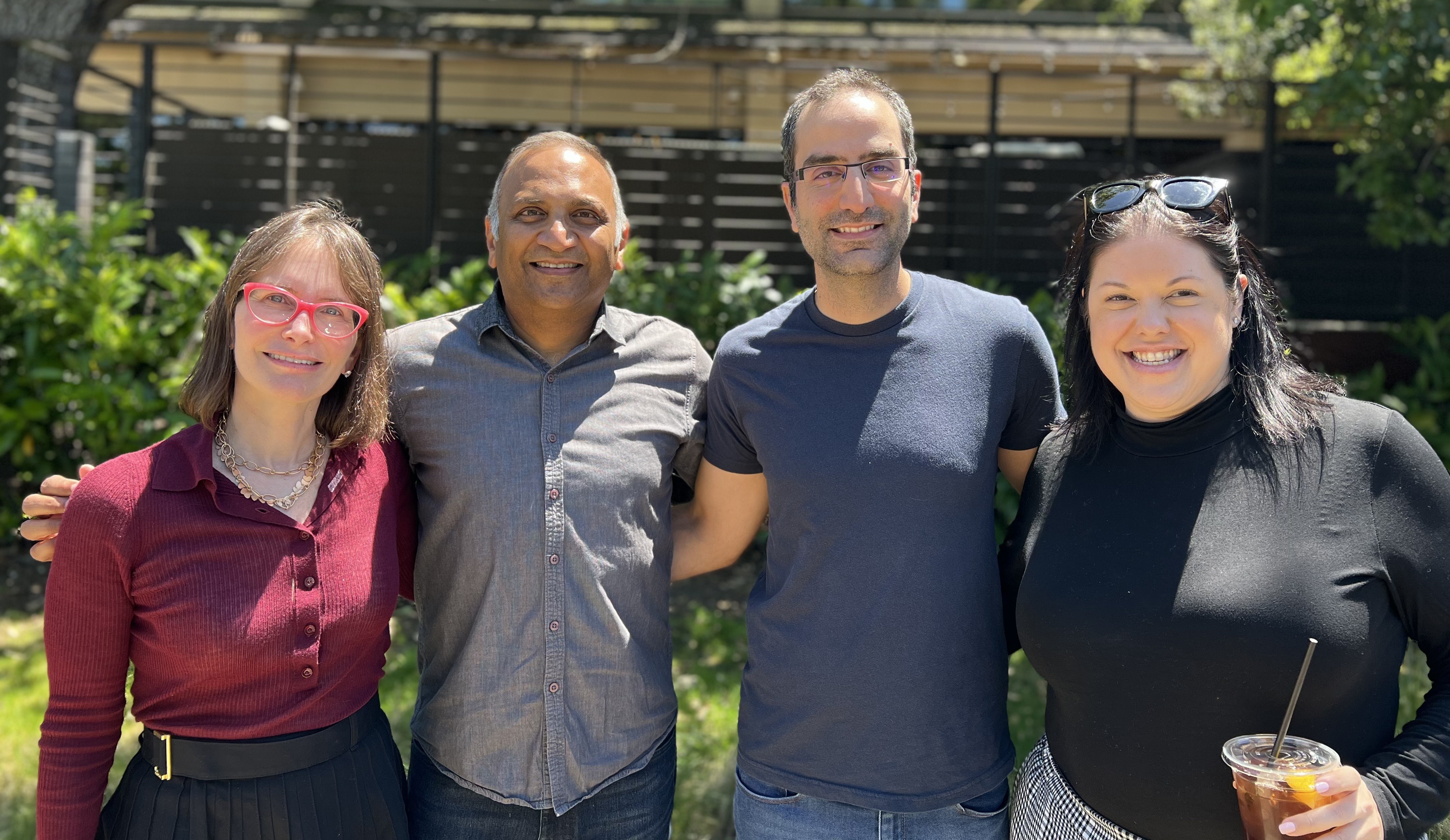
Square also assembled the group that would become Lead's founding team: Vyas, Jackie Reses, Homam Maalouf, and Erica Khalili. They worked on financial products from the technology side and helped develop Square's in-house institution. In the process, they learned the peculiar discomfort of being a fintech dependent on a bank partner. They later described Lead's premise with refreshing simplicity: build the bank partner they wished they had.
The opportunity arrived with an institution whose roots stretched back to 1928. In August 2022, the group acquired Lead Bank in Kansas City. It was an inversion of the usual fintech arrangement. Instead of placing a bright application on top of someone else's banking machinery, the founders would own the charter, operate the bank, and build the technology layer themselves. Old banking and new software would have to share not merely a partnership agreement, but a house.
This is where Vyas's résumé stops looking eclectic. Yahoo supplied lessons in distributed systems at consumer scale. Square supplied the domain knowledge of lending and banking. Lead joined both disciplines under regulatory responsibility. The platform his engineering organization builds spans payments, lending, cards, accounts, and stablecoin products. It serves young fintechs and public companies, which means the architecture must be flexible without becoming whimsical. Banks, unlike mood boards, are improved by restraint.
A founder's wider blast radius
Vyas has said that leadership tools remain fairly constant while their application changes with a company's culture and stage. The useful first move is to understand the business context before arriving with strong technical opinions. That sounds obvious. It is also a rebuke to a common executive sport: solving the last company's problem in the new company's conference room.
Becoming a founder widened the decision surface. A technical leader can optimize an engineering system. A founder must see the consequences for product, risk, compliance, clients, and the company itself. At a bank, those interests cannot politely wait their turn. They arrive together. Speed matters, and so does proof. Innovation is welcome, but it must bring identification.
He also argues for staying close to the craft. Leadership creates altitude; systems punish leaders who float away entirely. At Lead, the relevant details include low latency and high availability, but also the less fashionable work of controls, reconciliation, and operational resilience. The platform needs to feel modern without acquiring the amnesia of a startup that believes history began with its repository.
That insistence on context also explains why the story cannot be reduced to a familiar contest between technology and regulation. Lead's proposition requires both. Software can make a bank faster, more observable, and easier to integrate. A charter gives that software obligations which cannot be dismissed as legacy inconvenience. The engineering organization is therefore not merely shipping features. It is translating rules, money movement, and client intent into systems that can be tested, monitored, and explained.
Explanation matters more than it first appears. A distributed system already asks its builders to reason about actions separated by machines and time. Banking adds legal entities, payment networks, ledgers, approval boundaries, and the possibility that two parties describe the same transaction differently. Good infrastructure preserves a single intelligible story through all of them. When something goes wrong, the team needs more than an error message. It needs to know what happened, who was affected, what state the money is in, and which action is safe next.
The reported scale is substantial: $4 billion in client assets, more than $31 billion in annual loan originations, 4.15 billion API calls a year, and more than 30 million end users. In September 2025, Lead raised a $70 million Series B at a $1.47 billion post-money valuation. The following year brought expanded stablecoin settlement work with Visa, Bridge, and Mastercard, along with a third consecutive appearance on CNBC's Disruptor 50.
Those milestones belong to a company, not one executive. That distinction matters in Vyas's story because Lead was founded by a practiced team. The four co-founders had already built together, argued together, and encountered the pain they intended to remove. Familiarity did not eliminate complexity. It meant they knew which complexity was real.
The bank's history makes the contrast especially useful. An institution chartered in 1928 carries a long memory of deposits, credit, and community banking. Its newer clients may speak in APIs, webhooks, and programmable workflows. The nouns changed faster than the duty. Records must remain correct. Access must remain controlled. A promise to move funds must resolve into a completed transaction or an honest account of why it did not.
Vyas sits at the seam between those vocabularies. His job is not to make a bank imitate a software company in every respect, nor to make engineers accept every inherited process as sacred. It is to determine which constraints protect trust and which are simply waiting for a better implementation. That is patient work. Revolution is a splendid word for a speech, but a dangerous operating mode for a ledger.
The virtue of a boring moment
The newest part of Lead's work involves stablecoins and round-the-clock settlement, but the engineering demand is ancient: keep an accurate account of value moving between people. New rails do not abolish the need for controls. They make the clock less forgiving. Weekend settlement sounds liberating until one remembers that weekends were once useful for maintenance.
Here, Vyas's preference for iteration meets the harder boundary of finance. A good decision should meet reality quickly, but real-world feedback cannot become an excuse to gamble with other people's money. The craft lies in deciding which experiments can be reversible, which systems require redundancy, and where patience is not indecision but control.
His career offers no grand personality mythology, and is better for it. The public record shows an engineer drawn to consequential plumbing, a leader who values context, and a founder who believes technical depth remains useful after the title grows. He has moved from inboxes to loans to money movement, each time toward systems whose failures become instantly personal for somebody else.
One can imagine a perfect day in his profession. Billions of calls pass through the platform. Loans originate. Cards authorize. Accounts reconcile. A stablecoin settlement arrives on a Sunday. No customer pauses to admire the architecture. Nobody sends the CTO a grateful note about database consistency. Nothing becomes a trending topic. For the people who engineer the invisible, obscurity is not the absence of achievement. It is the receipt.