The first thing Rihanna sold the world was a command: come closer and dance. “Pon de Replay” arrived in 2005 with the efficient confidence of a record that already knew where the speakers were. She was 17, newly signed to Def Jam, and far from the Barbados streets that had taught her rhythm before the industry taught her scale. The song introduced a voice. The years that followed revealed something more durable - an editor’s eye. Rihanna could hear which song belonged to her, see which silhouette would make an image hold, and feel when an old category had become too small. That judgment, sharpened in public, eventually travelled from records to lipstick, lingerie, grants and boardrooms.
Her career can look like several careers placed side by side: pop singer, fashion figure, beauty founder, civic ambassador, philanthropist. From a distance, it resembles expansion for expansion’s sake. Up close, the pieces share a method. She notices an omission. She refuses to treat it as natural. Then she makes the frame wider.
The girl who won the audition
Robyn Rihanna Fenty grew up in Barbados and sang with two school friends. Their informal group had no original songs and no name when they auditioned for Evan Rogers, an American producer visiting the island. Rogers heard the distinction immediately. A demo followed. So did a flight to New York and an audition for Jay-Z, then the president of Def Jam. The familiar telling makes discovery sound like weather: talent is standing there, lightning strikes, a career appears.
The less tidy version is more useful. Rihanna had to leave a trio and become a solo proposition. She had to cross an ocean, perform in a corporate room and convince strangers that her particular mixture of Caribbean cadence and pop instinct could travel. She signed in 2005. “Pon de Replay” went to number two in the United States. By 2006, “SOS” had given her a first American number one.
Then “Umbrella” changed the temperature. The 2007 single, with Jay-Z, was spare enough to feel inevitable and strange enough to be remembered. Its hook turned rain protection into a vow. The song brought Rihanna her first Grammy the following year and announced that she was no longer a promising new singer. She had become a reliable center of gravity for a song, an image and an era.
“Sometimes the toughest thing in life is to be vulnerable.”Rihanna
Pop was the apprenticeship
A Rihanna album was never simply a report from one songwriter’s diary. It was an act of selection. She worked across dance music, R&B, reggae, rap and balladry, choosing material from a network of writers and producers and then making the final combination sound native to her. That work trained a founder’s muscle before anyone called her a founder: evaluate a crowded field of options, reject the nearly-right ones, and recognize the detail that can organize everything around it.
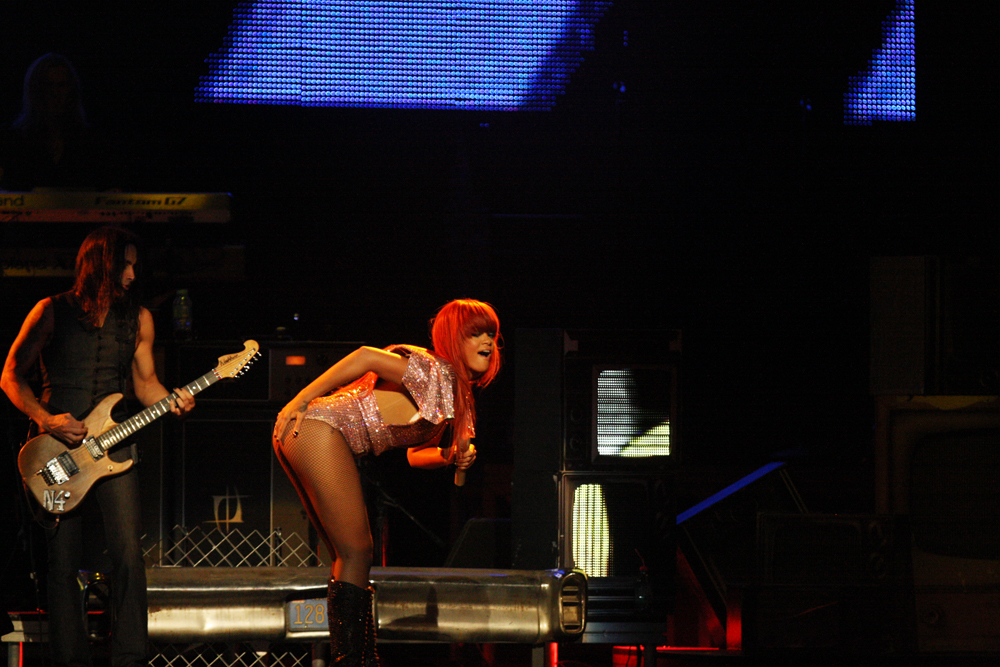
That instinct grew more visible with each reinvention. The severe bob and gleaming umbrella of Good Girl Gone Bad gave way to the harder surfaces of Rated R, the bright-red maximalism of Loud, and eventually the loose confidence of Anti. Released in 2016, Anti sounded less interested in supplying the market with obvious singles and more interested in living at its own speed. Its title was a useful declaration. Rihanna had become powerful enough to decline the version of Rihanna that efficiency demanded.
Forty shades, one unmistakable brief
Fenty Beauty’s 2017 debut converted a complaint into shelf space. Rihanna had spent years in makeup chairs and still saw complexion products built around a narrow idea of the customer. The launch range offered 40 foundation shades, with particular attention to tones frequently neglected at either end of the spectrum. The number travelled quickly because it was easy to understand. It was also difficult for competitors to dismiss. A product assortment had become a public audit of an industry.
Celebrity brands often begin with recognition and stop there. Fenty Beauty had a sharper thesis: people who had been treated as edge cases were customers in the center of the market. Its imagery reinforced the range, but the range carried the argument. The company reported $100 million in sales during its first 40 days. Other brands expanded their shade offerings. “Fenty effect” became shorthand for competitive pressure toward broader representation.
Rihanna described makeup as play rather than pressure or uniform. That line explained the emotional proposition. Inclusion was not presented as a solemn favor granted by a company. It was permission to experiment. Her own involvement ran through product texture, color and packaging. She once described wanting her hands physically on everything. Control, in this case, was not the enemy of scale. It was the means of keeping a large operation attached to a specific eye.
Savage X Fenty extended the argument from faces to bodies. Founded in 2018, the lingerie company used a wider range of sizes and models and turned its runway presentations into filmed variety shows. Dancers, musicians and models shared the stage. The old fashion-show hierarchy loosened. The spectacle remained glossy, but the invitation changed: more kinds of people could recognize themselves inside it.
“Makeup is there for you to play with. It’s there for you to have fun with.”Rihanna
The route home runs through Barbados
Fame carried Rihanna outward, but Barbados never became a decorative footnote. Her surname became the name of her companies. Her accent remained audible. In 2012, she named the Clara Lionel Foundation for her grandparents, Clara and Lionel Braithwaite. The foundation now backs community-led work across the Caribbean, East Africa and the American South, including climate resilience, women’s entrepreneurship, arts and culture, and opportunities for younger generations.
The operating idea is strikingly consistent with Fenty’s commercial one: people closest to an overlooked need are not peripheral. They are the experts. The foundation says it has distributed more than $100 million in grants since 2012 and works with 35 community partners. The figures matter, but so does the direction of trust. Rihanna’s fame attracts attention and money; local organizations decide how durable change is built.
Barbados answered her global visibility with public responsibility. The government appointed her Ambassador Extraordinary and Plenipotentiary in 2018, assigning a brief that included education, tourism and investment. In November 2021, as Barbados became a republic, the country named her its 11th National Hero. A teenager had once left the island with a demo. She returned in the civic vocabulary of the nation.
The discipline of not arriving yet
For years, the public conversation around Rihanna has included a running question: where is the next album? She has joined the joke, teased her audience and then declined to turn impatience into a release plan. The gap after Anti became conspicuous precisely because her earlier recording pace had been so brisk. Yet the interval was hardly idle. Beauty, lingerie, fragrance, hair products, philanthropy, film and a Super Bowl halftime show occupied it.
In 2025, she offered a more revealing explanation. The music she had explored did not match her growth. Eight years away needed to count. She said she had finally “cracked the code” on what she wanted the next body of work to be, while giving no date. The aspiration was not to resume an old production line. It was to make something her present self could perform and defend.
That patience is unusual in a culture organized around continuous visibility. Rihanna has enough visibility to know its limits. Attention can open a door, sell a first product and make a ticker move. It cannot decide whether a foundation shade works, whether a garment fits or whether a song deserves to survive its launch week. Those judgments return to the quieter discipline beneath the spectacle: look closely, keep your standards, and do not confuse demand with direction.
Her 2025 song “Friend of Mine,” made for Smurfs, was a reminder that music remained in the room. She also produced the film and voiced Smurfette, adding another blue character to a career already rich in color theory. The grand album reveal did not follow. Rihanna, predictably, kept the clock for herself.
“This much time away from music needs to count.”Rihanna
A larger room, built on purpose
The neat version of Rihanna’s life would be an ascent: island childhood, lucky audition, hit records, fortune. The interesting version moves sideways as often as it moves up. A singer learns curation. A fashion obsessive learns product. A customer’s frustration becomes a founder’s brief. A famous surname becomes an institution named for two grandparents. Success creates leverage, and leverage is sent toward the people and places the old map omitted.
There is wit in the way she has done it. A pop star whose fans beg for music builds an empire out of everything except the requested album. A beauty founder makes her strongest argument with the quiet arithmetic of 40 shades. A national hero appears at a ceremony not as an abstraction but as a Bajan woman whose work has travelled and returned.
Rihanna’s career is not a lesson in doing everything. It is a lesson in carrying a coherent eye into different rooms. The records, products and grants are not interchangeable, and some experiments have lasted longer than others. But the question beneath them remains steady: who has been left outside this picture? Her answer has been to redraw the edge - then make the result desirable enough that the rest of the culture follows.