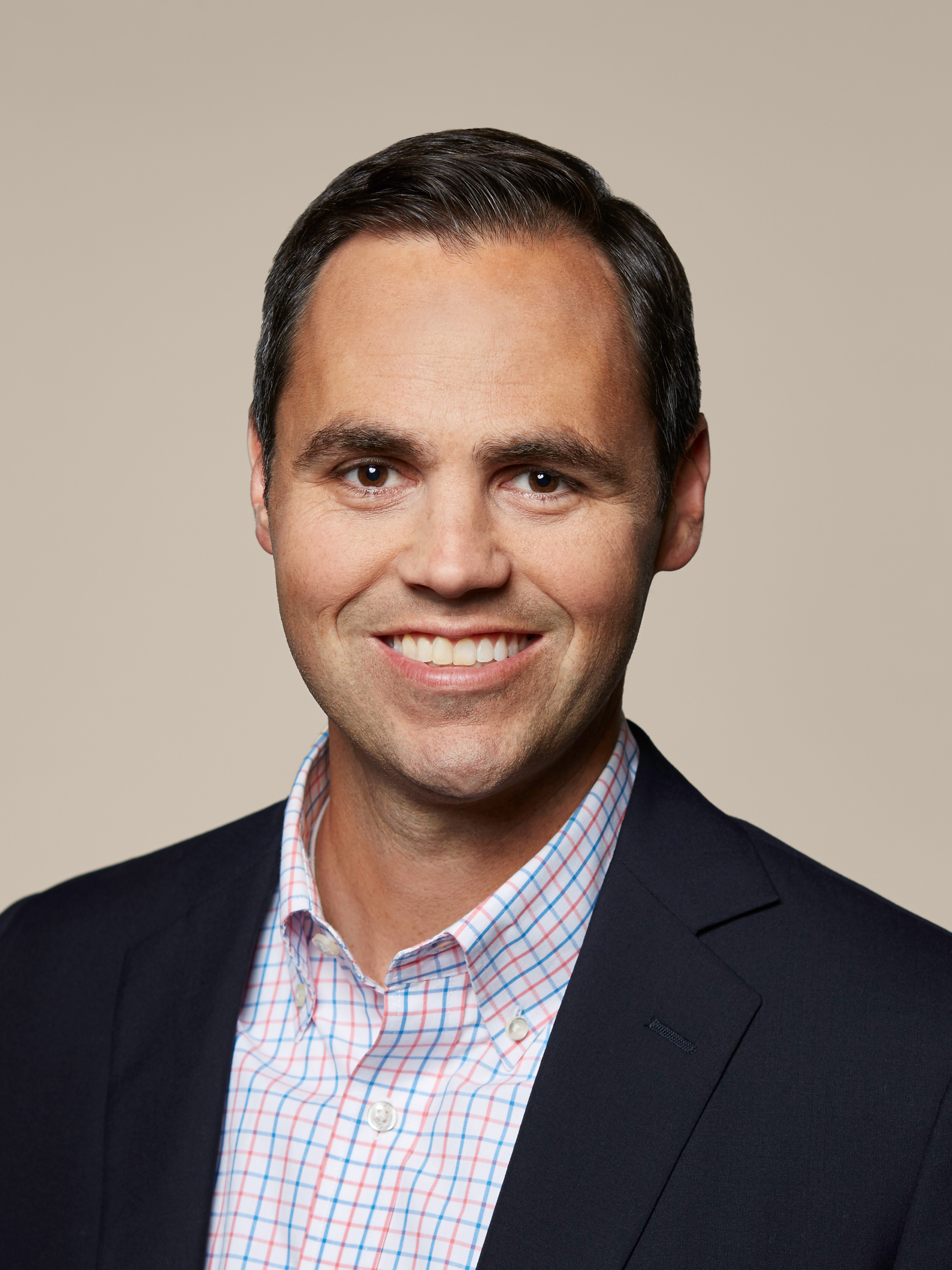
Profile
The Lawyer Who Learned to Write Checks
There is a particular kind of clarity that comes from spending eight years watching the best private equity minds in the world structure their deals - from the other side of the table. Ric Fenton spent those years at Simpson Thacher & Bartlett, the storied New York and Palo Alto law firm, before deciding in 2008 that he'd rather be the principal than the counsel. He joined TCV as Chief of Investment Operations and Chief Legal Officer, and the firm hasn't been the same since.
TCV - Technology Crossover Ventures - was already a serious outfit when Fenton arrived. Founded in 1995, the firm had backed some of the defining internet companies of the era. But Fenton brought something the firm needed: operational rigor married to legal precision, wrapped in the instincts of someone who had watched hundreds of transactions from every angle. He is now General Partner, and the four functions he oversees - Legal, Capital Markets, Portfolio Talent, and Data Intelligence - are essentially the connective tissue between every investment TCV makes.
His investment range runs from $10 million to $30 million with a sweet spot around $20 million. He is recognized by NFX Signal for his investing in the San Francisco Bay Area and FinTech across both Series A and Seed stages. The numbers suggest someone who favors conviction over scale at entry, then watches the compounding do its work.
"He manages not just legal but also the talent and data intelligence functions - an unusually broad operational remit for a single GP."
TCV Profile / Signal NFXThe breadth of that remit is worth pausing on. Most general partners at major venture firms carry a portfolio of company boards. Fenton carries something different: the architecture of how TCV itself operates. Deal sourcing pipelines, transaction structuring, portfolio value creation, exits - his fingerprints are on the full lifecycle of every investment. When TCV closes a company, when they negotiate terms, when they navigate an IPO, Fenton's function is in the room.
That brings us to the $3 billion. In May 2024, TCV closed its latest fund at that figure - bringing total committed capital past $21 billion since the firm's founding. Capital of that magnitude doesn't just announce itself. It requires institutional credibility built over years, a track record through market cycles, and the kind of operational infrastructure that makes LPs confident the money will be put to work well. Building that infrastructure has been Fenton's project since 2008.
Before all of it, there was Ann Arbor. Fenton graduated from the University of Michigan's Ross School of Business in 1997 with a B.B.A. in Finance. Then Durham: Duke University School of Law, J.D., class of 2000. Two institutions known as much for the ferocity of their sports fanbases as for the rigor of their programs. Fenton absorbed both. He is, by multiple accounts, a passionate Michigan football fan who also supports Duke basketball - a combination that requires exactly the kind of cognitive flexibility that makes a good investor.
The sports life extends beyond spectatorship. He runs half marathons. He plays tennis. He scuba dives and skis. These are not the hobbies of someone who leaves the work at the office - they're the habits of someone who understands that sustained high performance requires sustained recovery. Silicon Valley's best investors tend to share that quality. The ones who burn out tend to have confused intensity with endurance.
Fenton's engagement with the broader ecosystem goes beyond TCV's portfolio companies. He sits on the Board of Directors of the National Venture Capital Association, the trade body that represents the VC industry in Washington and sets standards for the field. He also sits on the Board of Visitors of Duke University School of Law - the body that advises the school's leadership on direction and strategy. Both roles put him in rooms where the future of investing is being shaped, not just reported on.
National Venture Capital Association (NVCA) - Board of Directors
Duke University School of Law - Board of Visitors
The Firm
TCV: What Twenty-One Billion Dollars Looks Like in Practice
Career Timeline
From Ann Arbor to Menlo Park
Before Fenton crossed the table to become a principal investor, he spent eight years at one of the most elite M&A law firms in the United States. The deal types he worked on read like a graduate curriculum in private capital:
- → Leveraged buyouts
- → Stock and asset acquisitions
- → Joint ventures
- → Minority co-investments
- → Securities offerings
- → PIPE financings
Ecosystem Leadership
Beyond the Portfolio
NVCA Board Director
The National Venture Capital Association shapes how venture capital is regulated, taxed, and understood in Washington. A seat on its Board of Directors means a voice in those conversations.
- Industry policy and regulatory advocacy
- Standards for venture practice
- Cross-firm network at the highest level
- Bridge between LP community and public policy
Duke Law Board of Visitors
The Board of Visitors advises Duke Law's Dean and faculty on the school's strategic direction. For Fenton, it closes a loop: the institution that trained him now draws on his perspective.
- Strategic guidance for law school leadership
- Alumni network cultivation
- Curriculum and career pathway input
- Connecting law students to venture careers
Deeper Read
Running the Machine
The four functions Fenton oversees at TCV - Legal, Capital Markets, Portfolio Talent, and Data Intelligence - don't just support the firm's investments. They define how TCV moves. Legal keeps transactions clean and defensible. Capital Markets manages relationships with institutional investors and navigates liquidity events. Portfolio Talent helps TCV's companies find and keep the people they need to grow. Data Intelligence gives the firm an analytical edge in identifying and monitoring opportunities.
Each of these functions would be a full-time job in isolation. Running all four, while also serving as General Partner and managing the firm's investment lifecycle from deal sourcing through exit, requires a particular kind of organizational intelligence. Fenton has been building and refining these systems for 17 years.
His recognized strength in FinTech investing across both Series A and Seed stages tells a story about where his investment intuition has sharpened most. Financial technology is a domain where legal, regulatory, and operational complexity intersects with software scale in ways that trip up investors who don't understand both sides. Fenton's background positions him to read those situations with unusual clarity.
The Michigan Ross and Duke Law combination also says something. Both are institutions that combine analytical rigor with a strong orientation toward practice - toward getting things done in the real world, not just theorizing about them. Michigan Ross produces finance professionals who can work; Duke Law produces attorneys who can lead. Fenton did both, then built something out of the combination.
His personal athletic commitments reflect the same orientation. Half marathons don't run themselves. Scuba diving requires certification, planning, and comfort with disorientation. Tennis demands pattern recognition and quick adjustments. Skiing requires reading terrain in real time. Each activity sharpens a slightly different cognitive muscle. That's not coincidence. It's a profile.
Areas of Focus
The Personal File