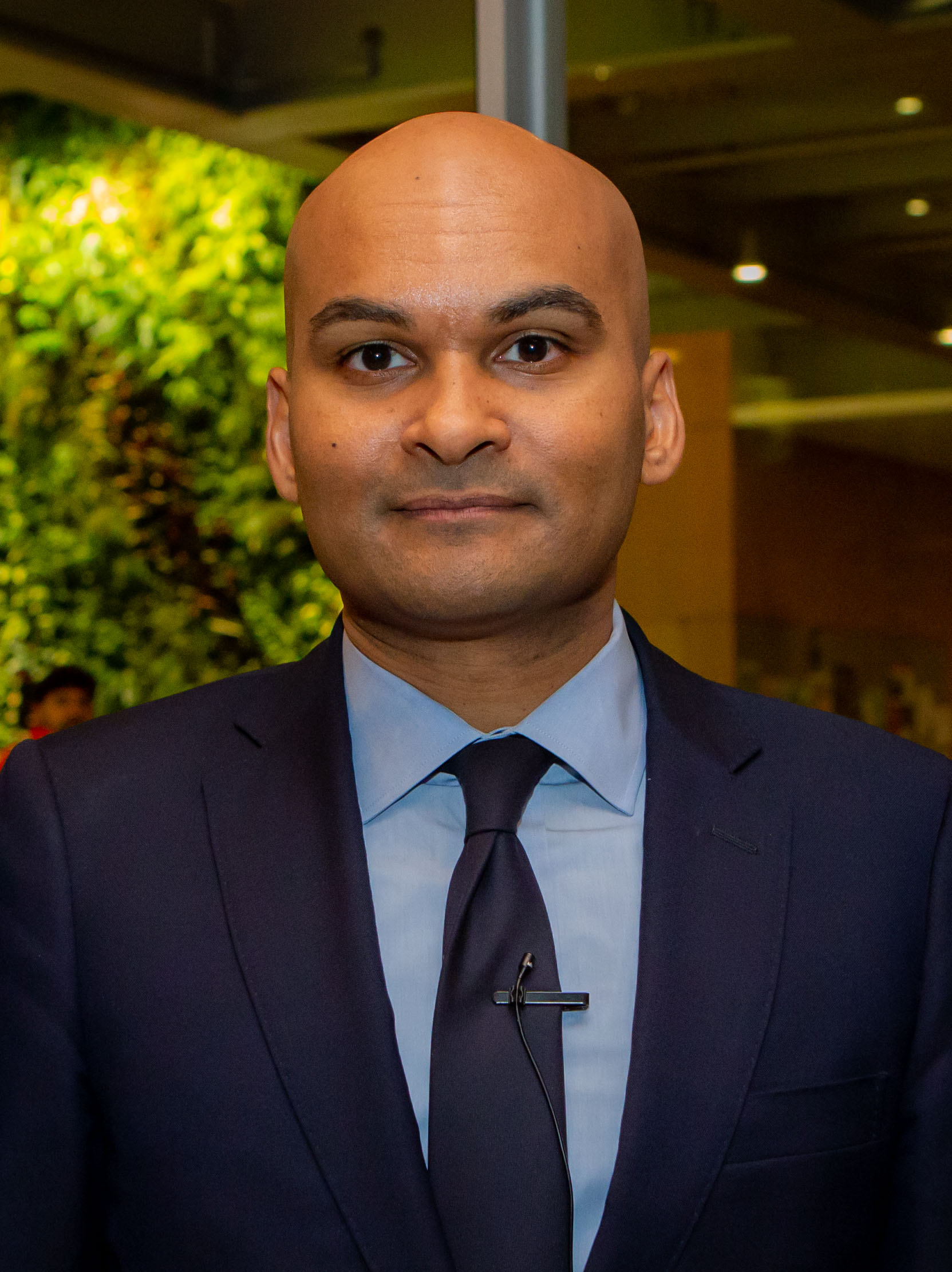
On any given week, Reihan Salam is doing the thing most people in his line of work quietly stopped doing years ago: reading the people he disagrees with on purpose. He runs the Manhattan Institute, the free-market think tank that helped put broken-windows policing and welfare reform into the national bloodstream, and he runs it as its fifth president - a job he stepped into in 2019 after walking away from a byline most writers would kill for.
The byline was at National Review, where he spent five years as executive editor. Before that he was the Atlantic guy, the Slate columnist, the National Affairs contributor - a writer whose specialty was taking the long, unfashionable view of policy and making it readable. Then he closed the laptop and picked up the institution. The Manhattan Institute is not a magazine. It is a machine for turning ideas into law, and Salam took the wheel of it in the middle of an American argument that keeps getting louder.
His pitch is unfashionable in both directions. He wants a right that wins in cities, not one that flees them. He wants a conservatism that speaks to working- and middle-class Americans "in all its multi-ethnic reality" - his phrase, and a loaded one coming from a Brooklyn kid whose Bangladeshi Muslim parents landed in New York in 1976. He is not interested in nostalgia. He is interested in coalition math.
"I write in the hope and expectation that people read people with whom they disagree to challenge their settled views."
- Reihan Salam
Borough Park to Harvard Yard
The origin story is dense with New York. He grew up in Borough Park, the kind of Brooklyn neighborhood where the subway is faster than a conversation about where you're from. He went to Stuyvesant - the exam high school that funnels the city's relentless into the Ivy League - then started at Cornell before transferring to Harvard, where he graduated in 2001 with a degree in social studies. At Harvard he joined the Signet Society and lived in Pforzheimer House. The credentials are immaculate. What's interesting is what he did with them.
He went to work. Reporter-researcher at The New Republic. Research associate at the Council on Foreign Relations. Editorial researcher for David Brooks at The New York Times - the apprenticeship of a young writer learning to think in columns. Then a left turn into television: producer for NBC Universal's The Chris Matthews Show, where the argument is the product and the clock is the enemy. It is an unusual resume for a think-tank president. Most of them came up through academia or politics. Salam came up through deadlines.
The Book That Saw It Coming
In 2008, with Ross Douthat, he published Grand New Party. The subtitle did the heavy lifting: How Republicans Can Win the Working Class and Save the American Dream. It argued that the Republican Party had a working-class problem and a working-class future, and that the two were the same problem. The book read as contrarian then. It reads as prophetic now. A decade later the entire American right would be arguing about exactly this, often without crediting the two young writers who diagrammed it first.
Ten years after that came Melting Pot or Civil War?, his solo book and his sharpest. The case it makes - skills-based immigration, faster assimilation, a hard look at what open borders do to the working poor who are already here - is the kind of argument that gets a writer attacked from every direction. Coming from a son of immigrants, it is also the kind of argument that is hard to wave away. He did not write it to win a popularity contest. He wrote it because he thinks the easy answers are wrong, and he would rather be useful than liked.
Running the Argument
At the Manhattan Institute he has kept his hand in the writing. He still contributes to The Atlantic, still edits at National Affairs and National Review, and he is a fixture at City Journal, the Institute's flagship, where in 2025 he has been picking fights with the "abundance" movement and dissecting Zohran Mamdani's mayoral victory as the culmination of New York's leftward turn. He shows up on the City Journal Podcast to argue about whether democratic socialism is becoming the Democratic Party's new base. He is, in other words, still doing the job he had at twenty-five - it's just that now he signs the checks.
The honors arrived along the way and he wears them lightly. The World Economic Forum named him a Young Global Leader in 2017. He was a Bernard L. Schwarz Fellow at New America in 2010 and a Pritzker Fellow at the University of Chicago in 2015. He's a life member of the Council on Foreign Relations and sits on advisory bodies from the Moynihan Center to the Public Interest Fellowship. None of it is the point. The point is the next argument.
What makes Salam unusual is not the credential stack - New York is full of those. It's the temperament. He is a conservative who reads the left closely enough to steal its best questions. He is an immigrant's son making the case for immigration restriction on his own terms. He is a writer who gave up the freedom of the page for the responsibility of the institution, and seems genuinely happy about the trade. In a media culture that rewards certainty, he keeps insisting that the whole point of writing is to be talked out of something. So far, he hasn't been - but he keeps reading, just in case.