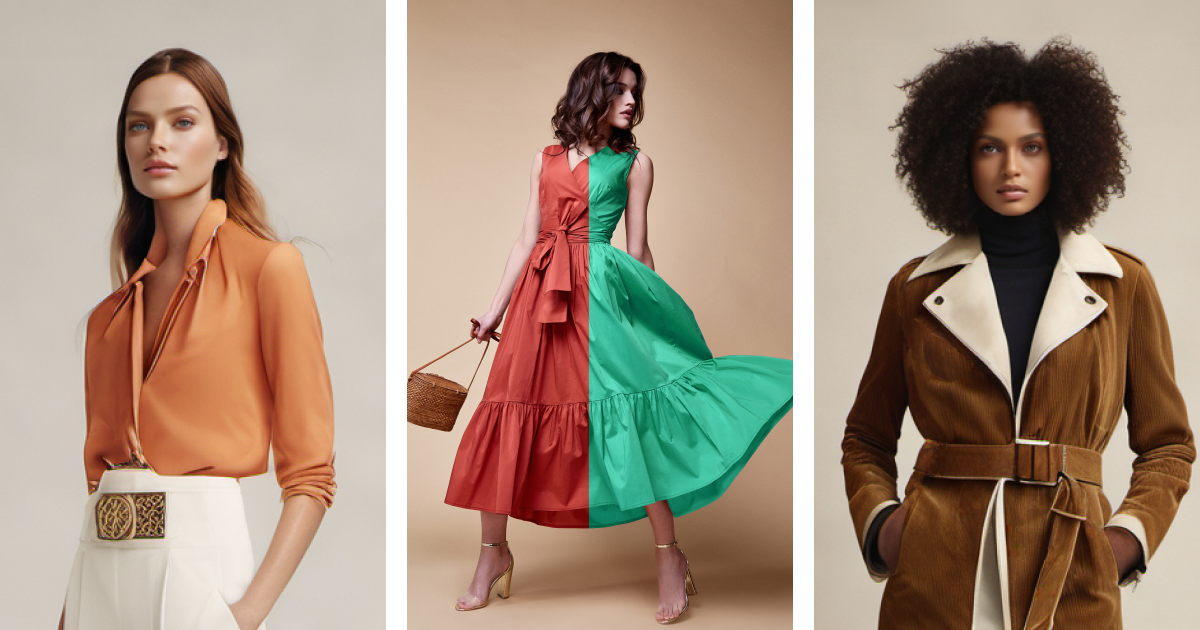
A designer types a sentence. A collection appears.
Somewhere in a New York studio, a designer describes a coat that does not exist yet - shearling collar, suede body, belt at the waist. Seconds later it is on a model, lit, photographed, ready for the lookbook. No sample. No sewing. No flight to a factory floor.
This is Raspberry AI on an ordinary Tuesday. The company builds generative AI for fashion creatives, and its pitch is almost rude in its simplicity: the part of fashion design that takes weeks should take minutes. Sketch to render to retail-ready asset, all inside one platform. The industry, which has spent a century perfecting the art of waiting for samples, is paying attention.
Fashion runs on a clock it can't keep
Fashion has a speed problem, and everyone in it knows the symptoms. A single idea travels from sketch to physical sample to fitting to revision to photoshoot before anyone outside the building sees it. Each loop costs weeks and real money in fabric, freight and labor. Designers juggle a sketchbook, a 3D tool, a review deck and a tech-pack generator that rarely talk to each other.
Consumers, meanwhile, have learned to expect new drops constantly. The gap between how fast trends move and how slowly a sample gets made has become the industry's quiet tax. You can have it fast, or you can have it right, and historically you could not have both.
From the deal desk to the design floor
Cheryl Liu did not come up through fashion's studios. She came up through its spreadsheets - a private equity analyst at KKR covering retail, with later stops at Amazon and DoorDash. That vantage point had a useful side effect: she understood the business of clothes as a supply-chain problem, not a romance.
When DALL-E and Stable Diffusion arrived in late 2022, most people saw a toy for making surreal art. Liu saw a missing tool for an industry she already knew was bleeding time. The bet was specific and slightly contrarian: general image models are clever but illiterate in fashion. They cannot tell a French seam from a fuzzy sweater, and they certainly cannot output a CAD file. A model trained to actually understand garments would be worth far more than one that merely makes pretty pictures.
The contrarian part mattered. In early 2024, plenty of investors assumed the foundation-model giants would simply absorb every vertical, fashion included. Liu's wager ran the other way: that the last mile - terminology, drape physics, print repeats, the unglamorous tech pack - was deep enough to be a business of its own. Recognition followed the conviction. She landed on the 100 Women in AI list, and the work read less like a wrapper on someone else's model and more like an attempt to build the category's native tool.
The Raspberry AI Run
One platform, the whole workflow
Raspberry AI is not a single trick. It is an end-to-end design platform that picks the designer up at the sketch and walks them all the way to the storefront. The clever bit is underneath: proprietary in-house models and fine-tuned ControlNets tuned so that, in the company's words, every output is retail-ready - not just plausible.
That distinction is the whole game. A pretty image is easy; a usable one is hard. Raspberry AI's outputs are built to survive contact with a real production line, which is why the platform bothers with the tedious parts other tools skip - color systems that match a brand's standards, technical drawings a factory can read, and brand-specific custom models so a luxury house and a sportswear label do not get the same generic look. Integrations with tools like Browzwear and Coloro stitch it into workflows designers already trust rather than asking them to abandon their stack.
Sketch to Render
Hand sketch or text prompt becomes a photorealistic garment that respects drape, print repeats and fabric behavior.
On-Body Try On
Drape a garment on a digital model from one clothing image and one model photo. No studio required.
Lifestyle & Product Photography
E-commerce shots and destination-style imagery for lookbooks, ads and social.
Technical Drawings & CAD
2D technical drawings, tech packs and CAD files that hand cleanly to manufacturing.
Video Studio
AI fashion video and motion content for campaigns and short-form channels.
Trend & Synthetic Testing
Gather trend research and test concepts on synthetic customers before committing to production.
The names on the door
Tools for creatives live or die by who actually uses them. Raspberry AI's answer is a customer list that skews serious. By early 2025 roughly 70 brands were on the platform, spanning sportswear, luxury and mass-market manufacturing.
The scale behind those names is the real story. Gruppo Teddy alone runs 8,840 stores across 39 countries; Li & Fung is one of the largest supply-chain orchestrators in apparel. These are not pilots run by a curious intern - a16z notes Li & Fung and Under Armour folded Raspberry AI into core designer workflows since launch.
The validation kept compounding through 2025 and into 2026. LVMH picked the company for its La Maison des Startups program, a useful signal given how protective luxury houses are about their image. CB Insights named it to the 2026 AI 100, and the CFDA paired with OpenAI to shortlist it for an innovation hub. None of these are revenue, exactly. But for a young company selling into a famously relationship-driven industry, the right rooms are their own form of traction.
From weeks to minutes
Smarter, faster, at scale - and that's the whole point
Strip away the demos and the mission is plain: let designers work smarter, faster and at scale. Raspberry AI is careful to frame the technology as leverage for human creatives rather than a replacement for them. The machine handles the slow, expensive middle of the process - the sampling, the re-rendering, the asset production - so the people can spend their hours on the part that needs taste.
There is a sustainability angle too, and it is not a fig leaf. Fewer physical samples means less fabric cut and shipped for ideas that never make the line. Better synthetic testing means fewer products manufactured into a market that did not want them. In an industry famous for waste, designing more of the failures away on a screen is its own quiet kind of progress.
Apparel today, the rest of the catalog next
The roadmap points outward. Clothing was the wedge, but the same logic - sketch, render, test, ship, faster - applies to home goods, furniture and cosmetics, all categories Liu has named as targets. The deeper claim is that any industry that designs physical products on slow, sample-bound cycles is a candidate for the same treatment.
Skeptics have fair questions. Domain-specific models are expensive to train and keep current; general-purpose tools keep improving and creeping toward the same turf; and fashion houses guard brand identity fiercely. Raspberry AI's bet is that fashion-native depth, retail-ready output and brand-specific custom models are a moat the generalists will not casually cross. The early enterprise logos suggest the bet is, so far, holding.
Back in that New York studio, the coat is finished before lunch. The designer never touched a bolt of fabric. The sample room is quieter than it used to be, and the calendar has weeks in it that used to belong to shipping and waiting. Raspberry AI did not make the designer more talented. It just gave the talent somewhere faster to go.
Find Raspberry AI
Watch it work: the YouTube channel hosts product demos including "Create AI Fashion Models and Poses in Raspberry AI" - youtu.be/zrueCfisa2U. For the funding backstory, see TechCrunch and a16z.