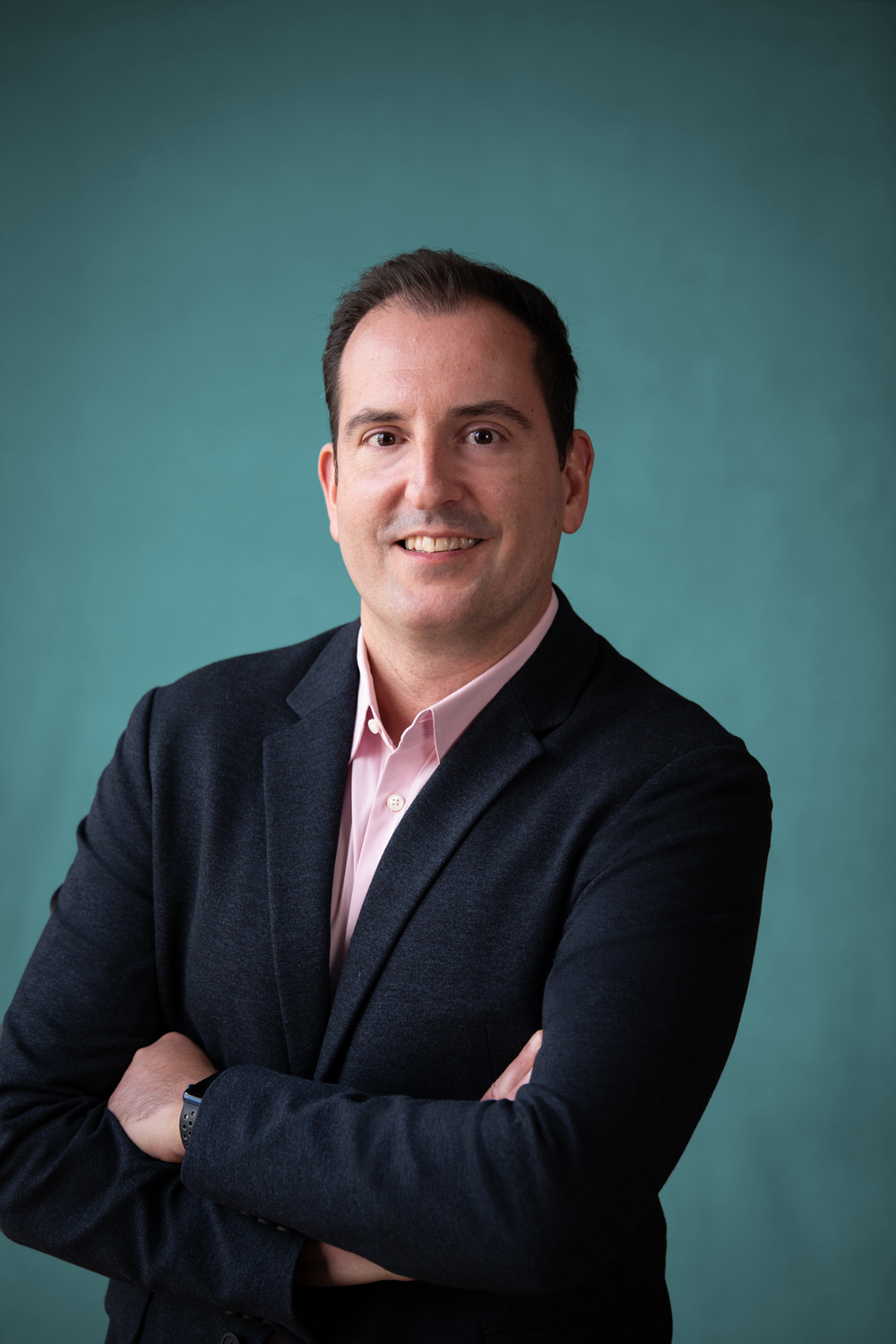
Today he is Chief Business Officer at GEMMA Biotherapeutics, known as GemmaBio, a Philadelphia company that launched on October 1, 2024 as a spinout tied to the gene-therapy work of pioneer Jim Wilson. Salsas runs business development and alliance management, and he also owns the legal and intellectual property functions. In a young company that is a lot of surface area for one person. He covers it because each of those jobs is really the same job: getting a scientific idea into a contract that lets it reach a patient.
The mission has a sharp edge to it. Gene therapy is expensive to develop and rare diseases, by definition, have small patient populations. The usual biotech math says skip them. GemmaBio exists to refuse that math - to widen global access to advanced therapies for people living with rare inherited diseases, including the ones traditional economics overlook. That puts Salsas in an unusual position: his job is to design deals that fund cures the market would otherwise call uninvestable.
Barcelona, Cambridge, Philadelphia - three cities, one resume
He started with chemistry. Bachelor's and master's degrees from Institut Quimic de Sarria in Barcelona, the kind of rigorous Catalan program that produces people comfortable with hard problems. From there to MIT for the PhD, where the science got computational. Then an MBA from IESE Business School, which is where the scientist became a strategist. Three degrees, three disciplines, and almost no overlap between them - except in him.
The early business career was at Esteve Pharmaceuticals, where he led R&D business strategy. In 2016 he joined the University of Pennsylvania's Gene Therapy Program in business development and climbed to Executive Director of Business Development. Penn's program is one of the most prolific engines in the field, and it became his training ground for dealmaking at scale. He later served as Senior Vice President of Business Development at G2 Bio before helping to found GemmaBio.
Rare diseases don't have big markets. So you don't bring a big-market playbook. You build a different deal.
What $4 billion in deals actually looks like
Across his career Salsas has led or co-led more than 20 transactions: strategic collaborations, technology out-licenses, spinouts, research partnerships, co-development agreements. The therapeutic map is wide - AAV gene therapies for rare diseases, central nervous system disorders, oncology, pain management, and the manufacturing platforms that make all of it possible. The cumulative deal value tops $4 billion in upfront payments and potential milestones. Along the way he has negotiated more than $600 million in committed research funding and secured over $230 million in capital.
Numbers like that can blur into noise. The point underneath them is that each one was a bet on a piece of science he understood well enough to price. He played a pivotal role in founding GemmaBio and other companies, and helped close the company's $34 million seed round in December 2024 - financing co-led by Double Point Ventures, Bioluminescence Ventures and Earlybird Venture Capital, with Savanne Life Sciences joining.
The Brazil move
One detail tells you how GemmaBio thinks differently. Among its early programs is a collaboration with Fiocruz, Brazil's main supplier of immunobiologics, biopharmaceuticals and diagnostics to the Ministry of Health. That is not a partner you find in a standard gene-therapy term sheet. It is the kind of relationship you build when access - not just approval - is the goal. For a CBO whose whole career is about matching the right partner to the right molecule, it is a signature move.
The lineage GemmaBio draws on is heavy: 3 FDA-approved AAV-based gene therapies, 95 patents, and first-in-patient studies across 17 diseases. Salsas's work is to turn that inheritance into the next wave of deals - and to make sure the therapies do not stop at the wealthy markets that can already afford them.
Why the double fluency matters
There is a quiet advantage in being the person at the table who can challenge a scientific claim and a legal clause in the same breath. It compresses negotiations. It catches problems early. It builds trust with the researchers whose work is being licensed, because they can tell he actually read the paper. In a field where the science is genuinely hard and the contracts are genuinely long, a chemist with an MBA and an MIT doctorate is not a generalist. He is a specialist in the seam between two worlds that rarely speak the same language.