BREAKING  An ER doctor in 37 seconds - no ambulance ride TELE911  7,500 medics · 150+ health plans MD AT 24  Sold first company at 29 "Ambulances became very expensive Uber drivers" HURRICANE MILTON  Virtual ER doctors for Florida AI NOTES  Documentation time cut 93% BREAKING  An ER doctor in 37 seconds - no ambulance ride TELE911  7,500 medics · 150+ health plans MD AT 24  Sold first company at 29 "Ambulances became very expensive Uber drivers" HURRICANE MILTON  Virtual ER doctors for Florida AI NOTES  Documentation time cut 93%
Profile · Virtual Emergency Medicine

Ramon
Lizardo

He decided the fastest route to emergency care was no route at all - and built the largest virtual ER in America to prove it.

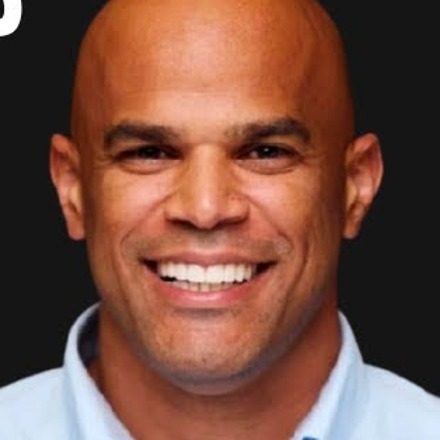
Ramon Lizardo, founder of Tele911
Dr. Lizardo, mid-grin. The bedside manner survived the screen.
37s
Call to ER doctor
7,500
Medics on the network
150+
Health plans served
24
Age he earned his MD
By the desk · Filed under Founders, Health, Emergency Care

The premise

A doctor on the iPad, before the gurney comes out

A paramedic kneels on a kitchen floor next to someone who just dialed 911. Instead of loading them into an ambulance, the medic flips up an iPad. Inside about half a minute, a board-certified emergency physician is on the screen, asking questions, reading vitals, deciding whether this is a hospital problem or a living-room one. That is Tele911, and Ramon Lizardo built the machine behind it.

Most ER patients, Lizardo learned on the hospital floor, do not need the ER. They need a doctor, a decision, and a way to stay home. The American instinct is to send a vehicle, then a bill. He flipped it: send a screen first. The doctor decides who actually rides. The result is hospital diversion at scale - fewer unnecessary transports, lower costs, and patients treated where they already are. He likes to call this kind of work the art of the impossible, and he hires people who treat that phrase as a job description rather than a slogan.

Tele911 calls itself the nation's largest virtual emergency medicine practice. The claim rests on real plumbing: roughly 7,500 medics in the field, members drawn from more than 150 health plans, and coverage stitched across California, Texas, Florida and beyond. What began as an idea in 2015 turned into a national lifeline during COVID, when keeping people out of crowded hospitals stopped being a cost argument and became a survival one. By Lizardo's own accounting the practice has touched something on the order of eight million patients - a number that sounds like marketing until you remember each one was a person who picked up a phone in a bad moment.

The mechanics matter because the whole thing collapses if the connection is slow. A frightened person on a kitchen floor will not wait two minutes for a stranger to appear. So the design target was brutal and specific: a board-certified emergency physician on screen in under a minute, often closer to 37 seconds. Get there, and the medic can do something most emergency systems never offer - treatment in place, against-medical-advice counseling done properly, or a calm redirect to urgent care instead of a midnight ER. Miss it, and the old default wins by inertia.
The math of staying home

Growth that looks like a hockey stick, on purpose

In a single year Lizardo reported tripling patient volume and quintupling billing, while shaving close to a million dollars off operating costs. The lever was simple to state and hard to build: connect the right patient to the right doctor fast enough that the ambulance becomes optional.

Volume growth (one year)
3x
Billing growth (one year)
5x
Documentation time saved with AI notes
93%
Time from 911 call to physician
~37s

Before the screen

Three companies, one stubborn question

A child of immigrants, Lizardo earned his MD at 24 and sold his first company at 29. The credentials read like two different people stapled together: undergraduate biology at Rutgers, a mini-MBA from Rutgers Business School, a Doctor of Medicine from Universidad Iberoamericana, and study in quantitative methodology at Harvard. The medicine taught him what goes wrong with a body. The quantitative work taught him how to prove it at scale. Between the white coat and the cap table he spent about fifteen years in technology, with consulting stints at McKinsey and Deloitte and clinical-strategy work that taught him how health plans actually think. The thread running through all of it: why does the system default to the most expensive answer?

Before Tele911 he advised early telehealth ventures - Doctu, working on modernizing platforms across Latin America, and TigoHealth - then ran clinical enterprise strategy at Clarify Health Solutions, where the job was reading the numbers payers live and die by. None of it was the company. All of it was the rehearsal. When he finally took the CEO chair at Tele911 in late 2022, he already knew the clinical reality, the payer math, and the engineering of scale. Few founders arrive holding all three.

The clinician

ER floor, New Jersey

Board-certified in emergency medicine, he practiced at Robert Wood Johnson University Hospital at Rahway. The frustration that became a company started here: too many patients arriving who never needed the building.

The strategist

McKinsey, Deloitte, Clarify

Consulting and a turn as VP of Clinical Enterprise Strategy at Clarify Health Solutions gave him the language of payers and the discipline of metrics - clear numbers, transparent process.

The builder

Tele911

Named CEO in November 2022, he scaled the practice into a category of its own, then stepped back to the board at the end of 2024 - handing off a running machine rather than a pitch deck.

In his words

The doctrine of misfits

We are a team of misfits, but we produce amazing results.
Ambulances have become very expensive Uber drivers.
Write your ideas down.

He recruits from outside healthcare on purpose, prizing repeatability and adaptability over a familiar resume. The org chart stays flat, the access stays direct, and the standards stay numeric. He frames the company as a family unit first and a machine second - empathy as an operating system, not a poster. The advice he gives would-be founders is almost suspiciously plain: write your ideas down, and build the thing that does not exist instead of copying the thing that does. Coming from a man who turned a hospital-floor annoyance into a national practice, the plainness reads less like a platitude and more like a confession of method.

Building the thing that did not exist

He did not join a specialty. He helped write one.

Virtual emergency medicine was not a field with textbooks when Lizardo started. So part of the work was inventing the scaffolding: fellowship protocols to train physicians for the screen, published data in medical journals to set standards rather than guess at them, and legislation that ended up bearing the company's name. It is one thing to build a product. It is another to convince a regulated, risk-averse profession that a new way of practicing is safe, repeatable, and worth a billing code.

That is also why Tele911 became, in his framing, the largest patient lead generator for putting people in the right level of care - not just diverting them from the ER, but routing them toward whatever they actually needed. The screen is the front door. The decision behind it is the product.

2024 · Partnership

VSee Health joins the stack

Tele911 partnered with VSee Health to harden the telehealth platform underneath the practice. By 2025, VSee's AI doctor-notes feature was credited with cutting documentation time by 93% - the unglamorous paperwork that quietly burns out clinicians.

2024 · Field test

When Milton hit Florida

As Hurricane Milton closed roads and strained hospitals, Tele911 connected Florida residents with ER doctors by video. A model built for everyday diversion proved itself in exactly the moment ambulances could not move.

The route

From idea to lifeline

2015
The ideaThe concept that becomes Tele911 takes shape - emergency care delivered to where the patient already is.
2020-21
Advisor yearsBoard advisory work at Doctu (telehealth in Latin America) and TigoHealth; clinical-strategy leadership at Clarify Health Solutions.
2022
CEOTakes the helm at Tele911 in November and pushes for scale.
2024
Partnership & stormTele911 partners with VSee Health and connects Florida residents with ER doctors during Hurricane Milton. Steps down as CEO at year end, staying on the board.
2025
AI on the chartAI doctor notes reported to cut documentation time by 93%, freeing clinicians to do the part only humans do.

Off the clock

Things that do not fit on a business card

Where it points

Democratize the dial tone

The goal is unglamorous and enormous: when anyone, anywhere, dials 911, a high-quality emergency doctor answers - and decides who actually needs the hospital. Treat people where they are. Send the vehicle only when the vehicle matters. Make the most expensive answer the last resort instead of the first.

Lizardo handed off the CEO title at the end of 2024 and stayed on the board, which is its own kind of statement. The interesting builders are rarely the ones who cling to the chair. He built a system that runs without him narrating it, in a field he helped name, for a problem most people never knew was a problem until the bill arrived. The screen is on. The doctor is already answering.