The job was worth ten dollars. Rahul Bansal built a WordPress plugin that would automatically tweet a new blog post, delivered it, and watched the payment disappear into the freelance platform’s fees. His profit was zero. The client, however, left a five-star review and came back with a larger assignment. An accountant could have closed the file. Bansal had acquired something he could use.
He was starting without a track record. A stranger’s willingness to hire him, followed by a public acknowledgment that the work had been done, made the next conversation easier. He also had an unusual way of choosing assignments: he looked for things he wanted to learn, then found someone willing to pay him to learn them. Fixed prices kept his education from becoming the customer’s extra bill.
Years later, the founder and CEO of rtCamp would be discussing enterprise publishing systems and a distributed team of 230 people. That was the team size he reported in March 2025. The first assignment still explains something about him. Useful work, made visible, could open a door that an empty profile could not.
A blog with a maintenance problem
Bansal had wanted to write before he wanted to run an agency. As a schoolboy, he helped a teacher reopen a library and gained access to its books. He read Marathi literature, kept a diary, and eventually found an online place to publish. His friend Anil Wadghule introduced him to blogging and many of the tools that became part of his working life.
Devil’s Workshop began in 2006. The next year, Bansal moved his blog to self-hosted WordPress. Customizing a publication brought him into contact with its machinery. When a migration hurt his traffic, he had a reason to investigate the code. Learning PHP became a practical response to a problem he wanted fixed.
The distance between writing a post and writing a plugin was shorter than it looked. Both gave him a way to make something and put it in front of people. His early WordPress work helped other bloggers move platforms. Those people had requirements, questions and friends with similar problems. A readership was becoming a customer base.
Six people, then a payroll
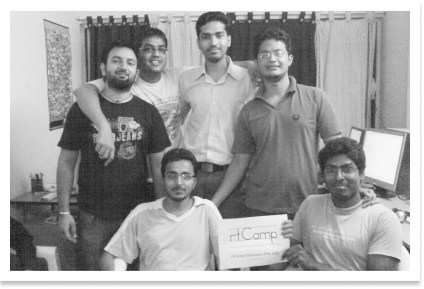
rtCamp dates its founding to March 12, 2009. Its public account begins with a network of blogs and a growing stream of requests for customization and migrations. The business eventually concentrated on WordPress development for other organizations. Publishing had supplied both the technical problems and the people who needed help with them.
The name carried a view of working life. The “rt” stood for round table; “Camp” drew on the participatory gatherings familiar to the technology community. Bansal wanted a company where people could have a say. A name could express that preference immediately. Making it work would become a continuing management task.
Running a business also changed the meaning of a project fee. A freelancer could calculate whether an assignment covered his own expenses. A company had salaries, rent and other obligations. Work that was interesting still needed to support the people doing it. The pleasure of solving a technical problem now arrived with a payroll attached.
The price of being affordable
Enterprise work required Bansal to reconsider what customers were buying. One encounter stayed with him: a prospective client treated a substantially higher price as perfectly reasonable. His assumptions about the upper limit of a WordPress project had been formed by the smaller jobs already on his desk.
He later recalled a 33-minute consulting call with Chris Lema that helped clarify rtCamp’s positioning. By 2014, the company was explicitly presenting itself as an enterprise WordPress agency. The change gave a name to a direction the business had begun to discover through its customers.
In Bansal’s description, enterprise requirements extend well beyond a busy website. Security reviews, integrations and the consequences of publishing the wrong information alter the work. A modest-looking site can have serious institutional responsibilities. The engineering bill has to account for those responsibilities, including the things a visitor will never notice.
For a founder who enjoyed making software, this was an education in how organizations purchase it. A working feature could be the beginning of the conversation. The customer also needed confidence in the process behind it.
The server bill supplied a plot twist
Some of that confidence had been built through unglamorous experiments with infrastructure. In a 2013 post, Bansal looked back on rtCamp’s switch to Nginx in 2009. The team had experienced frequent crashes on an Apache hosting plan costing $100 a month. After the move, he reported handling two to three times more traffic on a $40 plan.
Those were observations about that particular setup, rather than a universal promise about hosting. They also made a good reason to share what the team had learned. A lower bill and a site that stayed up were explanations people could understand without attending a strategy workshop.
His WordPress-Nginx tutorial series covered installation, configuration, debugging, optimization and troubleshooting. He warned that the software was moving quickly and that advice could age. There is something appealing about a technical writer admitting that tomorrow may rearrange today’s instructions. It leaves room for the reader to think.
The articles turned operational experience into a public resource. Someone arriving with a broken configuration could encounter rtCamp through a possible solution. Bansal’s fondness for systems administration had found a way to introduce the company while doing a useful day’s work.
The applicant who came for Microsoft Word
There was another problem that better server configuration could not solve. Early in rtCamp’s life, an applicant arrived for a WordPress position having confused the software with Microsoft Word. The names were close enough to get someone into the interview. The skills were another matter.
Bansal’s account of the episode leads into the company’s decision to recruit for computer science fundamentals and teach WordPress. Degrees and certificates were not prerequisites. Trainees were not required to sign an employment bond. They could learn and leave.
That freedom became uncomfortable when other employers began offering more. Bansal has described losing roughly 25 engineers between 2014 and 2016. Campus recruitment and training helped rtCamp keep operating while it pursued enterprise customers and the margins to improve pay. Teaching was part of the company’s response to a difficult labor market.
The program also became something other businesses could inspect. rtCamp’s WordPress course was public from 2015, and later received a CC0 license. A company trying to produce enough engineers for itself was making its teaching material available to others. The round table had acquired some extra chairs.
A badge, and a restaurant menu
In July 2016, rtCamp became a WordPress VIP agency partner, the first based in Asia. Bansal has described the recognition as a business turning point after years of having to persuade buyers to trust engineering delivered from India. The partnership provided an outside assessment that a sales conversation alone could struggle to supply.
As the agency moved into enterprise work, its customers included publishers such as Al Jazeera, Penske Media and Indian Express. Those names make the transition visible. The more revealing detail is how Bansal talks about the comfort the business eventually brought him.
A self-described foodie, he had wanted to eat in a restaurant without looking at the price before ordering. He said the VIP-era business had allowed that wish to come true. There are more elaborate ways to describe financial independence. Few are as easy to picture as opening a menu and ordering dinner.
His other public interests include movies, and his conference biography has named systems administration as his favorite working role. Even as the job expanded into sales and management, the person behind it remained recognizable: someone who enjoyed food, software and knowing how the server worked.
“I measure success in terms of impact our work is making!”
Rahul Bansal
A company with room to carry on
Bansal’s WordPress identity extends into translation, plugins and community events. His public contributor profile records Hindi and Marathi translation work alongside developer, speaker and organizer badges. He helped organize WordCamp Pune and later joined the WordCamp Asia organizing effort. The WordCamp Asia 2026 program in Mumbai listed him among its speakers.
That continuing presence matters to a career built through encounters with other people’s work. His own website points readers toward projects including rtMedia and EasyEngine. The public record contains things to use, talks to watch and material to learn from. A title tells readers where he works; those artifacts show how he has spent his time.
At WordCamp US in 2026, another colleague’s idea offered a small example of how that work could spread. David Levine wanted to bring people together around practical questions about AI. Bansal encouraged him to approach the organizers. The resulting Core AI Prompt Bar gathered volunteers and conversations around a subject generating plenty of uncertainty. Encouragement, in this instance, meant helping someone else get an experiment underway.
He has also stated an ambition with a longer horizon than the next contract: rtCamp should become self-sustaining, able to grow and contribute to open source without him directing it. The public handbook and emphasis on participation fit that aspiration. They give people ways to understand the organization beyond a conversation with its founder.
The ten-dollar assignment had ended with evidence that Bansal could deliver. Building a company added a harder question: could useful work continue through other people? His investment in teaching, public tools and shared knowledge keeps returning to that question. A founder’s influence can be measured in how much depends on him. Bansal has described wanting more of the work to carry on.
Follow the work
Personal website · Blog · rtCamp
LinkedIn · X · Instagram · Facebook · GitHub · WordPress
Watch: the WPBeginner conversation ↗
Watch: WordPress.tv talks ↗
Listen: enterprise WordPress with WP Tavern ↗
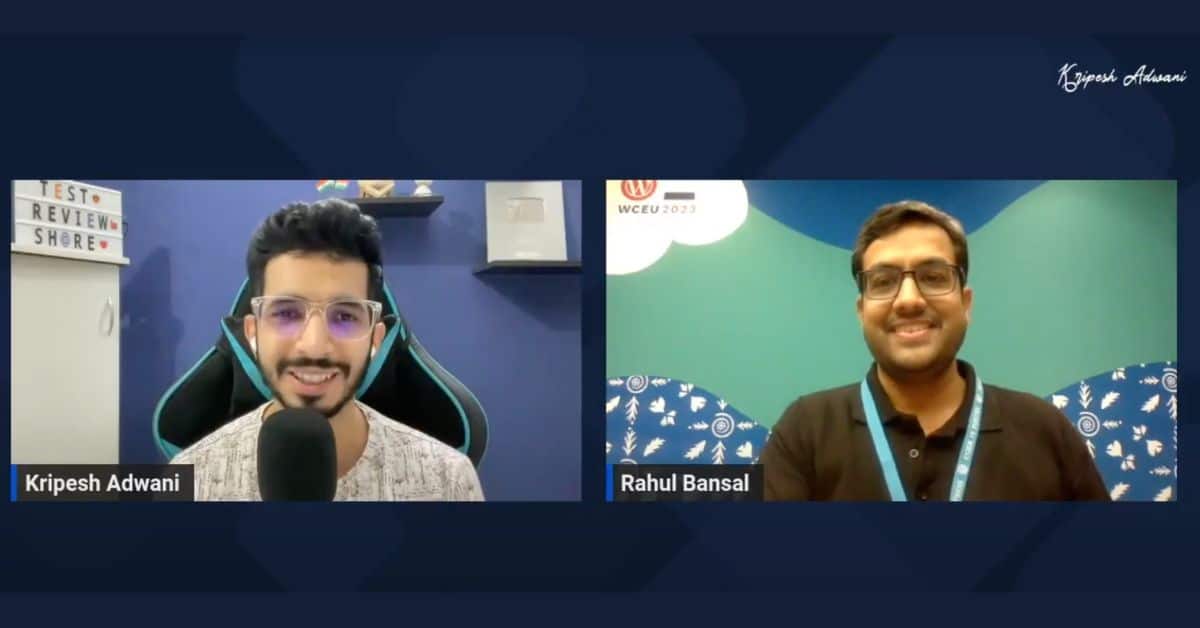
Read: the conversation with Kripesh Adwani ↗
Read: Bansal’s own account of his beginnings ↗