The database has a day job
The fashionable question is what artificial intelligence can do for a business. The awkward question is whether the database can leave its present home without taking the business down with it. A financial ledger does not become less urgent because the board has discovered AI. Payroll still expects to be paid. Orders still expect to arrive.
That tension gives Pythian’s forthcoming London session its point. Its events hub lists Oracle to Cloud: Building an AI-Ready Operational Foundation for Thursday, 19 November 2026, from 13:00–18:30 GMT at The Helicon, 1 South Place, London EC2M 2RB. Specialists from Oracle, Pythian and Google Cloud are announced alongside industry peers. The published pitch joins a safe move to the cloud with preparation of business data for AI, while daily work continues.
It is a useful order of operations. Before an organisation asks its data to perform new tricks, it needs to know which old duties must survive the move. The afternoon’s value will depend on how precisely those duties are discussed. A glamorous destination is poor compensation for a missed delivery.
London
Three promises, three difficult questions
The listing’s practical agenda has three parts: reduce the burden of old systems, avoid setup delays and cut high maintenance fees. Each speaks to a different sort of exhaustion. The first concerns what teams must keep alive. The second concerns how long a change takes to become usable. The third concerns the bill for standing still.
On the now-accessible detail page, Pythian describes legacy Oracle databases supporting finance, supply chains and HR, with extended support costs and repeated patching among the pressures. Its proposed discussion includes version debt and custom code dependencies. For a prospective attendee, the first useful question is therefore specific: which applications depend on which database versions, and what would break if those versions changed?
Setup delays deserve the same treatment. Google Cloud’s documentation says networking must be configured before relevant database resources can be created. Moving a workload is more than selecting a product. Teams should bring questions about access, connectivity, approvals and who owns each decision. A delay that has a named dependency is easier to discuss than a delay described as “the cloud”.
Maintenance fees, meanwhile, invite arithmetic. Ask for a comparison that includes the existing support bill, migration work, cloud consumption and continuing operations. A smaller line item is welcome; an unexplained total is less charming. The event listing offers a direction of travel, not a quantified saving for every Oracle estate.
Which systems and dependencies can be retired?
Who owns networking, access and approvals?
What changes in the total cost of operation?
Keep the business open during the move
Business continuity is the hinge between the migration discussion and the AI ambition. In practical terms, an organisation needs a way to change where its systems run while preserving the work those systems support. The detail page includes cutover planning and ongoing database operations among its breakout subjects, with dependency mapping and a non-production pilot in its execution outline.
Those are reasons to arrive with operational questions. Which workload could make a sensible first pilot? What evidence would count as success? Who authorises the switch, and what happens if that evidence is disappointing? These are suggested questions for attendees, rather than a claim that the organisers have published a complete migration procedure.
A pilot should make a decision better informed. It should give the people responsible for live service something more substantial than confidence. Ask how performance will be compared, how recovery will be checked and which application owners must participate. The database team cannot judge the whole business impact alone.
There is also a distinction between reducing disruption and guaranteeing its absence. Pythian frames the session around continuity; an individual organisation still needs to establish its own acceptable cutover window. The most useful conversation may concern the hour a business can tolerate, rather than the future it hopes to buy.
“A pilot should make a decision better informed.”From this feature
AI readiness earns its name
Preparing operational data for AI means asking what future applications will be allowed to use, and under what conditions. A database may be available yet contain inconsistent records. It may be accurate yet inaccessible to the people building an application. It may be accessible yet include information that should never appear in an answer.
These are practical considerations for a business evaluating readiness, not additional promises attributed to the London programme. Choose a prospective use case and work backwards. What information would it require? How current must that information be? Who can approve its use? How would a team recognise a wrong answer before it reached a customer or colleague?
The partnership has a concrete technical backdrop. Google Cloud documents Oracle Database@Google Cloud as bringing Oracle services on OCI Exadata hardware into Google Cloud data centres. Its overview also describes access management and monitoring capabilities. That helps explain why database location, cloud operation and future AI work can belong in one conversation.
It does not establish that attending an afternoon session will produce a working AI application. The announced subject is an operational foundation. Treat the meeting as a chance to test the assumptions beneath a future project. Readiness is valuable precisely because it asks whether the next step deserves to happen.
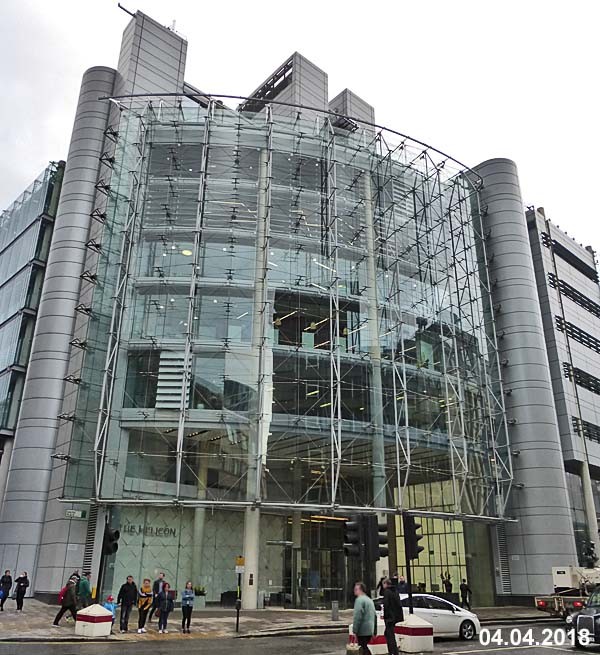
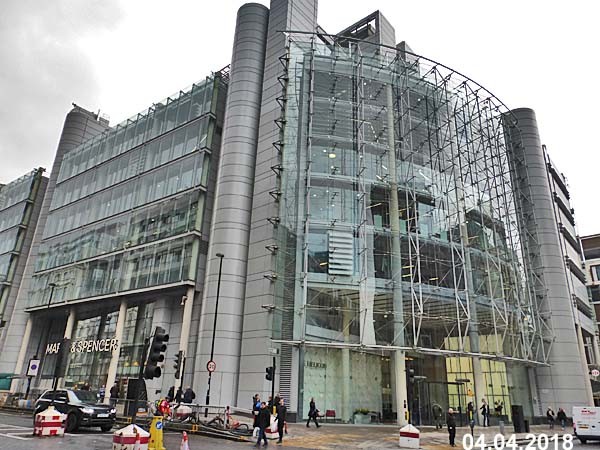
A London room for an existing Oracle estate
For London businesses evaluating systems they already own, access to the three organisations makes the meeting locally relevant. Oracle can be asked about its database technologies; Google Cloud about the cloud environment; Pythian about the work of assessment and migration. Their answers can be examined together, with the business’s actual constraints on the table.
The detail page advertises discussions with database specialists and a sponsored follow-up scoping session. These are organiser-described offers, rather than evidence of a result. Bring a concise picture of the estate: critical applications, versions, recurring costs and the change the business needs. A short, accurate brief will travel further than a long shopping list.
There is one practical update to the supplied research. The linked detail page was reported to return 404 during earlier research. On our 15 October recheck, a direct request returned HTTP 200 and an event page containing registration-form configuration. No registration was submitted. Use Pythian’s current events hub as the source for logistics, and recheck the linked registration page before publication or booking.
The afternoon lasts five and a half hours. Its best possible dividend is a better decision about the systems already doing the work: what to retire, what to move, what to test and what to ask next. Even the most ambitious AI plan benefits from a database that can finish today’s business.
Read the sources: Pythian events hub · Event details & registration · Google Cloud documentation