A reservation for the hard questions
A working AI demo can be a charming guest. It answers promptly, performs its little miracles and rarely brings up the bill. The bill, however, has a talent for arriving. In New York on October 27, Pythian and Google Cloud plan to give it a place at the table.
The partners have scheduled a private executive dinner at Hawksmoor NYC from 6:00–8:30 p.m. ET on Tuesday, October 27, 2026. The announced subject is AI return on investment: how to examine a portfolio of experiments, stop funding the weak ones and direct money toward work with measurable commercial value. It is a timely premise for any executive whose demonstration looked splendid while the business case remained a rough draft.
The invitation arrives wearing a Halloween-season flourish, “Trick or Trend.” Beneath that theatrical wrapping sits an ordinary management problem with expensive consequences. A company can afford to be curious. It cannot afford to mistake every curiosity for an asset. The interesting part of this dinner is the proposed examination of what deserves to survive the next budget conversation.
Source: Pythian event announcement
The portfolio faces its audition
A portfolio audit changes the unit of attention. Instead of asking whether one ingenious application can be made to work, it asks how competing projects earn their share of finite money and staff time. That forces a comparison across initiatives that may have been conceived by different teams, under different assumptions, with very different definitions of success.
Consider a hypothetical business with two experiments: one that drafts internal summaries and another that helps resolve expensive customer errors. The first might produce more visible activity. The second might address a smaller number of cases with greater financial consequences. Neither earns its budget by description alone. Each needs a baseline, a credible measure of improvement and an account of the resources required to achieve it.
That is the practical logic behind cutting low-value work. A cancellation can free the same engineers who are needed to make a stronger project usable. Continuing everything avoids an awkward conversation today and guarantees another tomorrow. The audit proposed for the dinner makes that choice explicit; no completed audit or resulting allocation has yet been reported.
Three decisions. One finite budget.
Define the value each experiment is meant to deliver.
Identify work that cannot justify further resources.
Put money and talent behind measurable commercial impact.
Source: Pythian event announcement
The invoice has more than one line
Infrastructure, licensing and integration costs are on the advertised agenda. They belong there because a prototype and an operating service lead different financial lives. A demonstration can survive on occasional use and careful supervision. A service has to endure ordinary working hours, uneven demand and people who have neither the time nor the inclination to admire its cleverness.
For an executive evaluating such a service, the useful question is what the entire workflow costs. Computing charges are one line. Access to software is another. Connecting the tool to existing systems adds work before launch and may require attention afterwards. Those expenses can change the economics even when the underlying model does exactly what its designers intended.
Here is an illustrative calculation, not an event finding: if a tool saves an employee several minutes but requires someone else to check and correct every answer, the gross saving and the net saving may be very different. Approval rules, exception handling and support all deserve a place in the estimate. The elegance of a demonstration cannot settle that arithmetic. A beautiful prototype can still be a dreadful investment.
A beautiful prototype can still be a dreadful investment.
From this feature
Source: Pythian event announcement
What the finance desk needs to see
CFO benchmarks give the discussion a sharper edge. A proposed gain should be attached to something a finance team can recognize: a cost that falls, a margin that improves or revenue that can credibly be attributed to a changed process. Those are different claims, and each calls for different evidence.
Time saved, for example, needs a destination. Does it reduce overtime? Allow a team to handle more work with the same staffing? Shorten a delay that was losing customers? These are analytical questions suggested by the agenda, rather than published results from either partner. They help distinguish a pleasing productivity statistic from an economic consequence.
A sensible measurement plan also specifies the period being examined and who owns the number. Without those details, a pilot can claim victory at the moment that flatters it most. With them, a business can compare expected benefits with actual performance, including the unglamorous expenses. The finance conversation begins before deployment, while choices are still cheap enough to change.
Source: Pythian event announcement
Agents get a seat, too
Pythian Field CTO Ernest Solomon is among the hosts listed on the event page. Agents and Google Workspace are announced discussion topics. Their inclusion makes everyday work a useful place to look for the claimed benefits: where a task begins, which systems it touches and who must accept the result.
An agent that takes an action creates a different evaluation problem from a tool that suggests an answer. An executive considering either would want to know how permissions, human approvals and error recovery affect the cost of getting useful work done. For Workspace-related proposals, the test would similarly be whether a change fits the actual habits and responsibilities of the people expected to use it.
These are questions for the forthcoming discussion. The announcement supplies an agenda, not evidence that a particular agent deployment has earned a return. Nor does a host listing establish who will attend. The value of the format will depend on the specificity of the conversation that eventually takes place.

Source: Pythian event announcement
An old New York room, a new expense
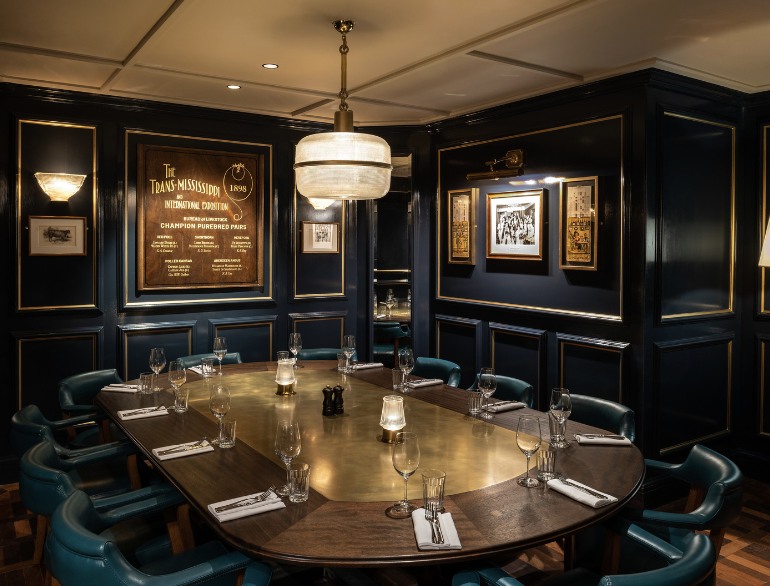
The setting is Hawksmoor in Gramercy’s historic United Charities Building. Its private-room atmosphere suits a subject that benefits from fewer speeches and more questions. The event page features Lord Bronx, with dark paneling, historical artwork and a single reclaimed-wood table. An image of that room is a venue preview, not a photograph of this future gathering.
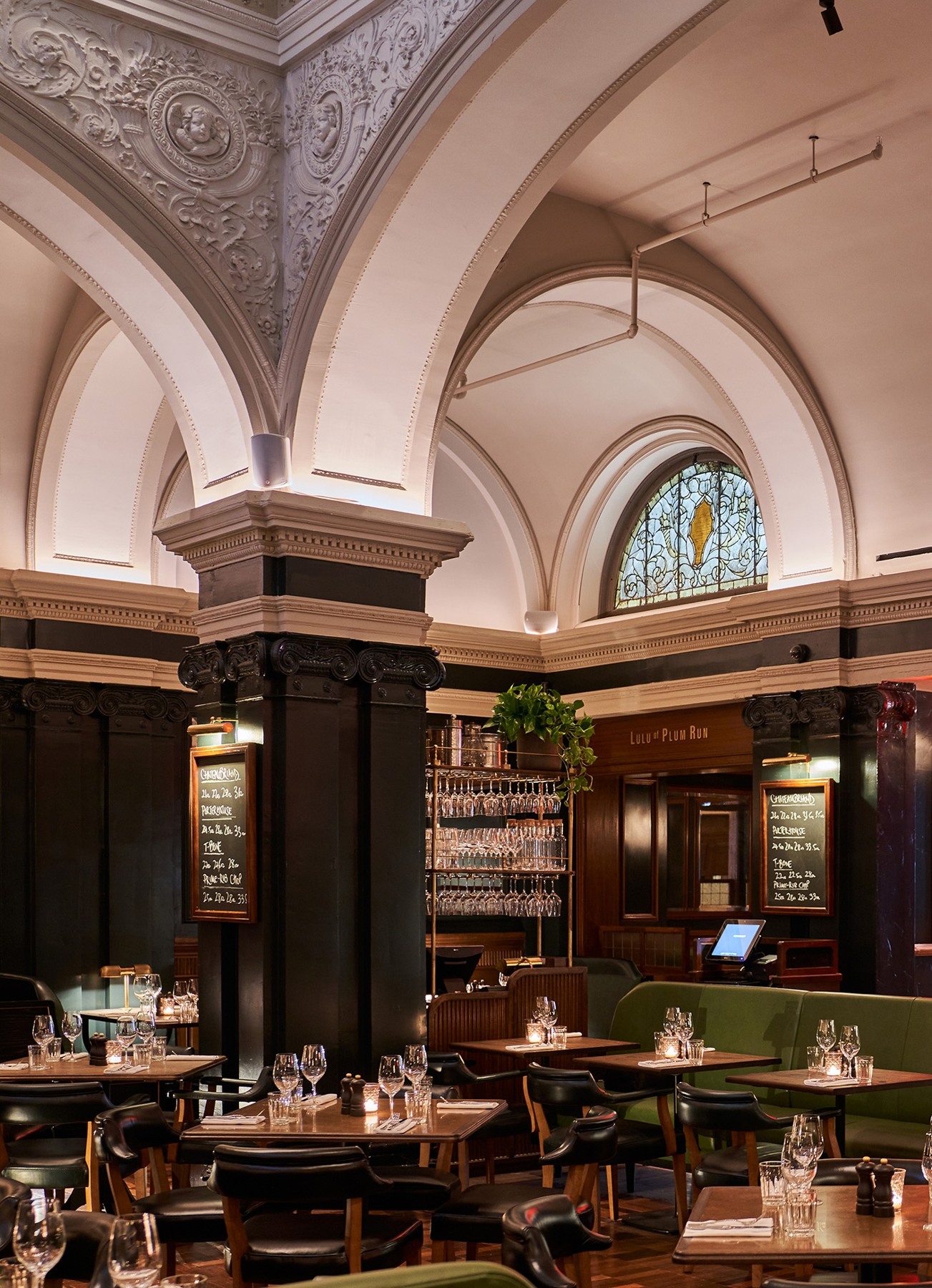
The restaurant’s designers, Macaulay Sinclair, describe restoring the building’s grand interior, including Ionic pilasters and coffered vaults. The architecture provides a handsome backdrop to an argument about modern business spending. There is a certain pleasure in bringing a technology that promises to hurry everything along into a room that rewards sitting still.
For local executives, the practical details are straightforward. Hawksmoor’s address is 109 East 22nd Street, New York, NY 10010. Pythian’s event page carries the registration route for the private executive dinner. Interested readers can use that page to register; the announcement does not establish a confirmed guest list.
October 27 offers a date for the debate. The answer will have to arrive in company accounts, after a project has been used long enough to show what it earns and what it consumes. Until then, the most useful thing on this New York menu may be a question asked without ceremony: what would persuade us to fund this again?
Source: Pythian event announcement · Hawksmoor venue details · Macaulay Sinclair restoration account
The dinner at a glance
- When
- Tuesday, October 27, 2026
6:00–8:30 p.m. ET - Where
- Hawksmoor NYC
109 East 22nd Street
New York, NY 10010 - Format
- Private executive dinner
Pythian × Google Cloud
Registration route provided by Pythian.
Before you go
When is the Pythian and Google Cloud AI ROI dinner?
It is scheduled for Tuesday, October 27, 2026, from 6:00–8:30 p.m. ET.
Where is the dinner being held?
Hawksmoor NYC, 109 East 22nd Street, New York, NY 10010, in Gramercy’s historic United Charities Building.
What will the discussion cover?
The announced agenda includes portfolio audits, low-value experiments, measurable commercial impact, operating and integration costs, CFO benchmarks, agents and Workspace.
Who is a listed host?
Ernest Solomon, Pythian’s Field Chief Technology Officer, is among the hosts listed on the event page.
How can executives register, and are results available?
Use the registration route on Pythian’s event page. It is advertised as a private executive dinner; a confirmed attendee list and dinner outcomes have not been reported.