At Aylo Health, the appointment was only the beginning of the appointment. Someone had to connect the patient, the provider, the available slot and the reminder. The primary-care business already had scheduling software, an electronic medical records system and Salesforce. Yet useful information still had to cross the gaps between them. Each gap invited another manual entry, another delay, another opportunity to get something wrong.
That is a revealing place to meet Provisions Group. The Tennessee firm sells consulting and staffing, but its customer stories keep returning to a particular nuisance: organizations buy capable tools, then discover that making those tools cooperate is a separate job.
- Consultants who connect software, workflows and the people running them.
- Healthcare is the focus; CRM, cloud, security and recruiting fill out the bench.
- PG360 offers specialist access through a monthly retainer.
- The lesson to borrow: inspect the handoff before replacing the tool.
The expensive space between systems
Aylo’s scheduling rules were complicated. Different patients needed different appointments, with different providers and resources. Provisions Group combined parts of the existing medical-record scheduling system with an application built inside Salesforce. It added an audit log, customized Marketing Cloud communications and connected chat support. Patients could schedule, cancel and reschedule; staff could work from the same platform.
The company’s case study reports more than $180,000 saved on existing costs after unnecessary scheduling features were removed. That figure describes savings, rather than the implementation bill, and carries no stated annual period. The distinction matters. The interesting achievement was making fewer paid features do more useful work.
“Provisions Group stepped in to help us move this project forward.”
Joe Falcomata / Aylo Health, published customer account
The bottleneck was the connection between systems. That diagnosis suggests a practical first move for buyers: trace one appointment from request to confirmation. Count the places somebody has to intervene. A software inventory will tell you what you own. Following the appointment tells you what it costs to operate.
A recruiter follows the work
Mark Freeman founded Provisions Group in 2003 as an IT search firm. Recruiting gives a company an unusually intimate view of its customers’ unfinished business. A request for another developer or administrator can reveal a larger problem with architecture, priorities or processes. Over time, Provisions Group expanded into consulting and implementation.
Acquisitions supplied more specialist capacity. Insight Powered, acquired in 2022, brought Salesforce expertise. The Hammrtech deal closed in July 2024, adding capabilities in AI, cybersecurity, cloud and software, plus a Knoxville presence. These were purchases of businesses that could do more of the work clients were requesting.
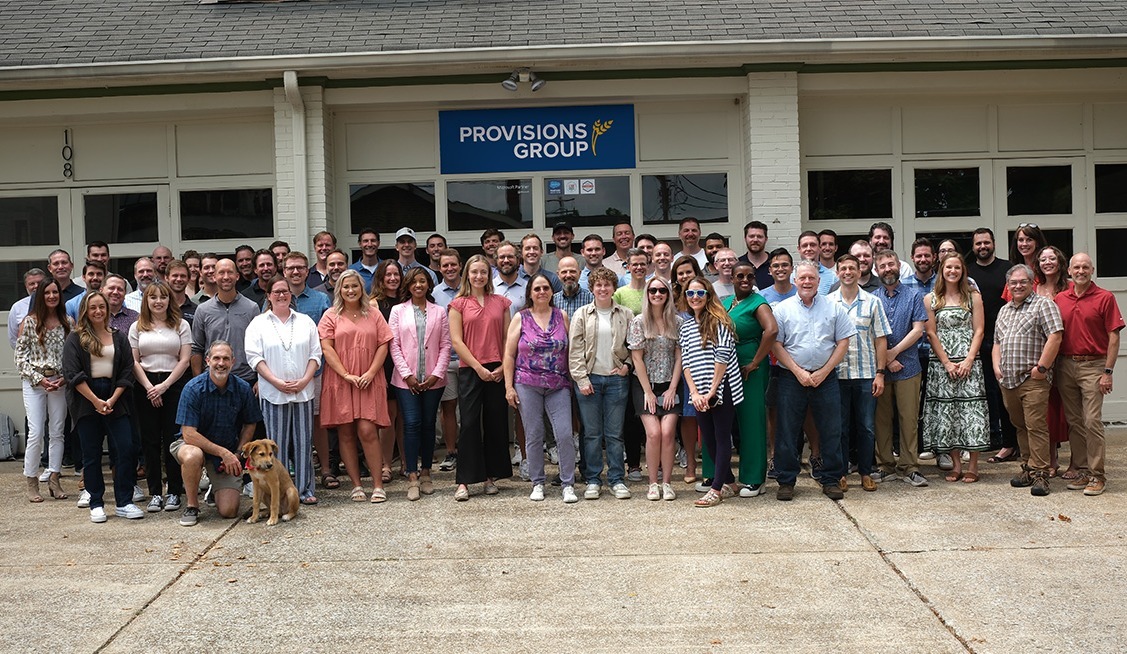
Today the service range includes EHR workflows, CRM, application development, analytics, cloud, security, marketing and talent placement. The firm works nationally. Its market position sits between a narrow platform specialist and a collection of separate vendors: several kinds of expertise available through one relationship.
When the whiteboard gets crowded
Consider a mobile wound-care provider in another company-published account. Clinicians traveled to skilled nursing facilities while the coordination relied on whiteboards, spreadsheets and group texts. Referrals were scattered across email and Google Docs. Growing demand exposed the weakness of arrangements that had depended on people remembering where everything lived.
Provisions Group implemented Salesforce Sales Cloud and Field Service, connected the Intellicure medical-record system, introduced dispatch tools and built operational dashboards. The reported results include a 75 percent reduction in scheduling time and more than a 50 percent reduction in referral-to-visit time. These are the provider’s reported outcomes, presented by its consultant.
The transferable idea is modest: give referrals, appointments and clinical records an agreed route. A dispatch board becomes useful when the underlying information is consistent. Adding a dashboard to contradictory records simply makes the contradictions easier to admire.
The retainer behind the bench
PG360 packages access to this range of specialists into a monthly retainer. Clients choose an engagement level, agree on a roadmap and receive weekly progress reports from a delivery manager. The offering spans 55 disciplines, with resources allocated as priorities change. Alongside it, the business sells staffing, project delivery and managed support.
Its November 2025 introduction described an evolution from ConciergeIT+. Customers were asking for more than extra hands: vendor sprawl, unpredictable budgets and difficulty scaling had become recurring concerns. PG360 was the firm’s response. The economic appeal is access to expertise a growing organization may need intermittently.
A buyer should still define the hours, responsibilities and outcomes in the agreement. Monthly budgeting does not settle the scope of a migration. And a team needing one straightforward configuration change may have little use for such a broad relationship.
Sometimes the first fix is a conversation
PrintsWell provides a useful counterweight to all the technical language. The stationery fulfillment company had an underused CRM and an unclear marketing direction. Provisions Group began with customer interviews and positioning before redesigning the website, consolidating domains and moving the business from Freshsales to HubSpot.
The reported automation benefit was three to five staff hours saved weekly. The sequence is worth copying: understand the customer, clarify the offer, then arrange the technology around it. Successful integration also requires access to systems, someone empowered to make decisions and employees willing to adopt the workflow.
Why the logo grows wheat
Freeman explains the company’s wheat emblem through patience, provision and a passage from Galatians. That founding idea has become a community-service initiative called Planting Seeds and a peer-voted Wheat Award at quarterly meetings. In July 2026, the firm announced its fourth Nashville Business Journal Best Places to Work recognition.
There is something fitting about a technology company choosing a crop as its symbol. Its most instructive work is patient, connective work: finding the redundant step, agreeing on the rule, getting the right person involved. For the buyer, the question becomes pleasantly concrete. Where does useful information stop moving?
Follow the work
Explore Provisions Group, PG360 and the customer stories. Find company updates on its news feed, LinkedIn, X and Facebook.