Breaking
SWIPECAST founder Peter Fitzpatrick books fashion's future in one app From JPMorgan trading desks to Vogue casting calls One developer. Three months. $400K quote beaten Clients include Tommy Hilfiger, Estee Lauder, Ralph Lauren "We feel like we're almost the future of the industry"
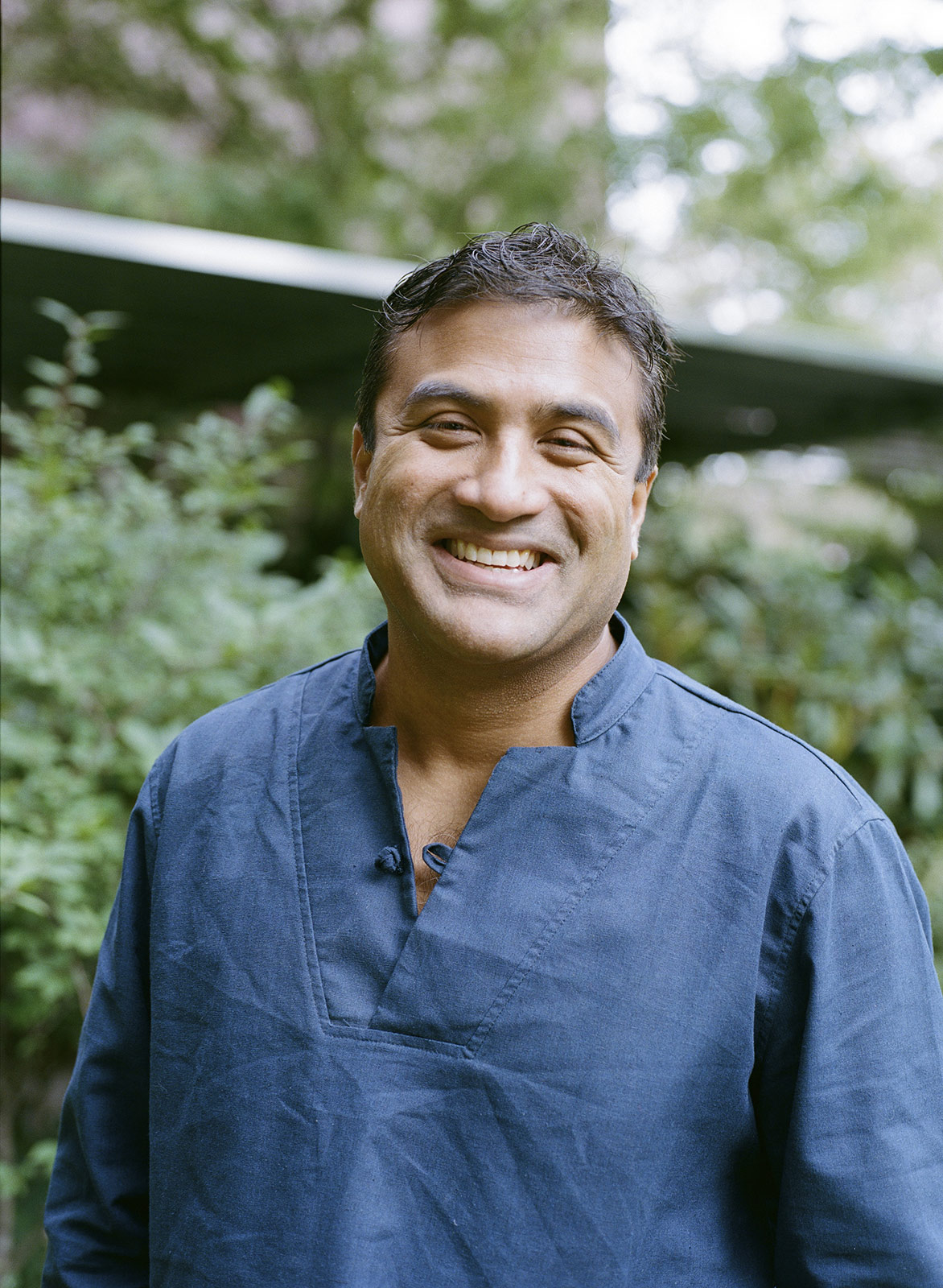
Peter Fitzpatrick, founder and CEO of Swipecast
The smile of a man who beat a $400,000 software quote with a single phone call.
Founder / CEO · Swipecast · New York

Peter
Fitzpatrick

He left a $22 billion hedge fund to fix the most analog corner of fashion: who gets booked, and when they finally get paid.

2015Swipecast founded
~$4MTotal raised
Top-10Agency he built first

A decade analyzing telecom deals on Wall Street does not, on paper, qualify you to run casting for Vogue. Peter Fitzpatrick decided the paper was wrong.

The Operator Today

A marketplace where fashion books itself

Open Swipecast and you are looking at the address book that fashion always wished it had. A beauty editor planning a shoot can reach a photographer, a stylist, a makeup artist, a retoucher and a roster of models without a single phone call to a single agency booker. Peter Fitzpatrick built that. He is the founder and chief executive, and the platform he runs has quietly become the connective tissue between the people who make images and the brands that pay for them.

The idea is almost rude in its simplicity. When you produce a photo shoot, you are not hiring a model - you are hiring a team. Caterers. Photo studios. Manicurists. Parts models. The retoucher who works through the night. Swipecast treats all of them as bookable, payable, reviewable talent on one screen. The client browses, books, and the money moves. No fax machines, no opaque agency markups, no waiting until spring to be paid for a job done in January.

Fitzpatrick is not a fashion native who learned to code, nor an engineer who wandered onto a runway. He is the rarer thing: someone who has sat on all three sides of the table - the money, the talent, and the technology - and built the bridge between them.

360°

Not just models

What launched as a booking app for models grew into a full creative-services marketplace - photographers, stylists, makeup artists, video directors, retouchers and studios, all in one place.

NYC

Headquartered downtown

Swipecast is run out of New York, the city where the magazines, the agencies and the money all sit within a few subway stops of each other.

People that want to be respectful and people that really care about what they're doing are going to gravitate to this platform.
- Peter Fitzpatrick, on the kind of company Swipecast keeps

The $75,000 bet

Before any investor, Fitzpatrick seeded Swipecast with roughly $75,000 of his own money. Then he asked a single engineer, Matthias Wickenburg, a deceptively casual question: could you build this?

Other shops had quoted him $300,000 to $400,000 and a team of eight to ten developers. Wickenburg said he could do it in three months. He did.

Who's On The Platform

The names that have passed through Swipecast read like a newsstand and a runway combined.

Tommy HilfigerRalph LaurenEstee Lauder Tom FordVictoria's SecretVogue V MagazineW MagazineNick KnightCharlotte Wales
How It Started

A problem he could see from the inside

Fitzpatrick had already run a modeling agency - Silent Models NY, which he built into a top-10 ranked women's agency - so he was not guessing at the industry's pain. He was living it. He watched models finish a job on the first of January and not see payment until April or May. He watched a business run on relationships and goodwill carry an enormous amount of friction underneath.

"There were some pinpoints that were pretty obvious to me," he has said, "and that the industry had never been able to solve." Slow payments. No transparency. No real discovery layer beyond who you happened to know. The agency model had been frozen in place for decades because no one with the right mix of nerve and technical reach had bothered to thaw it.

So in 2015 he teamed up with Wickenburg and launched the iOS app as a marketplace for models, designers, photographers and stylists. The plan, at first, was modest: help models run their own careers a little more simply. The industry had other plans for him.

From The Notebook

Four things that don't fit in a pitch deck

Cambridge firstBefore the trading floor or the casting call, he earned an M.Phil in Political Theory at the University of Cambridge. Fashion's quiet disruptor started in philosophy seminars.
Wall Street decadeRoughly ten years in finance - JPMorgan Chase covering telecom, media and tech, then the $22 billion hedge fund BlueMountain Capital. He knows exactly what a cash-flow gap costs.
The surpriseHe expected fashion to resist new technology. Instead the industry stampeded in. The skeptic was happily wrong.
First exclusiveSwipecast's first exclusively represented model, Demi Hannah Scott, went on to work with Nick Knight and Rihanna.
The Arc

Finance to fashion to software

Three careers that look unrelated until you notice the thread: each one is about matching the right people to the right opportunity, and removing whatever stands in the way.

1998-1999

Earns an M.Phil in Political Theory at the University of Cambridge.

2000s

Roughly a decade in finance: JPMorgan Chase (telecom, media, technology) and the $22B hedge fund BlueMountain Capital.

PRE-2015

Founds and runs Silent Models NY, building it into a top-10 ranked women's modeling agency.

2015

Co-founds Swipecast with engineer Matthias Wickenburg; launches the iOS app for models, designers, photographers and stylists.

2017

Raises a $2.5M round backed by former Hearst, Louis Vuitton and EMI executives; expands into a full creative platform.

2018

Profiled by Document Journal and The Impression as Swipecast scales to serve major brands and magazines.

By The Numbers

The economics he set out to break

The fashion-booking machine ran on delay and markup. Fitzpatrick's pitch was blunt: cheaper, faster, more transparent. "Today, it's a lot more economical to use Swipecast," he says, "it's a lot more convenient, it's a lot faster." The bars below sketch the gap he was attacking and the build he pulled off.

His read on where the whole business is heading is just as plain: "It's going to get faster, like every other industry. We're going to keep seeing more content on lower budgets." Swipecast is his bet on that future arriving sooner than the agencies think.

Self-funded seed money$75K
Build quote he refused$400K
2017 financing round$2.5M
Total raised~$4M
Months to first build3
The Long Game

Why fashion, and why now

It is worth pausing on how unlikely this all is. The man building fashion's booking infrastructure spent his twenties reading political theory at Cambridge and his thirties modeling cash flows for institutions that move billions before lunch. Those are not the standard credentials of someone who knows which retoucher a beauty editor needs at 2 a.m.

But Fitzpatrick had a second education, the kind you only get by running a payroll. Silent Models taught him the texture of the business: how a booking actually happens, where the trust lives, and where the money gets stuck. When he describes Swipecast's purpose, it is never abstract. "When my co-founder Matthias Wickenburg and I first launched," he says, "we were trying to help models run their careers in a simpler way." The grander platform came later, almost by demand, as everyone around the models - the photographers, the stylists, the studios - asked to be let in too.

His investor backing tells the same story of credibility crossing industries. The 2017 round drew former executives from Hearst, Louis Vuitton and EMI - publishing, luxury and music, the three worlds whose talent Swipecast was learning to route. These were not generic venture checks. They were people who understood, from the inside, exactly how broken the old system was.

And then there is the part of Fitzpatrick that is easy to miss in a founder profile: a real concern with conduct. He talks about respect and care not as marketing but as a filter, a way of deciding who belongs on the platform. In an industry that has had its share of reckonings around how talent is treated, building a system that rewards the people who behave well is not a small thing to say out loud. "We feel like we're almost the future of the industry," he says - and he means the culture, not only the software.

His ambition does not stop at the edges of fashion. He has spoken about the same model - on-demand, transparent, fast - extending into entertainment, sports and music. The logic holds. Every creative field has the same bottleneck: too many talented people, too little visibility, and a payment system designed in another century. Swipecast is the proof of concept. The rest of the creative economy is the addressable market.

What makes Fitzpatrick worth watching is not that he had a clever app idea. It is that he refused the expensive, conventional way to build it, seeded it himself, and trusted one engineer over a committee of ten. That instinct - find the smallest competent team, give them a real problem, get out of the way - is the same instinct that turned a model's career tool into a marketplace the whole industry now leans on. He bet that the future would be faster and fairer. So far, the bookings are proving him right.
In His Own Words

The founder, unedited

"There were some pinpoints that were pretty obvious to me and that the industry had never been able to solve."

"We feel like we're almost the future of the industry."

"Today, it's a lot more economical to use Swipecast, it's a lot more convenient, it's a lot faster."

"People that want to be respectful and people that really care about what they're doing are going to gravitate to this platform."

"When my co-founder Matthias Wickenburg and I first launched, we were trying to help models run their careers in a simpler way."

"It's going to get faster, like every other industry. We're going to keep seeing more content on lower budgets."

Built from public sources: The Impression, Document Journal, Fashionista, Crunchbase, LinkedIn and PRWeb.
Quotes drawn from published interviews. Figures are as reported.