The Story
A founder who fell in love with the most boring screen in software
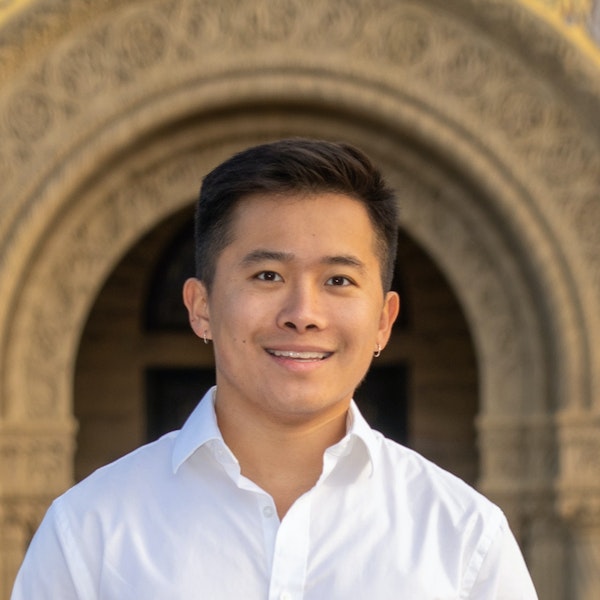
Peter Dun runs Feathery, a San Francisco company that turns the dullest moment in any digital product - the form - into the place where deals get won. Feathery builds form and workflow software for finance, insurance, and healthcare, the industries where a single dropped field can cost a customer, a claim, or a compliance headache. Today the product does more than collect answers. It reads PDFs, listens to phone calls, and pulls clean structured data out of the mess.
Start with the strangest fact about him. Most founders chase the glamorous thing. Dun went the other way and bet a whole company on the rectangle nobody wants to fill out. The instinct came from experience, not theory. He had watched, up close, how much money lives and dies inside a sign-up flow.
Before Feathery there was Robinhood. Dun joined the growth team and inherited the onboarding funnel - the long legal gauntlet where a new user hands over personal, financial, and identifying details before an account gets approved. By law, you have to ask. The art is asking without scaring people off. "A 1% difference in the number of people making it through is millions of dollars for us," he has said. So he ran the experiments. Fifty-plus of them. Different copy, different question order, different personalization. The conversion rate doubled.
Building, launching, and improving these hand-coded forms is incredibly tedious.
Winning was satisfying. The process was misery. Every tweak meant hand-coding, every hand-code meant an engineer pulled off real work, and even small changes could take weeks to ship. Product managers were frustrated by the velocity and their lack of control. Engineers resented being turned into form mechanics. Dun went looking for an off-the-shelf tool and found a gap. Typeform and Google Forms were built for marketers and small businesses - easy, but allergic to the custom validation, branching logic, and multi-field steps that a company like Robinhood actually needs.
So in 2021, in the middle of the pandemic, he left the rocketship. Walking away from Robinhood at the peak of its fame to build a form builder is the kind of decision that only makes sense if you've felt the pain in your hands. Dun had.
Inside Robinhood
In the eye of the storm, and equally in the dark
Dun's Robinhood years were not a quiet apprenticeship. He was there through the SIPC insurance controversy and the 2021 GameStop trading halt, the moment the whole financial world turned to stare at one app. He described being "in the eye of the storm" but also "equally in the dark" about the big decisions being made above him. It is a useful thing for a founder to learn early: scale is exhilarating and chaotic, and being close to the center is not the same as being in control.
There is a quieter feat buried in his resume too. Dun completed all four years of Stanford computer science while simultaneously working at Robinhood. He grew up in Indiana, went west for school, and never really slowed down - Google as a software engineer, Citadel Securities after that, then Robinhood. Three of the most intense names in tech and finance, stacked up before most people finish figuring out their first job. He later added a master's in computer systems from Stanford. The handle he uses everywhere, bodun, is why some people just call him Bo.
People need that human touch in a lot of their interactions, even though it could theoretically be digitized.
The Product
From a better form to a machine that reads the world
Feathery started as a low-code form builder for product teams - the thing Dun wished he'd had at Robinhood. Drag, drop, add real logic, ship in an afternoon instead of a sprint. But the more forms his customers built, the more Dun noticed what was flowing through them: mountains of unstructured data nobody was using twice. "There's all this unstructured data that people are already collecting through Feathery," he said. "How can we help them leverage this data even more?"
That question pushed the company into document intelligence and voice AI. Now Feathery can take a financial statement, an insurance policy, or a custodial account form - often a "crappy, blurry image of a PDF" someone uploaded sideways - and extract the data cleanly. The unglamorous reality of that work is the part Dun talks about most honestly. "You start with the preprocessing," he explained. "You have to rotate it, crop it, fix the resolution." Only then do the smarter models get a fair shot. Feathery stitches together OCR, document recognition, and large language models, tuned for finance and insurance paperwork, to reach 95 to 99 percent accuracy.
The voice side is the showy one. Picture an insurance broker on a call, traditionally typing client details by hand while half-listening. Feathery's voice AI transcribes the conversation, extracts the structured fields, and validates them in real time. The bottleneck disappears. The error rate drops. The human gets to stay human.
And that is the thread running through all of it. Dun is a builder who refuses to pretend AI is magic. "People want to know - are there mistakes?" he asks, because in regulated industries the answer matters. His north star is 99 percent - human-level accuracy - the point at which a bank or insurer could finally retire the manual review entirely. Until then, he keeps the human in the loop and says so out loud. That honesty, in a market drowning in hype, is its own kind of edge.
The Market
Why he chose the hardest customers on purpose
Plenty of form startups chase the easy money - marketers, event RSVPs, the occasional survey. Dun pointed Feathery at the opposite end: wealth management, underwriting, custodial account opening, claims, client onboarding for registered investment advisors. These are the workflows where the forms are long, the rules are unforgiving, and the data has to be right the first time. They are also the workflows where a clunky intake process quietly bleeds revenue and trust. It is harder territory, and that is exactly the point. The pain Dun lived at Robinhood - KYC, identity, financial disclosure, all under legal obligation - is the same pain a wealth manager or an insurer feels every single day.
To serve them, Feathery had to earn the boring badges that matter in regulated industries: SOC 2 certification and HIPAA compliance, secure data handling, the white-label editor that lets a bank put its own brand on the experience. None of it makes a flashy demo. All of it is the price of admission. Dun seems to understand that the unglamorous parts - compliance, validation, preprocessing a sideways scan - are not obstacles to the product. They are the product.
The Philosophy
A growth engineer's brain, pointed at intake
You can read Feathery as the logical conclusion of how Dun thinks. At Robinhood he learned that intake is not a formality but a funnel, and that a fraction of a percent compounds into millions. He learned that the bottleneck is rarely the idea and almost always the velocity - how fast a team can change the thing in front of the customer. And he learned, watching brokers and analysts retype information by hand, that humans waste staggering amounts of time being slow optical character readers. Feathery is the attempt to give all of that time back.
The voice and document work flows directly from that worldview. If the data is already moving through a form, why make a person transcribe it twice? If a customer is already on the phone, why not let the conversation fill the fields? Dun is careful not to oversell it. He keeps returning to the idea that people still want a human on the other end, that automation has a ceiling set not by technology but by trust. The goal is not to remove the person. The goal is to remove the drudgery so the person can do the part only a person can.
For now, Dun keeps the company in San Francisco, keeps shipping, and keeps inching the accuracy numbers upward. The roadmap he describes is unromantic and clear: sharpen the product experience, deepen the workflow tools, push document and voice intelligence toward that 99 percent line. It is the same incremental, test-and-learn temperament that doubled a conversion rate years ago, now aimed at a bigger target. Somewhere there is a product manager who no longer has to wait three weeks to change a form field, and that, quietly, is the whole idea.
Profile compiled from public sources: Feathery's founder story, the Deepgram AIMinds podcast, The Org, Index Ventures, Product Hunt, Crunchbase, and Peter Dun's own LinkedIn and X. Quotes are drawn from those interviews and posts.