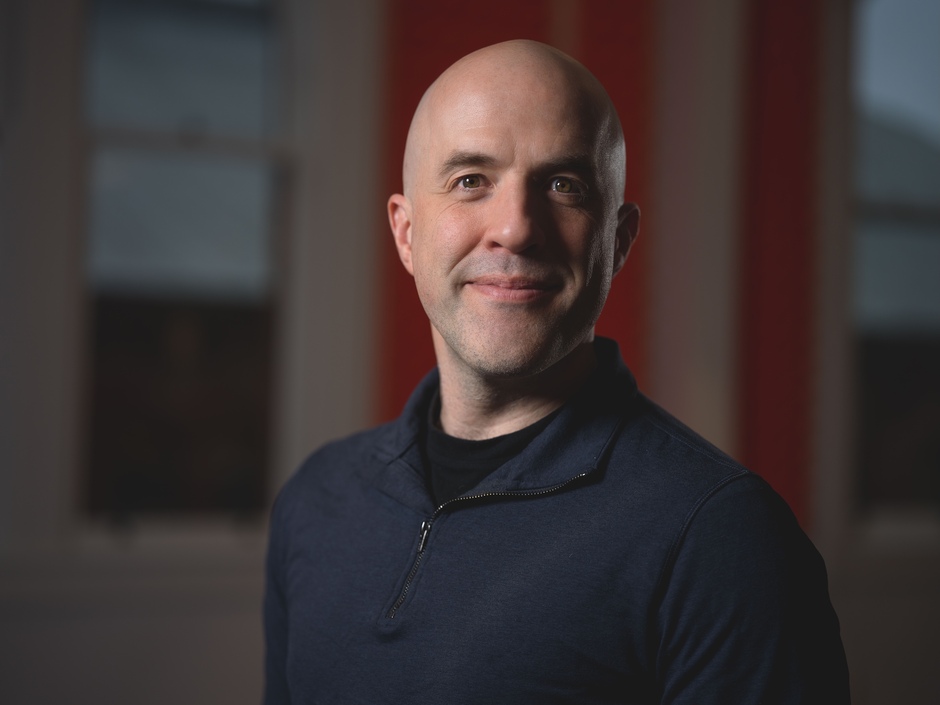
YC Group Partner - Founder - Author

Pete
Koomen

The Man Who Measured Everything - And Built a $100M Company Proving It Works

He pivoted in week two of Y Combinator. Kept going anyway. Built Optimizely to $100M+ ARR, sold it, then crossed to the other side of the table at YC.

YC Partner Optimizely W10 A/B Testing Rock Climber
Pete Koomen
$100M+ Optimizely ARR
8K+ Enterprise Customers
300K+ Experiments in the Book
$1.3B YC Portfolio Advised
Current Role Visiting Group Partner, Y Combinator
Location San Francisco, California
Founded Optimizely (YC W10), CarrotSticks

The Guy Who Pivoted in Week Two - And Won

There are founders who have one company in them. Pete Koomen is not that kind of founder. Before Optimizely changed how the internet makes decisions, there was CarrotSticks - a math learning game for kids that Pete built with Dan Siroker in 2009. It did not work. Less than a year later, the pair were sitting in a Y Combinator office with a pitch for a social discount platform for merchants. That didn't work either.

Week two of YC. New idea. They'd pivot to A/B testing - tools to help companies run the kind of experiments that Dan had seen work firsthand on the 2008 Obama campaign, where simple website tests had meaningfully moved fundraising numbers. The whole history of Optimizely rests on that decision made in a Y Combinator office before the batch was two weeks old.

"The two most important skills in a founder are 1. resilience and 2. the ability to attract people that are better than you are."

- Pete Koomen

What Pete brought to Optimizely was the engineering and product instinct of someone who had spent three years at Google launching Google App Engine - a product that reached 150,000 developers. He understood scale. He understood what it meant to build infrastructure that other people build on top of. That sensibility shaped Optimizely's product: not a one-off testing tool but a platform where entire organizations could embed scientific thinking into their daily product decisions.

By 2014, Optimizely had raised $57 million in venture capital and was serving approximately 8,000 enterprise customers - Disney, Starbucks, Crate & Barrel among them. The company expanded into Japan. Pete was building both the product and the culture simultaneously, deliberately establishing values (Ownership, Passion, Trust, Integrity, Fearlessness, Transparency) early, then evolving them as the company crossed 400 employees. When the company needed a dedicated CEO, Pete brought in Jay Larson and continued to lead product and engineering. In 2020, Optimizely was acquired by Episerver. ARR had exceeded $100 million.


Writing the Manual - Literally

A/B Testing
The Most Powerful Way to Turn Clicks Into Customers
Dan Siroker & Pete Koomen

A/B Testing: The Most Powerful Way to Turn Clicks Into Customers

Co-authored with Dan Siroker - Wiley (2013)

Most books about testing read like statistics textbooks with marketing branding. This one is different - because it's built on data from over 300,000 experiments run through Optimizely by real companies making real product decisions. Pete and Dan codified what they'd learned from watching thousands of organizations apply the scientific method to their digital experiences.

Marissa Mayer called it "smart" and "valuable." The book draws on case studies from major brands and spells out not just the mechanics of A/B testing but the organizational mindset shift required to make experimentation a genuine part of how a company thinks - not just a tool the growth team runs on landing pages.

It remains one of the foundational texts on product experimentation, widely assigned in product management curricula and cited by practitioners across the industry.

From Equations to Experiments

2004
Graduates Case Western Reserve with dual B.S. in Mathematics and Computer Science. One degree was not enough.
2004-2009
Product Manager at Google. Helps launch Google App Engine - the platform reaches 150,000+ developers. Also works on AdSense.
2009
Co-founds CarrotSticks with Dan Siroker - an online math game for kids. First company. Doesn't scale.
2010
Enters Y Combinator Winter 2010 batch with Dan. Pivots to A/B testing in week two. Optimizely is born.
2013
Publishes "A/B Testing: The Most Powerful Way to Turn Clicks Into Customers" with Siroker. Based on 300,000+ real experiments.
2014
Optimizely raises $57M. ~8,000 customers including Disney, Starbucks, Crate & Barrel. Expands to Japan.
2015
Receives Young Alumni Achievement Award from the Siebel School of Computing and Data Science at the University of Illinois.
2020
Optimizely acquired by Episerver. ARR exceeds $100M. A decade of work exits.
2022-2023
Serves as Visiting Group Partner at Y Combinator (S22). Joins full-time as Group Partner in October 2023.
2025
Publishes viral essay "AI Horseless Carriages" - a sharp critique of AI app design. Continues advising YC founders as Visiting Group Partner.
10+ Angel Investments
400+ Employees at Optimizely Peak
$57M Optimizely Raised
W10 YC Batch - Optimizely

Things Worth Writing Down

The two most important skills in a founder are 1. resilience and 2. the ability to attract people that are better than you are.

It's not a lack of AI smarts that is keeping us from the future...it's app design.

We help organizations incorporate the scientific method into their decision-making process, and then scale that to thousands of employees.

Most AI apps should be agent builders, not agents.

Featured Essay - 2025

AI Horseless Carriages

In April 2025, Pete published an essay that ricocheted through product and AI circles. The argument: most AI applications are doing it wrong - not because the AI is bad, but because the design imitates old software patterns. He calls them "horseless carriages" - the first cars that looked exactly like horse-drawn buggies, just without the horse.

The diagnosis is pointed: when Gmail offers to write your emails for you, it produces generic text that sounds nothing like you. The failure isn't the model. The failure is that the developer, not the user, controls the system prompt. Pete's alternative: build platforms that let users define how AI behaves on their behalf, not finished products with one-size-fits-all defaults.

He didn't just write about it. He built a weekend email-reading assistant to prove the point - demonstrating that AI shines at reading and transforming text, not generating it from scratch.

Read the Essay →
🐴 The Old Way

Developer writes system prompt. User gets one-size-fits-all AI. Nobody is happy. Gmail drafts emails that sound like a bot.

🚀 Pete's Argument

Users control their own system prompts. AI reads and transforms rather than generates from scratch. Actual utility follows.

🔧 The Pattern

Build agent builders, not agents. Ship platforms that let users configure AI behavior for their specific context.

📬 The Proof

Built his own email assistant over a weekend. Categorizes and responds to messages better than Gmail's AI. On purpose.

Back at the Table - On the Other Side

Pete knows what it's like to sit in front of a YC partner with a pivot you made in week two. Now he's the partner. He joined Y Combinator as a Visiting Group Partner for the S22 batch and moved to full-time Group Partner in October 2023, later continuing as Visiting Group Partner.

His focus areas track his biography: enterprise sales (he has stories), product experimentation, and AI product design. He runs Startup School sessions on enterprise sales for technical founders, translating the experience of growing Optimizely's enterprise ARR into frameworks founders can use from day one. The YC portfolio he advises carries a combined valuation north of $1.3 billion.

Focus at YC

Enterprise sales for technical founders, AI product design, experimentation culture, and helping early-stage companies figure out what actually works - using data, not intuition.

Notable YC Companies Advised

PostHog, Treble.ai, Ditto, Waterplan, and TigerEye, among others. Combined advisee portfolio valuation: $1.3B+.


The Details That Don't Fit a Resume

Early at Optimizely, Pete and Dan Siroker ran a competition to see who could close the bigger enterprise deal. Pete signed a customer at $8,000 per month. Dan countered with $12,000 per month. These aren't the numbers - the detail is that two technical founders were out selling enterprise software before they'd built a proper sales team, and turning it into a game. That competitive energy is partly how Optimizely got traction.

The founding story has its own wrinkle: the idea they brought to Y Combinator - a social discount platform for merchants - was discarded two weeks in. Most founders who join YC have spent months on their idea before showing up. Pete and Dan arrived, looked at the feedback, and changed direction almost immediately. The pivot to A/B testing came from Dan's Obama campaign experience and Pete's engineering instinct about what was actually hard to build well. They bet on difficulty as a moat.

"I enjoy using AI to build software more than I enjoy using most AI applications."

- Pete Koomen, AI Horseless Carriages (2025)

Outside the startup world: Pete is a rock climber who has summited El Capitan - the 3,000-foot granite wall in Yosemite that serves as the backdrop for Alex Honnold's free solo. He does not describe it as a metaphor for entrepreneurship. He describes himself, plainly, as "a father, husband and occasional rock climber." The understatement is probably the point.

Seven Things You Should Know

His personal website (koomen.dev) is built using a tool called "Scratch" - the same name as the MIT programming environment for children. Whether this is ironic is unclear.

He holds TWO undergraduate degrees - Mathematics AND Computer Science. Case Western apparently did not consider one sufficient.

The book he co-wrote draws on data from 300,000+ experiments run by Optimizely customers. Not a theoretical exercise.

He summited El Capitan - the same granite wall Alex Honnold free-soloed in "Free Solo." Pete used ropes. That is still El Capitan.

At Google, he helped launch Google App Engine. The product reached 150,000 developers. He then pivoted to helping companies measure what users actually do.

He and Dan Siroker built CarrotSticks - an online math game for kids - before Optimizely. It did not work. They built a $100M ARR company instead.

His "AI Horseless Carriages" essay argues that the problem with most AI products isn't the AI - it's designers copying old software patterns. Published 2025. Still circulating.

Share this profile: 𝕏 Tweet in LinkedIn f Facebook