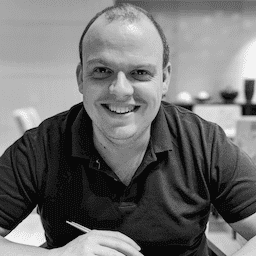
The Man Inside the Machine
There is a peculiar species of person who joins one of the world's most powerful technology companies and spends 16 years making sure it cannot wall you in. Paul Kinlan is that person. As Lead for Chrome and Web Platform Developer Relations at Google, he has spent the better part of two decades with a single, clear obsession: the open web should win, and developers should have the tools to make it happen.
Kinlan grew up on the Wirral - that thumb-shaped peninsula between the Mersey and the Dee in North West England - watching his father repair computers in their living room. He was not a passive spectator. He found the demo scene, the cracking scene, and a computer club, and he started building things. At 12, he watched someone play Street Fighter in an arcade and thought not about the game but about the loop, the joystick input, the code underneath. He went home and taught himself QBasic. The first real project? Lottery-number-picking software for his grandfather. Not a startup pitch deck. Lottery numbers. For his grandfather.
That combination of practicality, curiosity, and a willingness to build things for actual people who need them has defined everything he has done since.
"I bet on the people who build for the medium that is the web."
- Paul KinlanBy 18, Kinlan had started a web hosting company, running it as an exclusively Perl shop at a time when Perl was the web. He later enrolled at Liverpool John Moores University for a BSc in Software Engineering, where he simultaneously worked at Experian building Hunter 2 - a fraud detection system - in .NET and JavaScript. After university, a stint at a Liverpool telecoms company building voice interaction systems filled the days. The evenings were for side projects: Twe2, FriendDeck, Vooices, Ahoyo. Products with character, built by someone who clearly could not stop making things.
In 2010, Google noticed. He joined to build developer platforms, and he has not looked back - or slowed down.
The Things You've Used Without Knowing His Name
Developer relations is a job that succeeds in inverse proportion to how often the person doing it gets credited. Kinlan's fingerprints are on almost every tool and resource modern web developers take for granted.
Google Web Fundamentals - the reference site that taught a generation of developers what "progressive enhancement" and "responsive design" actually meant in practice - was his initiative. Add to Homescreen, the feature that blurred the line between website and native app, came through his team's advocacy. The 300ms click delay that made mobile websites feel sluggish compared to native apps? He pushed to kill it. Lighthouse, the tool millions of developers run before shipping anything, is part of his team's work. Workbox for service workers. Squoosh for image optimization. BrowserSync for synchronized cross-device testing. The list reads like a greatest hits of the modern developer workflow.
The Web Intents Story: In 2010, Kinlan launched Web Intents on GitHub - a framework for letting web apps communicate with each other, modeled on Android's Intents system. The specific implementation did not survive, but the idea seeded what eventually became the Web Share API and other inter-app web platform features. The original repo still has 479 stars. Sometimes being right too early counts.
None of this happened by accident. Kinlan's team works at the intersection of engineering, education, and advocacy - they sit close enough to Chrome's development to influence what gets built, and they face outward enough to hear what developers actually need. It is a tricky balance to hold for one year. He has held it for sixteen.
The Open Web or Nothing
There is a consistent strand running through everything Kinlan does publicly: the web's greatest virtue is that it is open, linkable, and does not require anyone's permission to participate in. His career has been an extended argument for that virtue from within one of the organizations most capable of either defending or undermining it.
He talks about "universal access" not as a platitude but as a design constraint - the link enables access for everyone, and any architecture that breaks or bypasses the link should be viewed with suspicion. His advocacy for Progressive Web Apps was about giving developers a path to near-native experiences without surrendering the open web's principles to a walled-garden app store.
"Universal access. The link enables this, and we need to fight to keep it open and accessible to all."
- Paul KinlanHe is also clear-eyed about the pace problem developers face. "Information overload," he has said, is among the most significant challenges - the technology changes faster than anyone can track, and the developer ecosystem rewards those who already know what to learn next. His work on web.dev, MDN contributions, and Chrome release communications has been partly an attempt to solve that problem at scale.
AI Focus: The Next Chapter
In 2025, Kinlan launched AI Focus - a newsletter and blog dedicated to exploring what artificial intelligence actually means for the web and web development. Not the breathless hype version. The practical, what-does-this-change-for-people-who-build-websites version.
His angle is characteristically grounded. He is not chasing the AI gold rush. He is asking what happens to the medium of the web when AI can generate sites, describe interfaces, and automate the parts of development that used to require specialist knowledge. His essays - "Email: The Web's Forgotten Medium," "Describing Sites Instead of Coding Them" - read like dispatches from someone who has been thinking about web platform design long enough to notice what the AI wave is about to change, and what it cannot touch.
"Right now, the intersection of Web and ML is incredibly exciting. People are building sites and apps that do things that we never thought were possible."
- Paul KinlanAt Google I/O 2025, he was on stage as Lead for Chrome Developer Relations - the same role, a bigger moment. The question he is working through in public is whether the open web can absorb the AI era the way it absorbed mobile, cloud, and every previous wave of change. His bet, predictably, is yes. His work is showing developers how.
He still lives in Ruthin, a medieval market town in North Wales with a population under 5,000. The contrast with Mountain View is not lost on him. It might be the point.
The Record
- Launched Google Web Fundamentals - the canonical reference for modern web development practice
- Drove removal of the 300ms tap-click delay on mobile web, making mobile browsing feel responsive
- Championed Add to Homescreen and Progressive Web Apps as a path to native-like web experiences
- Co-created Squoosh, the in-browser image compression tool used by millions of developers worldwide
- Contributed to Lighthouse, the industry-standard performance and quality audit tool for the web
- Initiated Web Intents (2010) - a prototype for inter-app web communication that seeded later Web Share API work
- Led Chrome DevRel team spanning web.dev content, MDN contributions, and browser compatibility advocacy
- Contributed to BrowserSync, Workbox, chrome samples, and material-design-lite
- Launched AI Focus newsletter in 2025, covering the intersection of AI and web development
- Speaker at Google I/O 2025 as Lead for Chrome Developer Relations
How He Got Here
-
1990s
Grew up on the Wirral; taught himself QBasic; wrote lottery software for his grandfather; active in the UK demo and cracking scenes -
~1998
Started a web hosting company at 18 - exclusively Perl, exclusively ambitious -
2000s
BSc Software Engineering, Liverpool John Moores University; concurrently built fraud detection at Experian using .NET and JavaScript -
mid-2000s
Telecoms company in Liverpool: voice interaction systems by day, side projects by night (Twe2, FriendDeck, Vooices, Ahoyo) -
2010
Joined Google to build developer platforms; announced Web Intents in December - a framework for web app interoperability -
2012-2015
Launched Google Web Fundamentals; championed Add to Homescreen; helped kill the 300ms mobile click delay -
2016-2020
Led Chrome DevRel; contributed to Squoosh, BrowserSync, Workbox, Lighthouse, material-design-lite -
2021-2023
Director of Chrome Developer Relations; focused on Core Web Vitals, Baseline compatibility, and Fugu APIs -
2024-2025
Launched AI Focus; presented at Google I/O 2025; continues to push the open web forward from Ruthin, North Wales
What He Actually Says
"I bet on the people who build for the medium that is the web."
- Paul Kinlan"Information overload. The pace of technology is changing so quickly that it's impossible sometimes to know where to start."
- Paul Kinlan, on developer challenges"Universal access. The link enables this, and we need to fight to keep it open and accessible to all."
- Paul Kinlan, on the open web"I think we are going to have to adapt to the changes that AI brings to the web."
- Paul Kinlan, AI Focus, 2025- Runs his own Mastodon instance - Kinlanodon - at status.kinlan.me. Because of course he does.
- Lives in Ruthin, North Wales (pop. ~4,900), while working for one of the world's largest tech companies
- His WebIntents GitHub repo still has 479 stars - a monument to being right before the platform caught up
- His Twitter/X bio once listed him as "Mr Web Intents" - a title earned, not assigned
- Built fraud detection systems at Experian before pivoting to making the web less frustrating
- Email: paulkinlan@google.com - unusually public for a senior Googler, very on-brand for an open-web advocate
- Has 286 public GitHub repositories. He is not hoarding ideas.
What He's Doing Now
- Jun 2025 Launched AI Focus blog and newsletter - a dedicated publication covering how artificial intelligence is reshaping the web and web development
- May 2025 Presented at Google I/O 2025 as Lead for Chrome Developer Relations
- Jan 2025 Published "Email: The Web's Forgotten Medium" and "Describing Sites Instead of Coding Them" - essays on the future of web publishing
- 2024 Active on Mastodon discussing web platform and AI topics; continuing to lead Chrome Developer Relations at Google