The compliments were the warning. Panos Siozos and his co-founders could show people their learning platform, explain its intricacies, and receive an encouraging response. Then the prospective customer would leave without paying. For researchers, this was an awkward result. The software had passed one kind of examination and failed another. Polite applause, it turned out, was a currency with a rather disappointing exchange rate.
Siozos has described that moment without trying to disguise the mistake. The team had to change quickly. Their judgment of a good product needed to accommodate the judgment of the people expected to buy it. Today he runs LearnWorlds, the company he co-founded with George Palaigeorgiou and Fanis Despotakis. Its history contains a lesson that would fit comfortably inside one of its own courses: expertise can help you build something; listening helps you discover what it is for.
Before the startup, the family homework
Siozos grew up in Athens, in a home full of books and the working materials of education. His father was a public-school teacher, and teachers were part of the family's social circle. Lesson plans and stories about pupils were ordinary household fare. Education was close enough to observe as daily work, with all the preparation that disappears when somebody simply says a person teaches for a living.
During his postgraduate studies, he taught information and communication technology at a secondary school in an underprivileged area. He has recalled that experience as a turning point in his interest in educational technology. It gave the subject a practical urgency: a tool might widen what a teacher or student could accomplish, provided somebody designed it with their circumstances in mind.
At Aristotle University of Thessaloniki, he studied computer science and earned a doctorate in educational technology. His interests included computer-assisted assessment, online educational environments, privacy and computer ethics. From 2009 to 2014, he worked at the European Parliament as a policy adviser on research and innovation. The route to entrepreneurship therefore passed through classrooms, software and public policy. Each dealt, in a different way, with turning knowledge into something people could use.
A recording studio with a rooster problem
Siozos, Palaigeorgiou and Despotakis had built their first learning management system in 1999. They worked on educational tools, papers and experiments long before LearnWorlds became a business. When they returned to the commercial idea, the initial operation was an online academy teaching web development to Greek learners. Its recording studio occupied a storage shed on George's tomato field, beside a chicken coop. The early videos, Siozos later recalled, acquired a soundtrack of roosters.
The team created courses in HTML5 and CSS3, selling them for $15. They bought a screen and microphone with their limited budget and supplied the content themselves after finding it difficult to recruit established trainers. There was no ready audience or reputation to borrow. Having a platform did little to reassure a teacher who would have to trust a new business with their material.
The tomato field belongs in this story because it makes the beginning wonderfully specific. A company now associated with millions of learners started with people making teaching materials in a place better suited to agricultural storage. The equipment could record a lesson. It could not persuade the local poultry to observe studio etiquette.
More consequential than the improvised premises was the founders' assumption about demand. They thought a sufficiently good platform would persuade people to pay. Customers, however, assessed it against their own needs. The team had to discover those criteria. A software feature could be academically interesting and commercially irrelevant; a less glamorous request might be essential to somebody trying to run a school.
- 1999First learning management system
- 2009-14Siozos advises on research policy at the European Parliament
- 2012Development of the commercial platform
- 2014LearnWorlds launches commercially
- 2021$32 million growth investment
- 2026Human-directed AI becomes central to the product vision
The student has to do something
Siozos's educational background shows up in the details he chooses to discuss. An ebook should allow a learner to highlight a passage and leave notes. A test can give somebody a chance to revisit a misunderstanding while there is still time to learn from it. These are small actions, but they turn reading or watching into work the student performs. The learner leaves a trace of their thinking.
He distinguishes formative assessment, which helps a student learn during a course, from a final assessment used to judge performance at its end. Computer-assisted assessment was part of his doctoral work. In the product, that interest becomes the possibility of trying a test again, checking an answer and returning to the material. A certificate records an outcome. Practice gives the person a chance to change it.
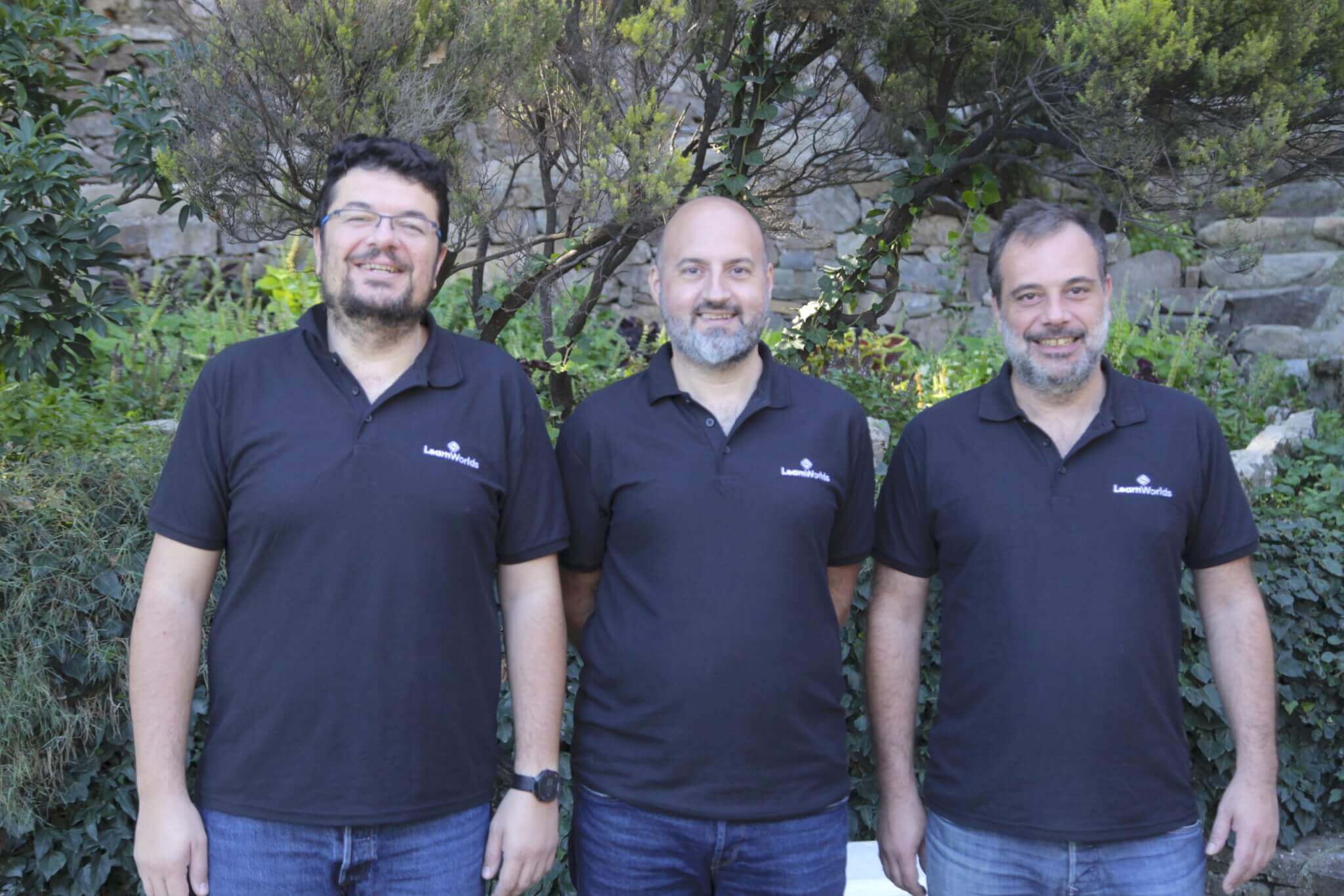
The division of work among the founders reflects their different responsibilities. Palaigeorgiou, the chief product officer, leads product direction, research and design. Despotakis, the chief technology officer, handles development and infrastructure. Siozos is CEO. Their shared history gives the business a sustained interest in how learning works, alongside the less romantic requirements of keeping a platform running and a company solvent.
He also wanted educators to control the business surrounding their teaching. LearnWorlds lets them run branded schools with their own content and audience relationships. His comparison has been to Shopify: provide the tools for an independent operation. That carries a particular appeal for somebody who has already built an audience and now wants to decide how to teach it, what to charge and how to maintain the relationship.
An illustration of the learning activities Siozos describes, rather than a measured comparison of outcomes.
Greece taught them to look abroad
The first version was built for the Greek market in Greek. In 2013 and 2014, Greece's financial crisis made selling it locally difficult. The team turned toward the United States, where prospective customers were willing to try a new platform. Siozos has described the forced change as beneficial in retrospect. A narrow starting market made international adaptation an early necessity.
The commercial platform launched in 2014. Its customers already had courses, audiences and teaching material, but building the delivery system was a burden. Reaching them required more than translating a few labels. Languages, payment methods and local business requirements became part of the product. A founder could design an elegant lesson; the customer still needed a way to collect the fee.
By December 2025, the company reported reaching more than 32 million learners across 155 countries. Those learners belonged to the schools and organizations using the software. The distinction matters to understanding Siozos's ambition. He built a business that supplies other teaching businesses, leaving room for a wide variety of subjects, audiences and ways of earning a living.
As of October 2026, LearnWorlds reports more than 13,000 customers and over $1 billion in customer revenue. That revenue belongs to the people and organizations teaching through the platform. For Siozos, the figures place the early problem of finding a paying customer in a different setting: thousands of customers now have paying customers of their own.
LearnWorlds-reported cumulative scale, checked October 2026. Customer revenue is revenue earned by its customers.
Money arrived after the lesson
The founders began receiving salaries in 2018, according to Siozos's account of the early years. Their first external funding arrived in 2019. The gap between starting work and getting paid is a useful corrective to a tidy founding date. A business can spend years consuming its founders' time before it can reliably compensate them for it.
LearnWorlds announced a $32 million minority investment from Insight Partners in July 2021, following its earlier seed round with Marathon Venture Capital. The company planned to spend on product development, customer success, marketing and sales. Its announcement recorded more than 4,400 customers across over 120 countries. The investment gave an already operating business resources to expand the work around its product.
By that July, more than half of the company's pipeline was automated and led by the product, Siozos told interviewer Nathan Latka. Salespeople were being added incrementally, with attention to the extra conversions they brought. The measurement was practical: would another person help more customers buy? It was a long way from expecting the excellence of the software to settle the matter by itself.
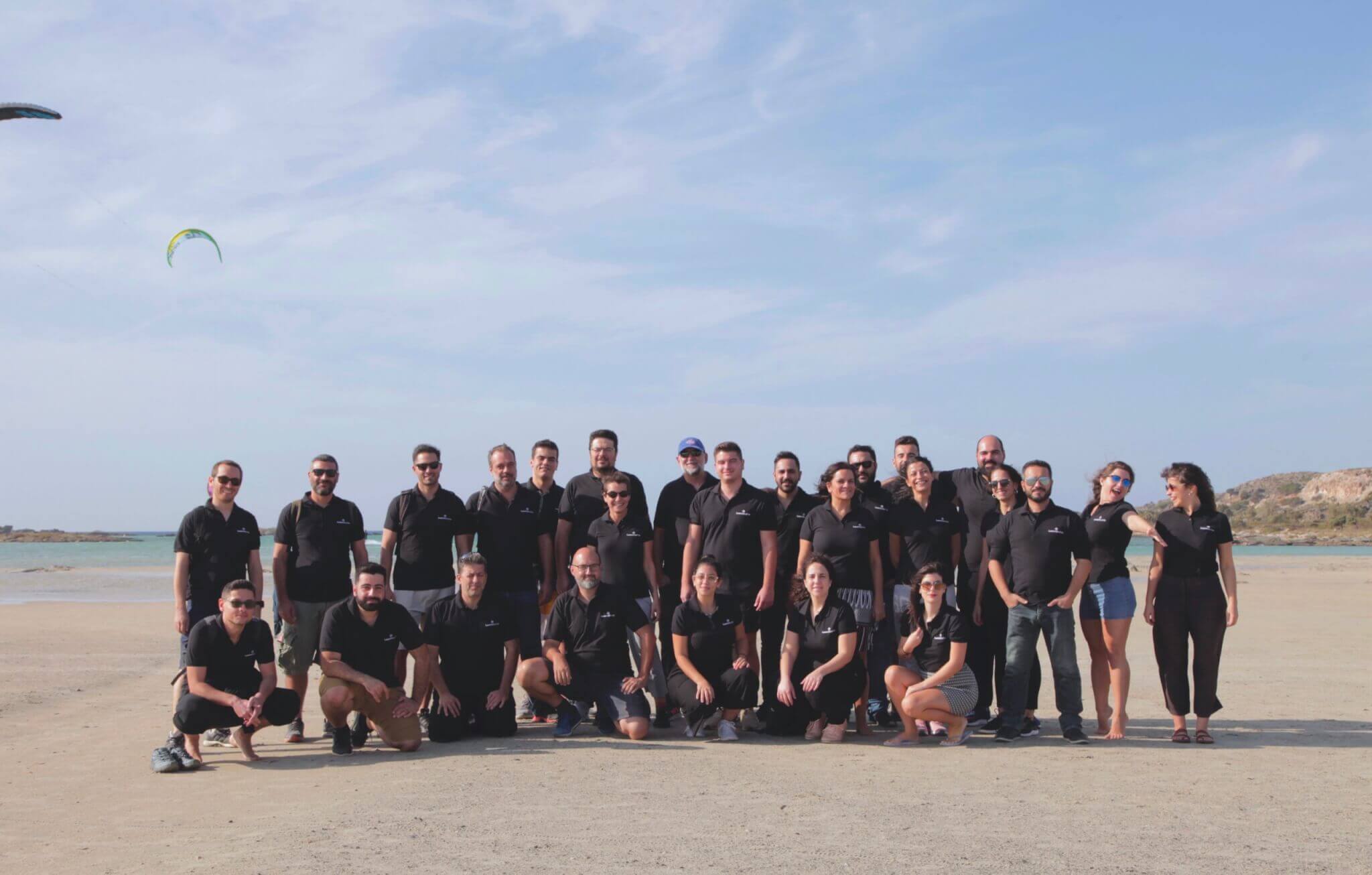
Growing the organization changed Siozos's own method. He had once preferred to make a prototype himself, see what worked and improve it. With a larger team, he described the job as explaining an idea accurately enough for other people to carry it forward. He also valued uninterrupted time to investigate difficult problems. Meetings might run a company, but they could easily occupy the hours needed to think about one.
The teacher stays in the room
In April 2026, Siozos framed the next stage around human-directed AI and learning outcomes that a business could measure. His definition of success remained tied to what customers could accomplish: teaching effectively, building viable businesses and adapting as needs changed. It is an exacting ambition for software. A list of features is easy to display. Whether somebody becomes more capable takes more care to establish.
In September, he described AI practice environments: a law student negotiating with an agent that changes its position, or a language student conversing with a responsive agent. These were examples of what AI could enable, rather than evidence that every course already worked this way. The educator would supply intention, context and standards. AI could provide more opportunities to rehearse and receive feedback.
“AI should support educator expertise rather than bypass it.”
Panos Siozos, September 2026
LearnWorlds's October 13, 2026 presentation introduced its Living Learning System vision. The proposed work spans course creation, learner guidance and academy management, with educators reviewing material and defining the rules. Siozos and Palaigeorgiou were listed as speakers. The vocabulary has changed considerably since a shed housed the recording equipment. The question of what a person actually learns remains recognizable.
In his October conversation with instructional designer Holly Owens, Siozos stressed the difference between measuring activity and measuring outcomes. Completing a course is easy to count. What the learner can subsequently do is the more useful question. He argued that instructional designers still have substantial work ahead as AI expands the possibilities for creating learning experiences.
There is room in his outlook for amusement. He enjoys mountaineering, photography and travel, and recommends The Hitchhiker's Guide to the Galaxy for its habit of overturning familiar assumptions. His preferred maxim is brief: “Getting better every single day.” For a founder who had to learn that compliments would not pay the bills, the appeal is understandable. A willingness to revise your answer is a useful thing to bring to work.