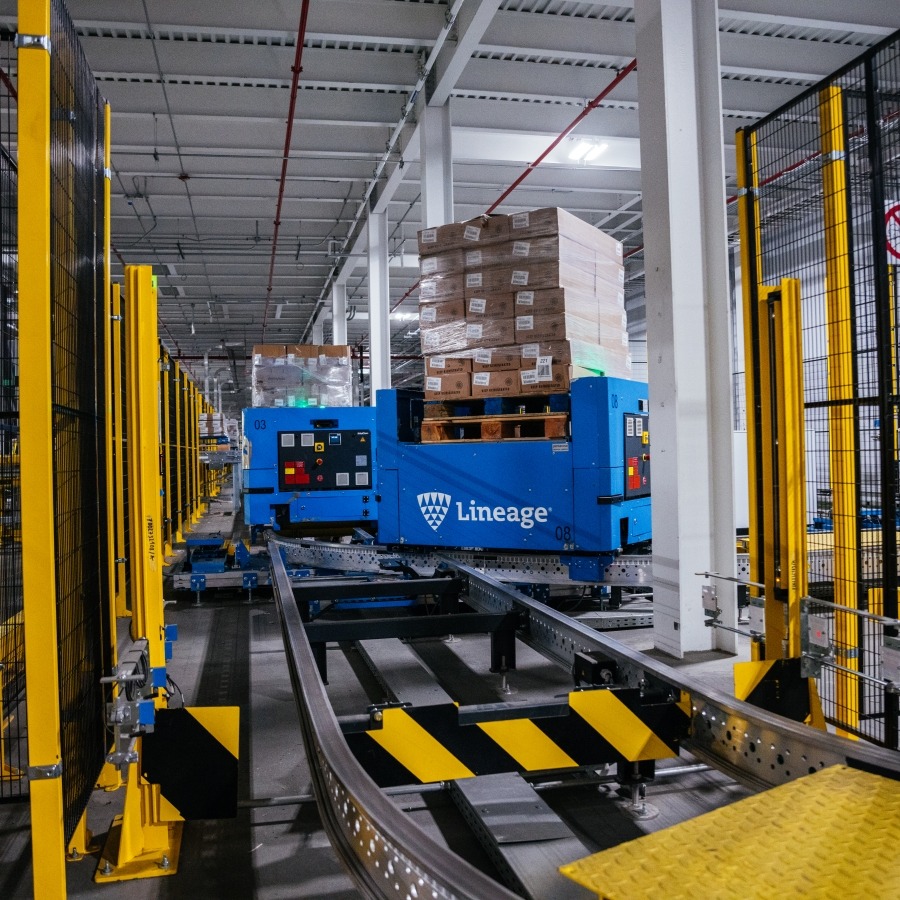
Imagine a shipment request arriving at 4:57 p.m. The attachment names one destination. The email names another. A forwarded message appears to repeat yesterday’s order, except for a changed lot number. Everyone would like to go home. The freight, being freight, has other ambitions.
An AI agent can turn that mess into an impressively tidy record. Tidiness, however, is a poor witness. The destination may still be wrong, the order duplicated, the customer’s special handling rule quietly lost. A polished answer can conceal a very expensive misunderstanding.
That is the problem behind Pallet’s approach to testing agents before they enter physical operations. Its product page says every agent undergoes thousands of simulations and adversarial tests before production. For an operations leader, the useful question is whether those rehearsals reveal the failures that would matter on a real shift. A demo needs applause. A shipment needs the right address.
Source: Pallet agent platform
A demo needs applause.
A shipment needs the right address.
Give the agent a memory—and a rehearsal
Pallet Core is the layer combining agent construction, enterprise memory, custom models and simulation. It lets an operations leader examine a workflow before committing it to production. On Pallet’s current product page, those capabilities appear as Forge, Memories, custom AI models and pre-deployment simulation.
The distinction matters. Model intelligence alone does not tell an agent which customer uses an obsolete product code, or which instruction takes precedence when two documents disagree. Enterprise memory supplies operating context; construction turns it into a workflow; simulation gives the resulting agent somewhere to make mistakes before a customer inherits them.
A rehearsal should have a clear expected outcome. If a required field is absent, the test should establish whether the agent asks for it, holds the order or invents an answer. The first two may be acceptable under different operating rules. The third can look efficient until someone opens the trailer.
Conceptual workflow · approval boundaries are an operational design choice.
Invite the awkward paperwork
Thousands of tests become useful when they cover different ways a workflow can fail. Consider five test cases an operations team could put before an agent: a malformed document, conflicting instructions, a duplicate order, missing fields and an unusual customer rule. These are illustrative cases, rather than a published inventory of Pallet’s test suite.
A damaged table tests whether quantities stay attached to the right products. Conflicting emails test which source the workflow treats as authoritative. A duplicate request tests whether a follow-up becomes a second shipment. An empty delivery field tests whether uncertainty survives extraction. A customer exception tests whether the general rule yields when it should.
Adversarial testing adds another pressure: content deliberately designed to mislead the agent. Suppose an attachment contains a sentence telling it to ignore its operating instructions. The document should remain evidence about the shipment, never acquire the authority to rewrite the workflow.
For each class, a reviewer needs to see the expected action, the observed action and the consequences of a miss. Counting successful runs is easy. Deciding which failures forbid deployment takes judgment. A missed reference number and an unauthorized destination change deserve different conversations.
Two percentages, two different jobs
Lineage makes that distinction concrete. Pallet’s customer account reports 99.8% accuracy for structured shipment-packet extraction, and 95% for ambiguous resolution in warehouse order management. It also reports near 100% on unambiguous orders. Those figures describe different tasks and difficulty classes; they are not interchangeable promises.
Extracting a field asks what a document says. Resolving an ambiguous item asks which operational record the customer means. The second question may depend on account history, subsidiary identities or inconsistent product descriptions. Combining both into a single handsome percentage can hide precisely where human attention is needed.
Imagine two agents with the same overall score. One misses ordinary fields occasionally; the other performs routine work beautifully but mishandles uncommon customer exceptions. Averages make them neighbours. A warehouse manager would assign them different permissions.
A useful acceptance review therefore separates routine extraction, ambiguous matching, duplicate detection and escalation. It asks how each result was measured and what happened to rejected cases. The public Lineage figures illustrate why that separation matters; they do not supply a universal pass mark for every logistics workflow.
Source: Lineage customer results
Structured shipment-packet extraction
Ambiguous warehouse order resolution
Reported by Pallet in its Lineage customer story. These measures cover different work and are not a combined accuracy score.
The checks travel with the agent
Testing before launch cannot inspect every future email. Pallet’s security page describes protections for each model call: input sanitization, prompt-injection prevention, structured-output validation, and rate limiting with monitoring. Incoming content is checked, untrusted content is treated as data, and responses must satisfy a strict format before use.
Those controls address different problems. Sanitization checks the material entering the call. Injection defenses keep instructions hidden in documents from gaining authority. Output validation checks the shape of the result. Rate limits and monitoring help expose unusual usage as the system runs.
A valid format still needs a valid business decision. A destination can be perfectly formatted and entirely mistaken. That is why production controls and workflow tests belong together: one examines the call’s boundaries; the other examines whether the action makes sense.
For risky exceptions, human approval should remain part of the release design. The reviewer needs the disputed evidence and a meaningful choice, rather than a button beneath an unexplained recommendation. A system earns useful autonomy by making its uncertainty legible.
Source: Pallet security controls
Six weeks, with the hard questions asked early
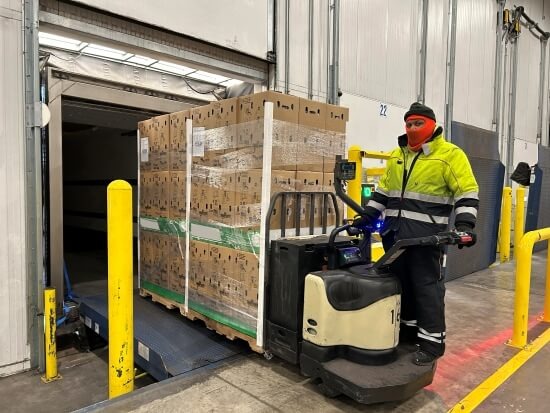
Pallet says Forge automatically learns, generates and tests agents and operating procedures; most custom agents can go live in about six weeks. Lineage’s order-intake deployment reached full production in 49 days. The first is a typical timeline offered by the vendor. The second is one customer result.
The practical connection is earlier evidence. When learning and testing happen during construction, an operations team can discover a disputed rule while changing it is still cheap. The deadline need not force the risky exception through: a workflow can automate approved cases and leave consequential uncertainties awaiting human approval.
Before release, the leader should be able to answer three plain questions. Which cases can proceed? Which must stop for review? What evidence supports that boundary? Speed becomes credible when those answers arrive before launch.
Return to the order at 4:57. Perhaps the agent creates it. Perhaps it holds it for a coordinator. The important achievement is that the choice follows an examined rule, with a reason someone can inspect. The shipment has plenty of opportunities for adventure. Its paperwork need not add another.
Source: Pallet agent platform