The most revealing piece of Lineage’s artificial-intelligence story is not a robot gliding through a freezer. It is an email attachment. Before food can move through a loading dock, somebody has to turn bills of lading, purchase orders, arrival notices, packing lists and customer shorthand into clean instructions a warehouse system can understand. At Lineage’s scale, that clerical threshold appears millions of times a year.
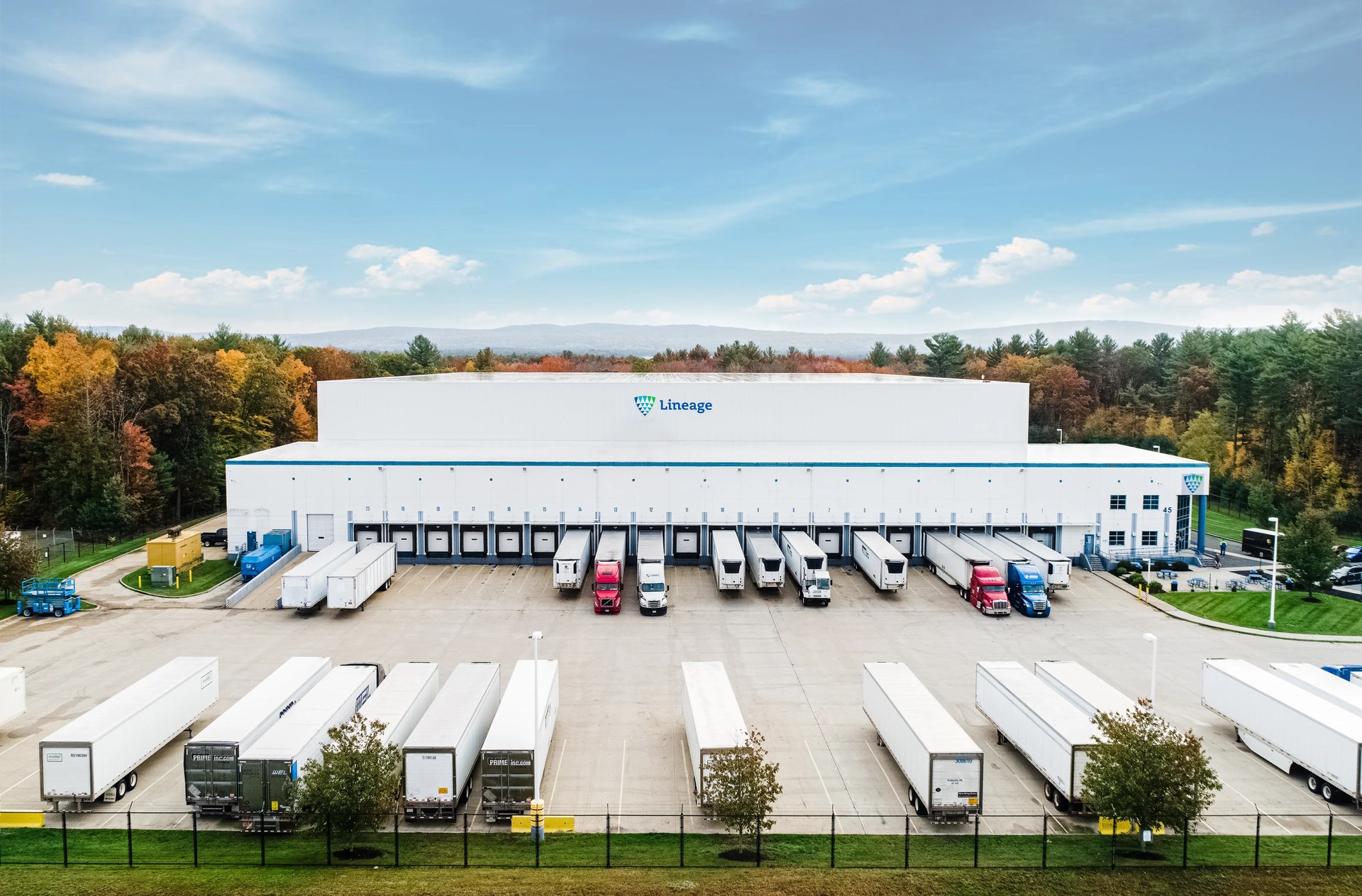
Lineage is the world’s largest temperature-controlled warehouse operator, with more than 480 facilities spanning North America, Europe and Asia-Pacific. It moves tens of billions of pounds of food for producers, retailers and distributors. The physical network is enormous, but the bottleneck Pallet was hired to attack was surprisingly ordinary: skilled people reading disorderly documents and retyping what they found.
This was not a single neat process waiting for a chatbot. Inbound teams received handwritten notes, rough phone photos and dense multipage tables. Freight forwarders decoded customer-specific conventions before creating jobs in CargoWise. Warehouse coordinators reconciled the names and product codes in customer emails with records scattered across warehouse management systems. The real operating manual often lived in people’s heads.
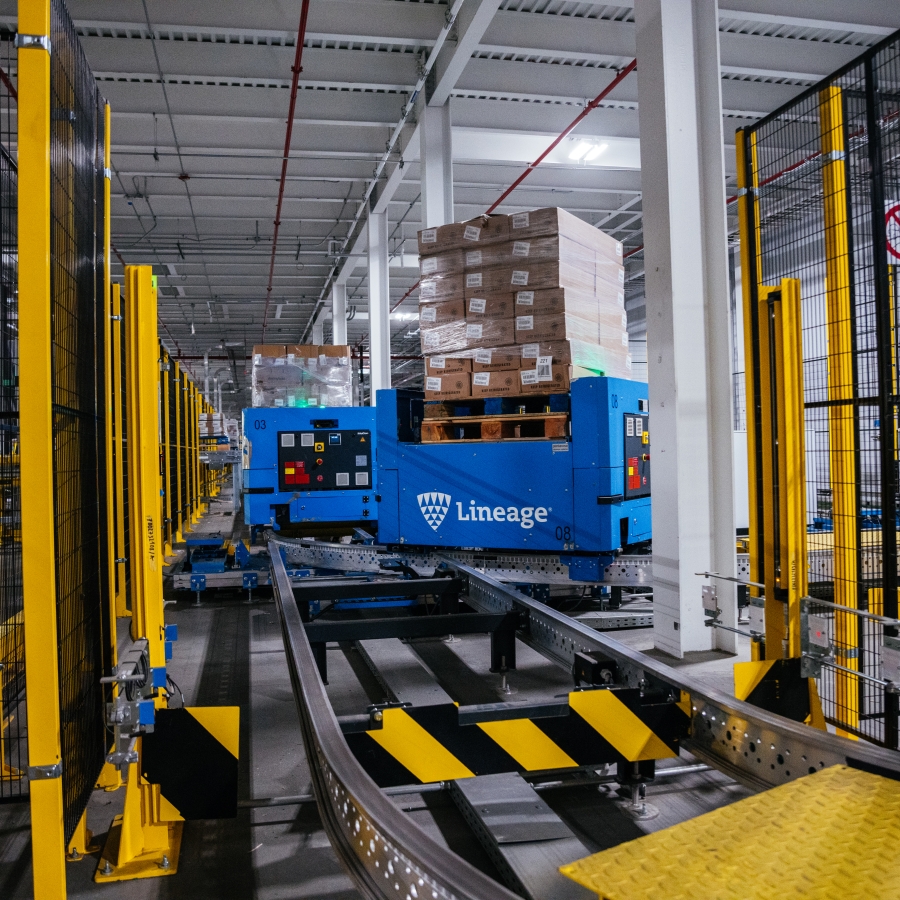
That last detail matters. The promise was not simply faster optical character recognition. It was to capture the judgment behind the keystrokes, then run it reliably across a global network. Today three Pallet agents handle roughly 2 million Lineage workflows a year. The useful story is how narrowly each agent’s job was defined—and how precisely each one is measured.
01 / The systemThree agents for three different kinds of mess
Receiving
Extracts about 40 fields from BOLs, POs, arrival notes and packing lists.
Order intake
Checks email requests and creates clean forwarding orders directly in CargoWise.
Order management
Matches customer codes, lots and instructions to the right WMS records.
The receiving agent is the reader. It works through shipment packets that may mix bills of lading, inventory lists, purchase orders and arrival notes. From each packet it extracts about 40 fields covering shipper, carrier and cargo details, then produces structured data ready for the WMS. Across 53 facilities it can process as many as 1,000 documents in a day. Its reported accuracy is 99.8%, including peak periods.
The order-intake agent is the builder. It watches freight-forwarding inboxes, recognizes whether a message is a new request, a forward or a follow-up, checks for duplicates and gathers tracking data from air and ocean systems. It extracts roughly 30 fields and creates the forwarding order directly in CargoWise. Work that took an operator about 15 minutes now takes about two.
The order-management agent is the resolver. It pulls customer orders from Salesforce, opens attachments in different formats, and maps item codes, lot numbers and delivery instructions to the right records in a facility’s WMS catalog. This job is harder because the customer’s label for a product may not match the warehouse label, while one customer name may point to several entities or subsidiaries. There is no dependable copy-and-paste path through that ambiguity.
Taken together, the three jobs offer a practical taxonomy for enterprise agents. Some work is extraction: find the facts. Some is transaction: put the facts into the right operating system. Some is resolution: decide which real-world record the facts actually describe. Calling all three “automation” hides the engineering difference. Designing them separately makes the results easier to test, improve and trust.
02 / MeasurementAccuracy is a workflow, not a slogan
A single average accuracy number would make this deployment sound simpler than it is. Lineage and Pallet instead report performance against the decision each workflow has to make. Receiving-data extraction and CargoWise order intake both reached 99.8% accuracy. The WMS agent is near 100% when an order is unambiguous and 95% when the item-resolution problem is genuinely ambiguous.
Production accuracy by workflow
That distinction is the grown-up part of the case study. A typo in a low-stakes field, a duplicate forwarding order and a wrong product match are not equivalent mistakes. They deserve different test sets, thresholds and escalation rules. The 95% figure may look weaker beside 99.8%, yet it covers the cases where human coordinators previously supplied context that the source documents did not contain.
Pallet’s method was to capture those operator rules, connect information across systems and run thousands of simulations before go-live. In other words, tribal knowledge became testable infrastructure. The agent does not need to pretend every case is obvious. Confident matches can flow through; exceptions can reach a person with the relevant evidence already assembled.
This is the lesson worth stealing for any operations team considering AI: measure the unit of judgment, not the theatrical demo. Start with the exact action the system must take. Separate clear cases from ambiguous ones. Record the false matches that would hurt the business. Then give the edge cases a deliberate human path. “Human in the loop” is useful only when the loop is designed, staffed and measured.
03 / DeploymentForty-nine days instead of pilot purgatory
The forwarding agent moved from first deployment to full production in 49 days. That speed is notable because the assignment reached past the inbox into CargoWise and relied on conventions that had never been fully written down. It also produced a concrete operating gain: order-entry time fell from 15 minutes to two, an 87% reduction.
The sequence suggests why the project escaped the usual proof-of-concept trap. The target was bounded. The destination system was named. The old cycle time was known. Accuracy could be scored against completed work. Most importantly, production was the finish line from the beginning, not an optional phase after a polished demo.
The receiving deployment offers the complementary proof of throughput. Processing up to 1,000 documents a day across 53 facilities is not an innovation-lab benchmark; it is work arriving from different carriers and countries, in inconsistent formats, on peak days. The number of supported sites also tests whether the captured knowledge travels. A clever parser at one location is a tool. A repeatable process across dozens of facilities begins to look like operating leverage.
Pallet captured that expertise, reached production in just 49 days, and helped us elevate our service.Sudarsan Thattai · CIO and Chief Transformation Officer, Lineage
The sentence pairs the two things that enterprise AI projects too often force apart—speed and service quality. The software had to move quickly without asking customers to accept a colder, more rigid operation.
04 / EconomicsThe payoff is a different cost curve
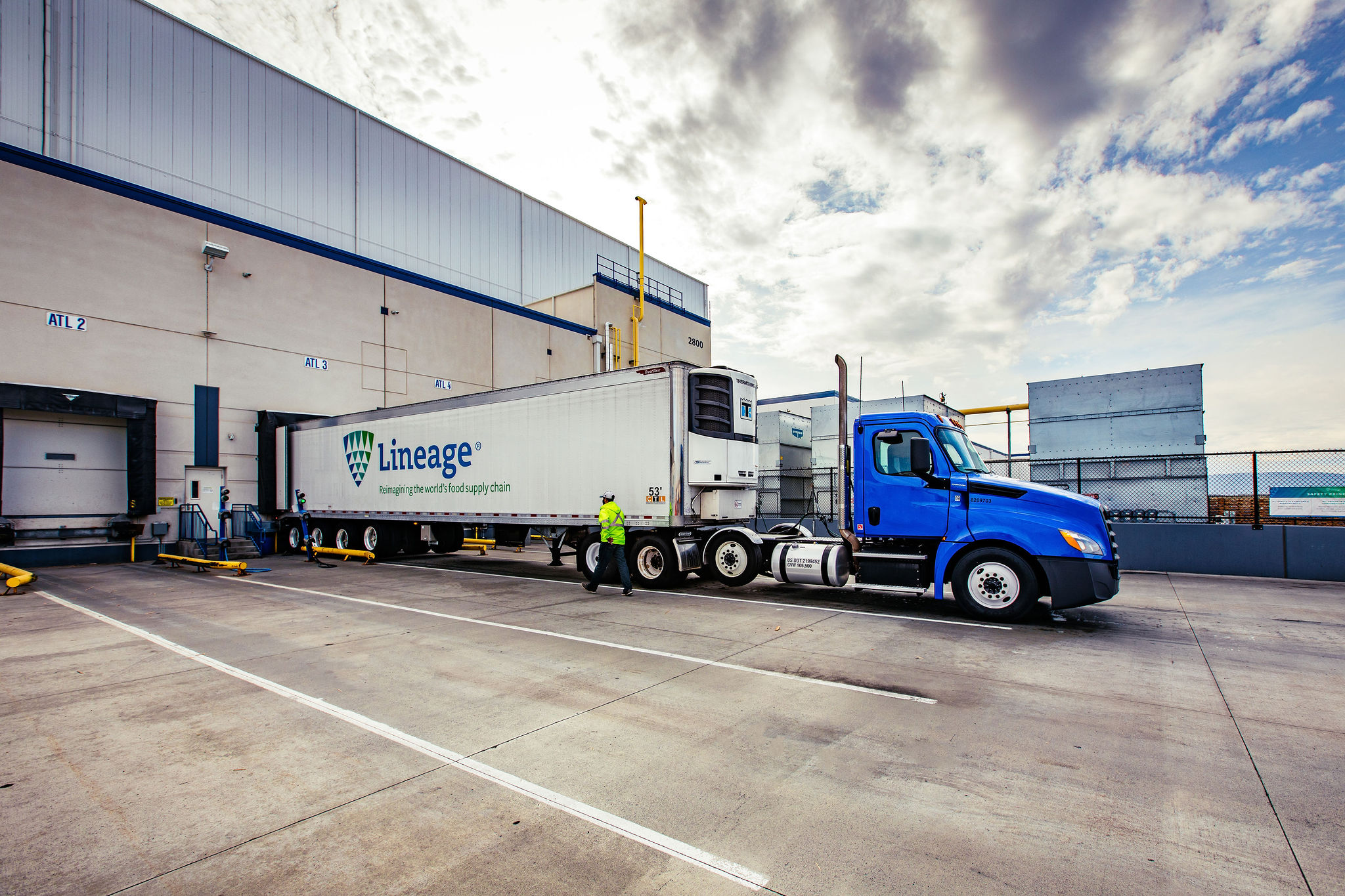
Saving 13 minutes on one forwarding order is pleasant. Repeating that saving across a network is structural. Pallet’s agents now perform shipment-processing work roughly 2 million times annually across three Lineage business units. Lineage expects more than 3 million shipments to be processed by Pallet in 2026 as the system expands across U.S. and international sites.
The strategic result is not “fewer keystrokes.” It is that administrative effort no longer has to climb in lockstep with shipment volume. That changes the growth equation. A busier network can improve operating efficiency at the same time, while coordinators spend more of their day on customers and exceptions—the work where responsiveness and judgment are most visible.
There is a service lesson hiding inside the efficiency story. High-touch service does not require humans to touch every field. It requires humans to be available at the moments that matter. Removing routine transcription can make an operation feel more attentive if the recovered time goes to solving delays, communicating with customers and handling the unusual order that should never be left to an automatic default.
The scale also makes small error rates tangible. At 2 million runs, 0.2% represents 4,000 potential exceptions. Near-perfect is not the same as invisible, which is why workflow-level monitoring and exception queues remain part of the product, not cleanup after it. The point of accuracy is not a bragging right. It is knowing which work can pass untouched and which work deserves attention.
05 / The playbookWhat operators can copy tomorrow
- Map one high-volume workflow from messy input to a named system of record.
- Calculate current minutes per transaction and split clear cases from ambiguous ones.
- Capture the conventions and exception rules that experienced operators carry in their heads.
- Test on the ugly inputs: handwriting, bad scans, forwards, attachments and conflicting codes.
- Measure throughput, decision-level accuracy, time saved and exception quality in production.
Lineage also shows why starting with “Where should we use AI?” is usually too broad. The sharper question is: where are trained people acting as adapters between unstructured customer communication and structured operating software? That seam appears in insurance claims, construction submittals, health-care referrals, wholesale purchase orders and field-service dispatch—not only freight.
The physical world will always generate imperfect information. Boxes arrive with altered labels. Customers reuse a familiar nickname. Photos are crooked. A crucial instruction sits in the third attachment of a forwarded email. The winning system is not the one that wishes this mess away. It is the one that learns how experienced operators navigate it, proves that behavior under load and knows when to ask for help.
That is why this case is larger than a warehouse story. Lineage did not put “AI” everywhere. It put three agents at three expensive translation points, gave each a measurable job and pushed them into production. Two million annual runs later, the headline result is not a futuristic facility. It is a mundane workflow that finally scales as fast as the freight.