Breaking
NEIL RAY - Founder & CEO, Raydiant Oximetry LUMERAH earns FDA Breakthrough Device designation GE HealthCare joint development initiative announced 2025 $7.5M Series A extension oversubscribed, 2024 Total funding raised: $31.7M+ Mission: fewer unnecessary C-sections, safer childbirth
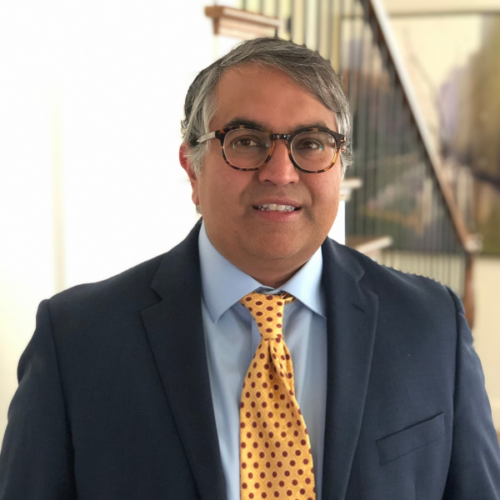
Neil Ray, MD - Founder and CEO of Raydiant Oximetry
Neil P. Ray, MD. He left the operating room to argue with a machine that hadn't changed in 50 years.
Founder / Physician / Believer in Better

Neil Ray

A pediatric anesthesiologist who put down the syringe, picked up a light, and went looking for the oxygen inside an unborn baby.

Raydiant Oximetry San Ramon, CA Medtech Maternal Health
The Work Now

He is trying to read a baby's breath through the mother's skin.

Somewhere in a delivery room right now, a monitor is guessing. It has been guessing, in more or less the same way, for half a century. Neil Ray spent twenty years listening to those guesses as a board-certified pediatric anesthesiologist, and one day he decided he had heard enough.

Today he is the founder and CEO of Raydiant Oximetry, a medtech company in San Ramon, California with a stubbornly specific goal: shine light through a mother's abdomen and measure how much oxygen is reaching the baby inside. The device is called Lumerah. It is non-invasive, needs no needle, and it borrows a trick from the same family of light-detection ideas that power LiDAR. If it works at scale, it could tell an obstetrician something the old machines never really could - whether the baby is actually in trouble.

That distinction matters more than it sounds. The standard fetal monitor is good at raising alarms and bad at being right about them. Ray has described its accuracy, bluntly, as no better than a coin toss. Every false alarm carries a cost, and often that cost is an emergency C-section that a mother did not need. Raydiant's pitch is not incremental. It wants to replace the coin.

Ray is not doing this from a garage with a dream and a whiteboard. Lumerah has earned FDA Breakthrough Device designation and an Investigational Device Exemption. Clinical enrollment began in 2024. In 2025, GE HealthCare - one of the largest names in the business - signed on to a joint development initiative to bring the technology into its fetal monitoring platforms. When the incumbent asks to work with you, you are no longer just a critic of the coin toss.
50yr
Since fetal monitors last changed
2
Devices in clinical trials
$31M+
Total funding raised
1
GE HealthCare partnership
The Turn

A math major, a Harvard residency, and one uncomfortable realization.

Before the light and the sensors, there was arithmetic. Ray studied mathematics at Northwestern, took his M.D. at Rush Medical College, and did his anesthesiology residency at Harvard. He began practicing in 2005. On paper, that is a career you do not walk away from.

He walked away from it. The realization was simple and hard to un-see: he was helping perform C-sections that the data did not justify, because the data itself was unreliable. Women's health, he noticed, had seen very little real innovation. So he did the thing that made his colleagues nervous - he left a paying job as a doctor to become a first-time founder with no engineering background and no business experience.

He funded the first prototype out of his own savings. That detail later did quiet work in investor rooms; a founder betting his own money is a founder who believes. He took the idea to the Fogarty Institute for Innovation, a Bay Area accelerator that mentors only a handful of companies at a time, and there he learned the second profession hiding inside the first.

His summary of the education is characteristically plain: selling is a big part of becoming an entrepreneur. Always selling. A surgeon is trusted by default. A founder has to earn the room every single time.

The Trail

From equations to enrollment.

2005

The clinician

Begins practicing as a board-certified pediatric anesthesiologist.

2016

The founder

Founds Raydiant Oximetry to build a fetal pulse oximeter worth trusting.

2022

The long game

Roughly $10M invested, five years into a plan he frames as a decade-long, ~$30M build.

2024

The proof

Oversubscribed $7.5M Series A extension; first participants enrolled in the Lumerah and Daisy studies.

2025

The validation

GE HealthCare joins a joint development initiative for fetal oxygen saturation technology.

The Hardware

Two devices, one delivery room.

Device 01 - Monitoring

Lumerah

A low-cost, non-invasive sensor that reads fetal blood oxygen saturation through the mother's abdomen during labor. Built on pulse oximetry and biophotonics, it aims to tell distress from noise - and cut the C-sections that noise causes. FDA Breakthrough Device designation. IDE approved.

Device 02 - Intervention

Daisy

A surgical device designed to quantify blood loss, treat uterine atony, and help prevent postpartum hemorrhage after a C-section. The quieter half of the mission: keeping the mother safe once the baby has arrived. First study participant enrolled in 2024.

The Money

Crossing the valley of death, one round at a time.

Raydiant's capital has come in layers - SBIR grants from the NSF and NIH to survive the early years, then a Series A that a syndicate of women's- and children's-health investors extended past its target. Cross-Border Impact Ventures led the 2024 extension, joined by RH Capital, the Global Health Impact Fund, VCapital, and the March of Dimes Innovation Fund.

~$10M
by 2022
$7.5M
2024 ext.
$31.7M
total
In His Own Words

The founder, unfiltered.

"Selling is a big part of becoming an entrepreneur. Always selling."

On the skill doctors never learn

"We are honored to partner with funds that recognize the life-saving potential of our groundbreaking devices."

On closing the Series A extension

"I learned how to transition careers from a clinical physician to a medical device developer."

On the Fogarty Institute

"Without the SBIR program, I don't know if we would have made as much progress."

On surviving the early years
The Grain

Why this one is different.

Skin in the game

Own savings, first

He built the first prototype with his own money before asking anyone else for theirs. Belief you can put on a balance sheet.

Intellectual honesty

No echo chamber

He talks about the danger of naive assumptions - of falling for your own patient story instead of the market's real size.

Transformative, not tweaks

Replace the coin

His advice to founders: work on something transformative. He is not trying to improve the old monitor. He is trying to retire it.

Clinician's eye

He saw the problem first

The idea came from the operating room, not a pitch deck. Twenty years of watching a machine be wrong.

Patience

A ten-year build

He framed Raydiant as a decade-long, ~$30M project. Medtech does not reward the impatient.

The unglamorous stack

Grants and grit

SBIR awards from the NSF and NIH kept the lights on across the years venture money tends to skip.

Marginalia

Facts for the footnotes.

01He started in mathematics at Northwestern before medicine ever entered the picture.
02Lumerah leans on the same light-detection ideas that make LiDAR work.
03The company name is a small pun on its method - it radiates light through tissue.
04Harvard-trained, San Ramon-based. The résumé went west.
05His clinical trials run at Eastern Virginia Medical School under Dr. George Saade.
06When he left medicine, some colleagues thought it was the wrong move.

Share this profile

Profile compiled from public sources - interviews, press releases, and company materials. Facts current as of mid-2026.