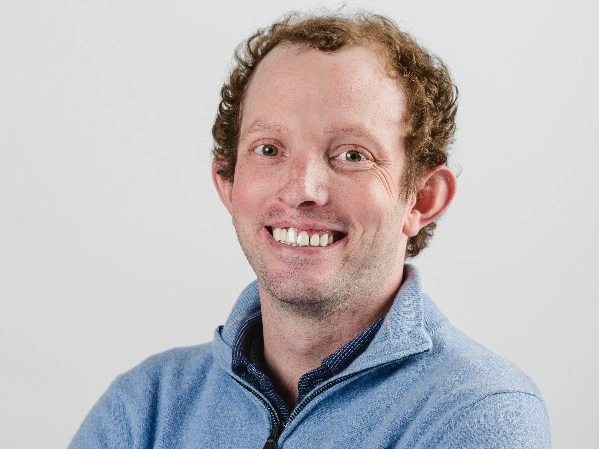
The trader who tokenized the safest thing in finance
In a corner of crypto obsessed with the next 1000x token, Nathan Allman built a company around an asset that pays about as much as a savings account. Short-term U.S. Treasuries. The kind of instrument that puts dinner-party guests to sleep. He wrapped them so they could trade around the clock, settle on-chain, and act as collateral anywhere in the world - and in doing so turned Ondo Finance into the leading name in real-world asset tokenization, with roughly $3.5 billion locked in by early 2026.
The bet was contrarian precisely because it was dull. While others chased volatility, Allman chased plumbing. He framed Ondo not as a crypto startup but as a "decentralized investment bank," deliberately borrowing the vocabulary of the institutions he came from. The pitch landed: Peter Thiel's Founders Fund and Pantera Capital co-led a $20 million Series A in April 2022, with Coinbase Ventures, Tiger Global, GoldenTree, Wintermute and Flow Traders along for the ride.
"Stablecoins at $200 billion are more than material enough for traditional finance to be paying serious attention."
Nathan Allman, on why Wall Street could no longer look awayThe vantage point from inside the machine
Before Ondo, Allman spent roughly two years on Goldman Sachs' digital assets team inside the Global Markets Division, building cryptocurrency market services and security-token offerings for institutional clients. It was the kind of seat that teaches you why traditional finance moves so slowly - which counterparties need which approvals, which assets can legally touch which wallets, why a settlement that should take seconds takes days. He left in February 2021 to build the thing he could see but the bank could not yet ship.
He arrived at Goldman by an unhurried route. An Economics and Biology degree from Brown University. An associate stint in alternative credit at Prospect Capital Management. A partnership at ChainStreet Capital, a quantitative crypto hedge fund running algorithmic, event-driven strategies. Later, an MBA from Stanford's Graduate School of Business. The throughline was structured finance, not speculation - and it showed in everything Ondo built.
What he actually shipped
Allman's thesis was that real yield, not hype, would bring institutions on-chain. The products followed that logic with almost stubborn consistency.
A yield-bearing stablecoin backed by U.S. Treasuries - cash that earns while it sits.
A tokenized fund holding short-term U.S. government Treasuries, tradeable on-chain.
Tokenized U.S. stocks and ETFs. Crossed $1B in value locked in under eight months.
An institution-focused layer-1 designed to carry real-world assets at scale.
A different kind of crypto founder
Colleagues described him as technically rigorous and measured - traits that stood out in an industry built on attention. He treated regulators like adults rather than obstacles, approaching compliance as a feature instead of a tax. He mentored younger founders. When Aave's Stani Kulechov spoke about Allman, it was to credit him with helping the whole sector grow up, bridging Wall Street rigor with the open ideals of Web3.
On stage at TOKEN2049 in 2023, his argument was less about price and more about mechanics: if you put a Treasury on-chain, it can trade 24/7, settle instantly, and serve as collateral globally. The asset doesn't change. The rails do. That was the whole company in a sentence.
"We've talked for years about how DeFi can make trading and lending complicated instruments cheaply available to retail investors all around the world."
Nathan Allman, in conversation with TheStreet RoundtableOnward
Nathan Allman died unexpectedly in May 2026. Ondo Finance announced the news and named Ian De Bode - the longtime president who had run strategy, product and daily operations for more than two years - as CEO. In its statement, the company wrote that "Nate's brilliance, humility, and drive shaped every part of what Ondo is today. His belief in the power of technology to create a more open, accessible financial system lives on in everything we build."
The category he helped create kept growing. Tokenized real-world assets - Treasuries, stocks, commodities - are now a fixture of serious financial conversation rather than a fringe experiment. Allman spent five years arguing that the most radical move in crypto was to make it boring, regulated, and useful. The market has been agreeing with him ever since.
There is a portrait of him that people who knew him keep returning to: eyes closed, mid-thought, working out what came next. It is a fitting image for a founder who spent his career one step ahead of an industry that hadn't caught up yet.
Explore & Follow