An aisle-less warehouse, fed by a swarm
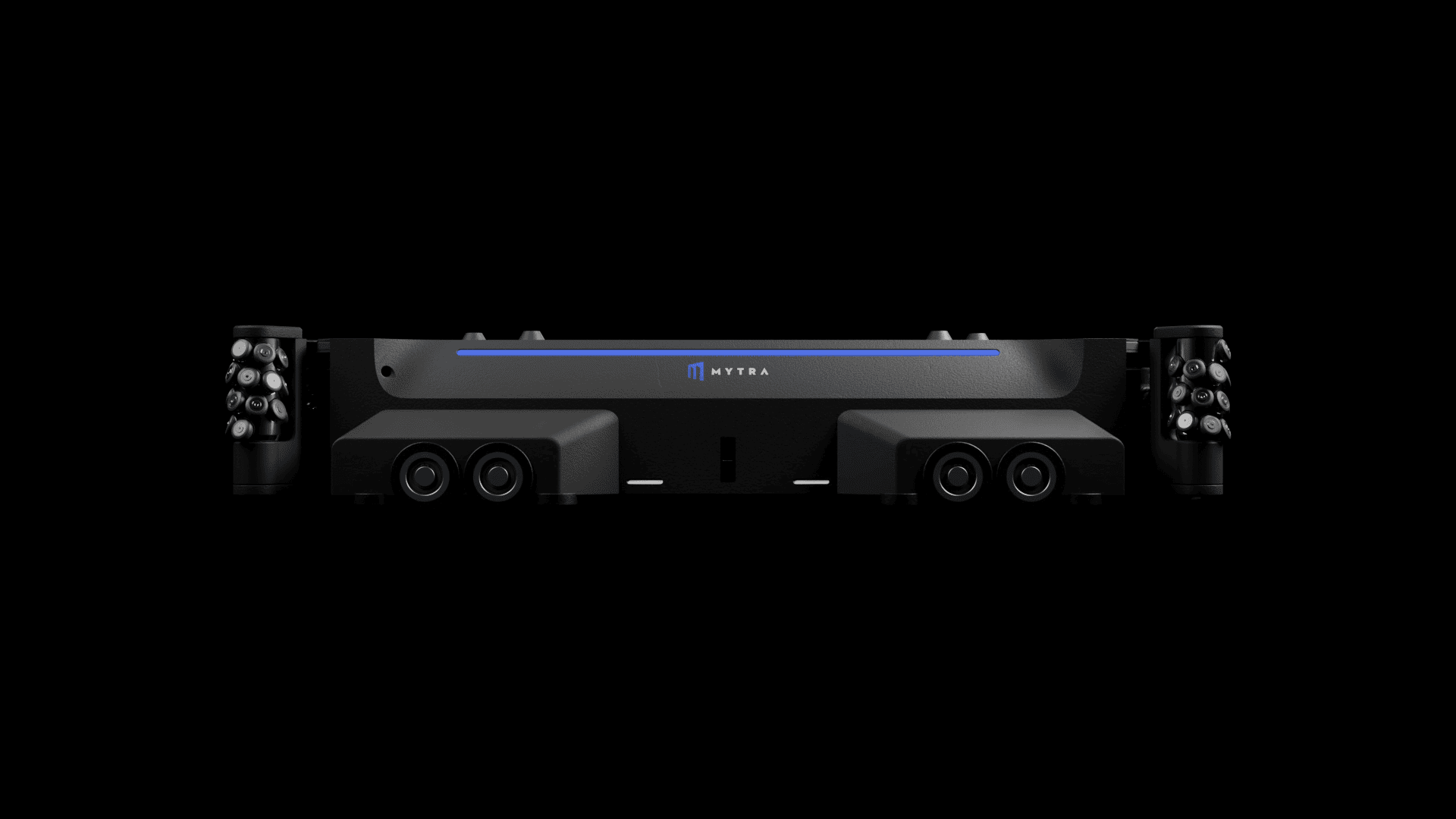
Step inside one of the Albertsons distribution centers where Mytra is now running, and the first thing you notice is what you cannot see. There are no long forklift lanes. No pickers walking miles a shift. There is a steel lattice the size of a city block, and there are bots inside it - identical, square, climbing walls and crossing ceilings, moving 3,000-pound payloads in any direction the software asks for.
The system is quiet, in the way data centers are quiet. The work is happening inside a box. Pallets enter, are stowed, are reshuffled, and exit in the order a truck wants them. That is the whole job. Mytra has decided this job - the dullest, most labor-soaked function in physical commerce - is the one worth obsessing over.
Logistics is a software problem dressed in steel
The dirty secret of warehouse automation is that most of it is brittle. The big systems on the market - conveyors, shuttles, fixed cranes - work beautifully when reality matches the spreadsheet. When demand swings, when SKUs change, when a bot fails at 2 a.m., everything downstream goes sideways. Operators end up running the automation around the automation.
Chris Walti spent seven and a half years at Tesla watching this play out at industrial scale. He ran Model 3 material flow. He started the in-house mobile robotics team. He started, then stepped away from, what became the company's humanoid program. Ahmad Baitalmal, his eventual co-founder, had architected manufacturing software at Tesla and Rivian. They had both, in their own way, seen the same thing: factories were being held up by what happens between the machines.
If you ask Walti why he started Mytra, he will not begin with robots. He will begin with the observation that the physical world is the last frontier still waiting for software's gift - configurability. You can change a webpage in a second. You should be able to change a warehouse in an afternoon.
Three primitives, infinite arrangements
Most robotics companies sell complexity. The pitch goes: here is the perfect machine for your perfect process. Mytra's bet is the opposite - that simplicity, repeated, beats sophistication every time. The company's entire system is built from three things, and only three things:
One: a bot. Identical to every other bot. It has a patented helix corner design that lets it climb the lattice walls, and wheels that let it run flat across them. It does not care whether it is going up or sideways.
Two: a cell. A standard cube in a 3D matrix structure that scales by repetition. Add a row. Add a floor. The shape of your warehouse is now negotiable.
Three: software. AI for path planning, conflict resolution, and self-healing - the kind of distributed coordination problem that ten years ago lived only in the data center.
It is, on paper, a Rubik's cube the size of a building. The cleverness, ironically, is in refusing to be clever. A simpler unit of automation is a more robust one, because anything that goes wrong with one bot or one cell can be routed around by the rest of the swarm.
From a Tesla side conversation to a $2B valuation
The system, broken into parts
The Bot
Identical 3D mover with helix corners and flat wheels. Lifts 3,000 lbs. Goes up, down, sideways - any direction the orchestrator asks for.
The Lattice
A modular cube matrix. No aisles. Add a row, add a level. Density goes up; floor space goes down; reconfiguration is a software change.
Mytra OS
Edge AI for routing, conflict resolution, and continuous learning. When a bot drops out, the swarm reroutes. Self-healing is the default state.
Numbers & believers
The case for Mytra isn't yet that it has reinvented logistics. It's that the people most allergic to risk in the supply chain - large grocers with cold chains, time-windowed deliveries, and razor margins - are running it in production. Albertsons is the public name. There are others. The investor list - Greenoaks, Eclipse, Avenir - is not a typical hardware syndicate; it is a software syndicate, betting on a hardware company that thinks like one.
Funding stack, by round
An operating system for moving stuff
Strip away the lattice and the bots, and Mytra is making a bet about where industrial software is going. For two decades, the most valuable companies in the world figured out how to make bits cheap and configurable. The atoms are still expensive and rigid. The next platform layer, in Walti and Baitalmal's reading, is the one that gives physical operations the same property that cloud gave to applications - the ability to be reshaped without being rebuilt.
That is what the company means when it calls itself software-defined. The hardware is the price of admission. The product is the orchestration.
The boring problem with the biggest bill
The math here is unromantic in a way that should worry anyone competing with it. Labor in warehousing is scarce, expensive, and increasingly unwilling. Real estate is up. Consumer expectations - same-day, next-day, never-late - keep ratcheting in the wrong direction for incumbents. Any system that makes a warehouse denser, faster, and reconfigurable on Tuesday afternoon doesn't need to be revolutionary to win. It just needs to ship.
Mytra is shipping. Walk back into that Albertsons facility and the bots are still moving, the lattice is still humming, the trucks are still leaving on time. The aisle is gone. The forklift is shorter on work. The math has done the talking.