A frequent flyer program usually begins with a ticket. Miles began with the trip to buy one, or with the walk you took instead. At its 2018 launch, one mile on foot could earn ten reward miles. A mile on a plane earned a tenth of one. The app had borrowed aviation's most familiar unit of account, then given the advantage to the pedestrian.
- Miles was a free app that counted trips automatically and turned movement into redeemable points.
- Merchants paid for customers driven by offers; transit agencies and automakers also bought rewards technology.
- The company reported seven million reward redemptions by 2021 and shut the app on May 14, 2025.
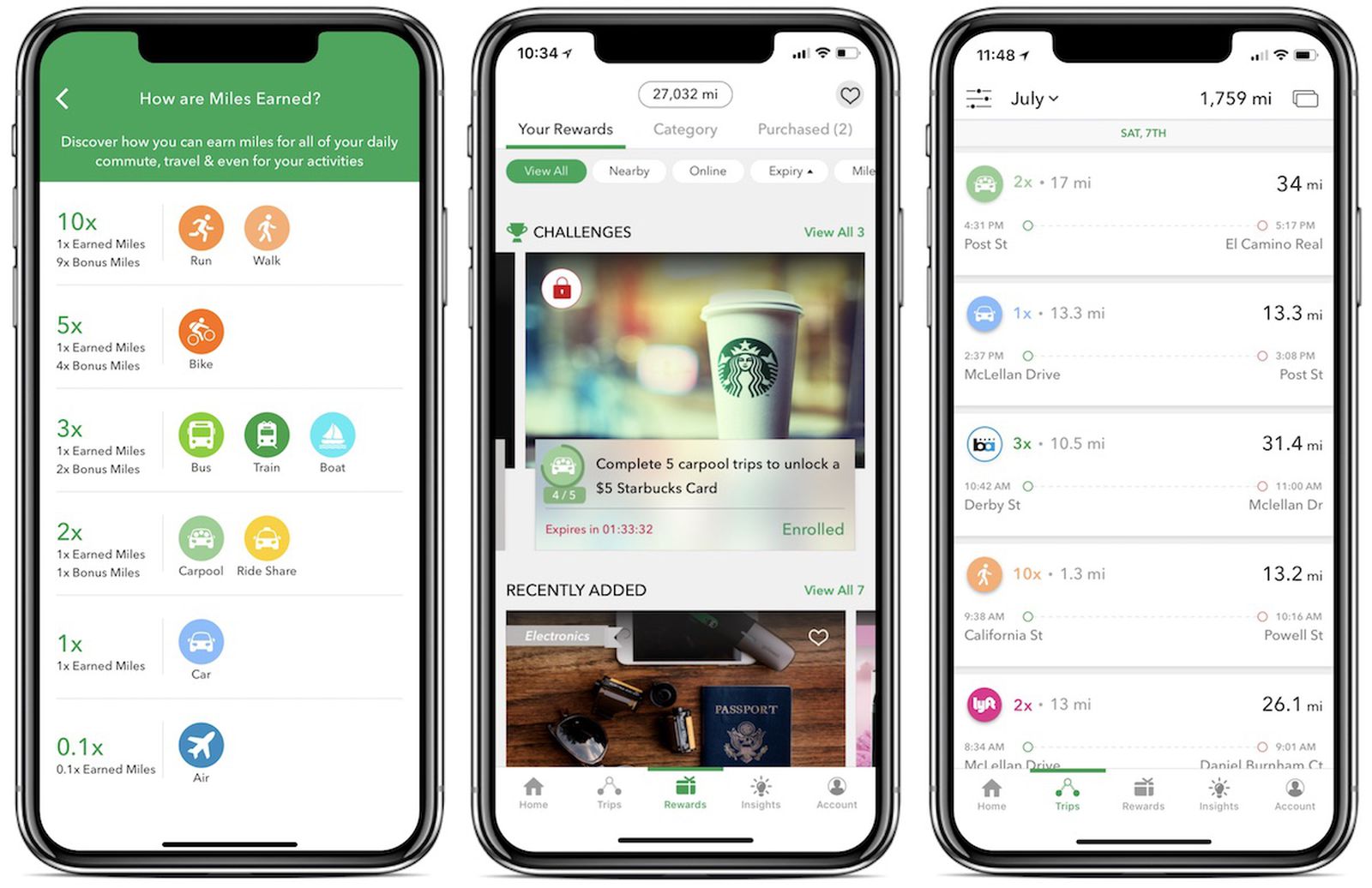
The proposition was charming because it asked so little at the point of use. Carry a phone. Travel as usual. Miles detected the journey and its mode in the background, then credited the account. Driving, ridesharing, taking a train, cycling, walking, even going by boat could count. A member could exchange points for discounts, gift cards, entries in raffles or donations. It was loyalty for the activity between transactions, where most loyalty programs saw blank space.
The journey was the receipt
Jigar Shah, Paresh Jain and Parin Shah founded Miles in 2016. Their app arrived in July 2018, pitched as a universal program for travel across modes and providers. Airline miles belong to an airline. A credit card rewards spending. Miles claimed the miles in between: the bus ride to work, the short walk to lunch, the car journey to a store. One app could recognize them all, without asking a passenger to keep a travel diary.
Its arithmetic carried an editorial opinion. At launch, car travel earned one point per mile, a rideshare two, public transit three, cycling five and walking or running ten. The scheme could reward a greener choice without lecturing anyone about it. A commute became a little game, and the smaller, healthier trip often won. Later promotions changed the multipliers; the principle survived.
Launch rates, not a permanent conversion table.
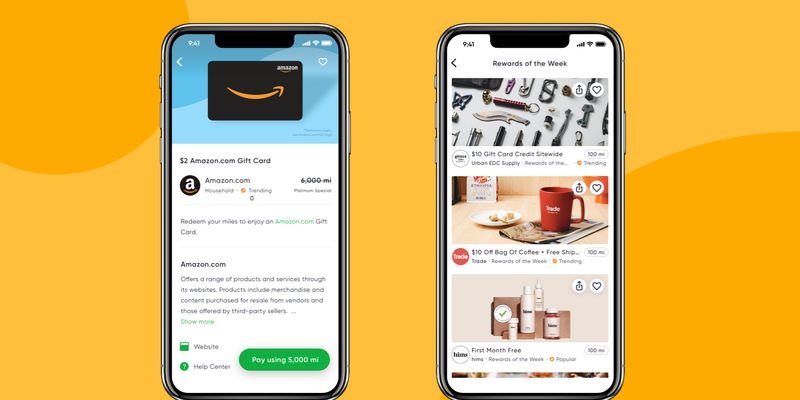
There was a price, even though the app was free. Automatic tracking worked best with continuous location access. That made the exchange unusually plain: the user offered knowledge of how and where they moved; Miles offered points whose value depended on the rewards then available. Some offers were true gift cards. Others were introductory discounts that still required a purchase. A coupon for a new customer can feel generous to a brand and rather less so to a commuter who has collected points for weeks.
The customer who paid was usually a brand
Miles's consumer bargain had a business half. A 2021 interview with the head of Miles Japan described the model as performance based: merchant offers appeared in the app, and Miles received a fee when a redeemed offer brought a customer. The points were an invitation to shop, issued before anybody bought a thing. That reversed the normal order of a loyalty card. A cafe usually gives points after coffee; Miles could give someone points for walking toward the cafe.
The list of reward partners grew past 200 brands, spanning retailers, food delivery, travel services and subscriptions. Miles said users had redeemed 500,000 rewards by mid-2020. A year later, its account had reached seven million redemptions, alongside 12 billion reward miles earned and more than $50 million in claimed user savings. Those are company reported totals, useful evidence of activity. They do not, by themselves, say what an average user earned, what merchants paid, or whether the whole exchange was profitable.
reported in 2021
reported in 2021
July 2021
The funding round, led by Scrum Ventures, brought the company's announced cumulative investment to $20 million. Japan Airlines' innovation fund joined it, along with TransLink Capital and other investors. Japan became Miles's first international launch that October. It was a deliberate destination: a local executive told ITmedia that Japanese consumers were already enthusiastic users of point programs. An exportable earning engine still needed local offers that people would actually want.
Then the world stopped moving
A rewards app built around trips met a grim test in 2020. With commutes collapsing, Miles offered bonus points for staying home and made a Staying Home category for delivery, exercise and entertainment offers. It also favored walking, running and cycling with extra points. This was the first obvious change in the story: the company could no longer depend on the behavior it had named itself after. It moved the incentive to where people were, including inside their homes.
Another extension was less visible to ordinary app users. Miles worked with Vix Technology to connect rewards to transit ticketing systems. Agencies could issue targeted challenges, including a reason for a driver to try transit, and inspect whether travel patterns changed. Vix and Miles said agencies had seen documented shifts of 1% to 4% toward greener modes among users who primarily drove, depending on local circumstances and rewards. It was a modest range, which made it more interesting than a slogan. Changing a commute is harder than opening an app.
The company also supplied the machinery to bigger brands. Stellantis launched a branded Miles app for its customers. By September 2022, Miles said it had more than 100,000 users, 250,000 redemptions and over 450 rewards in that program. The branded version put the automaker's name in front and Miles's earning and redemption system behind it. This was a second market: selling the program itself, not just the attention of its own members. Miles also described an SDK used in a Japan Airlines app.
“Mobility today is a universal behavior that goes largely unrewarded.”Jigar Shah, 2018 launch announcement
A point is a promise
By 2024, Shah was describing an app that reached beyond travel. Public posts announced PayPal cash redemption, games and a new tier system. The founding vision was also being phrased more broadly: reward everyday actions, large and small. The changes suggest a search for more reasons to return to the app and more ways for a point to feel useful. The public record does not establish which change mattered most to the business.
On May 14, 2025, Miles announced that its app would shut down effective that day. The short notice thanked users and partners and described the end of an almost nine year journey. It did not give a detailed reason. Any tidy story that blames a single feature, a single market or a single funding round would pretend to know more than the announcement says.
What can another company borrow? First, find a behavior that matters before the purchase, then make the reward arrive with almost no effort. Second, give a partner a measurable reason to fund it: a new customer, a redeemed offer or a transit ride that otherwise would have been a drive. Third, make the value of points legible. A vast pile of miles is less persuasive than a reward someone wants this afternoon. The model struggles when people decline location access, when a useful offer is hard to find, or when a merchant cannot see enough new business to justify paying for it. Miles proved that everyday motion could be counted. The difficult part was making every side of that count agree on what it was worth.
More from the road
These contemporary accounts and company channels trace the app from launch through its later partnerships.