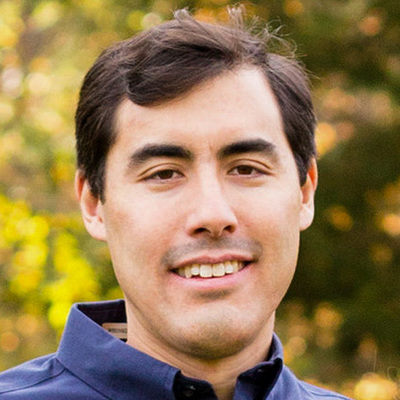
The man who built a spam filter in a week, a blog for two decades, and a reputation that no algorithm can replicate.
In a world where tech media chases clicks and venture capital chases growth, Michael Tsai does something almost subversive: he just shows up every day. From a small town in New Hampshire, he writes a blog that the Apple developer community has used as a daily compass since 2002. No advertising. No VC funding. No editorial team. Just one person with sharp eyes, a clean writing style, and an unbroken publishing streak that most media companies could only dream of.
If you follow Apple developer news, you have probably read a Michael Tsai roundup without realizing it. When a controversy erupts in the Mac world - App Store policy, a new macOS API, a developer relations breakdown - Tsai is the one who gathers every meaningful reaction, adds his own measured commentary, and publishes the whole picture in one place. John Gruber, the founder of Daring Fireball, has called him one of his favorite bloggers and regularly points his own readers toward Tsai's roundups as the definitive overview of community sentiment.
But Tsai is not just a curator. He is a builder. His company, C-Command Software, produces four commercial Mac applications that he codes, designs, markets, and supports entirely by himself. The flagship product, SpamSieve, has been filtering email for over two decades and remains the most accurate spam filter available for macOS. EagleFiler organizes research and files. DropDMG handles disk images. ToothFairy switches Bluetooth devices from the menu bar. Each product is meticulous, reliable, and deeply useful - qualities that describe their maker just as well.
"I got impatient and hooked an external filter to Mailsmith via AppleScript within roughly a week of reading Paul Graham's paper."- Michael Tsai, on building SpamSieve (2002)
In August 2002, Paul Graham published "A Plan for Spam" - a paper arguing that Bayesian probability could filter email with startling accuracy. Most people read it as an interesting idea. Michael Tsai read it as instructions.
Within roughly a week, he had written a working spam filter and connected it to Mailsmith via AppleScript. That impatience - the reflex to build a solution the moment a good idea surfaces - became SpamSieve, which launched as a commercial product in late 2002.
By April 2003, Macworld ran a cover story on anti-spam software. SpamSieve 1.2.2 received four mice - the highest rating of any product reviewed. Competing products from larger companies with entire engineering teams received fewer mice than this single developer's side project turned product.
SpamSieve is still the gold standard today. More than two decades after that first AppleScript hack, it works with every major Mac mail client, uses machine learning to adapt to each user's personal email patterns, and achieves accuracy rates that mass-market solutions still cannot match.
Four commercial Mac apps. One developer. Every line of code, every support email, every website update - all Michael Tsai.
The gold-standard spam filter for macOS mail clients. Bayesian machine learning that adapts to your personal email patterns. Achieves 99%+ detection accuracy. In continuous development since 2002.
FlagshipA Mac app for capturing, organizing, and searching files, notes, and web pages. Keeps research and reference material structured and retrievable without forcing you into a proprietary format.
CommercialCreates and converts disk images, archives, and packages for Mac distribution. A utility built for developers and power users who need reliable, scriptable disk image creation.
CommercialOne-click Bluetooth device switching from the menu bar. Acquired from its original developer Robin Lu, who reached out after seeing Tsai's own blog post mentioning the app.
Acquired 2018Every day since 2002, Michael Tsai has published curated links and commentary on Mac, iOS, and Apple developer news at mjtsai.com. This is not a content farm. It is one person doing the reading so that Apple's developer community does not have to chase every thread on every forum and every social platform themselves.
The format is a classic link blog: a short excerpt from an interesting piece, Tsai's own commentary in brackets, and often links to a dozen follow-up reactions from other developers and writers. When something big happens in the Apple world - an App Store policy change, a new OS release, a public dispute between a developer and Apple - Tsai's roundup of community response is frequently more comprehensive and better organized than anything produced by a dedicated news outlet.
Gruber's Daring Fireball linked to one of Tsai's roundups with the note that it was "better than anything I could write on the topic." That kind of peer endorsement from the most respected voice in Apple commentary is not nothing. It is almost everything.
The blog runs without traditional advertising. There is one Carbon network ad on the page - by choice, to keep page loads fast and content clean. Readers who find value in the daily curation support it via Patreon. In 2018, Gruber publicly urged his own readers to become Patreon supporters. The independent model has held for over two decades.
One post about an Apple AI research paper was read by more than 150,000 people. The Guardian adapted it into a published piece with the headline "When billion-dollar AIs break down over puzzles a child can do, it's time to rethink the hype." That is the reach of someone who has been patiently building credibility since 2002.
Apple once held a SpamSieve update in App Store review for 61 days. The only thing that broke the logjam was a mention on Daring Fireball. The app that had received four mice in Macworld had to wait two months for a routine update - and only moved after public attention. Tsai documented the entire thing on his blog.
Robin Lu wanted to hand off ToothFairy to someone who would care for it properly. He searched for an indie Mac developer who actually used the app. He found Tsai's blog, saw a post mentioning ToothFairy, and reached out. The transfer happened because of a single blog post. The blog's value is not just informational - it is reputational.
Tsai's email newsletter is not delivered by any standard system. He built a custom AppleScript that constructs a "fake RSS feed" which MailChimp reads to generate each newsletter edition. A developer who makes his living writing clean, reliable software uses a quirky homebrew system to distribute his own writing. He documented this publicly in 2021 and called it exactly what it is: bad AppleScript.
A post on Tsai's blog about an Apple AI research paper reached over 150,000 readers - the largest audience in the blog's history. The Guardian then adapted it for print. A Patreon-funded link blog written by one person in New Hampshire became source material for one of the world's most read newspapers. This is what two decades of consistent quality looks like.
The Mac indie developer scene is full of one-person operations, but few have managed the combination of longevity, quality, and influence that Michael Tsai has built at C-Command Software. He handles everything: writing the code, designing the interface, running the website, answering support emails, managing App Store submissions, and publishing a daily blog.
This is not a side hustle. C-Command Software is a real business that has supported its founder for over twenty years. The sustainability of this model depends entirely on the trust of users who keep paying for products and the readers who keep supporting the blog via Patreon.
Tsai built his reputation the slow way: by being correct, consistent, and useful over a very long period of time. He does not chase news cycles. He does not write headlines designed for outrage or engagement. His roundups work because they are comprehensive and fair. His software works because it is reliable and maintained. The entire operation is built on the premise that being genuinely useful is sufficient.
In an industry obsessed with scale, Tsai's operation is a deliberate refusal to scale. He is not trying to build a platform, attract investment, or hire a team. He is trying to make software that works and write commentary that is worth reading. Over twenty years in, both projects are ongoing.
"Robin Lu knew from my blog that I used the app and was an indie developer, so asked if I'd like to take ToothFairy over."- Michael Tsai, on acquiring ToothFairy (2018)
Learned BASIC on the Apple II around second grade. His relationship with Apple hardware is older than most people in tech's careers.
Was co-publishing a Mac e-zine (ATPM) at age 16. He was editing other people's writing about Macs before most of his peers had a driver's license.
Maintains a separate hiking log at hiking.mjtsai.com documenting trails across New Hampshire, Vermont, Massachusetts, and Maine.
His newsletter delivery system is built on AppleScript and a synthetic RSS feed. He wrote 3,000 words about how bad it is. It still works.
SpamSieve was built in approximately one week after Tsai read a research paper. The same impatience that created the product has kept it maintained for over 20 years.
C-Command Software runs entirely without employees. Every support ticket is answered by the person who wrote the code being asked about.