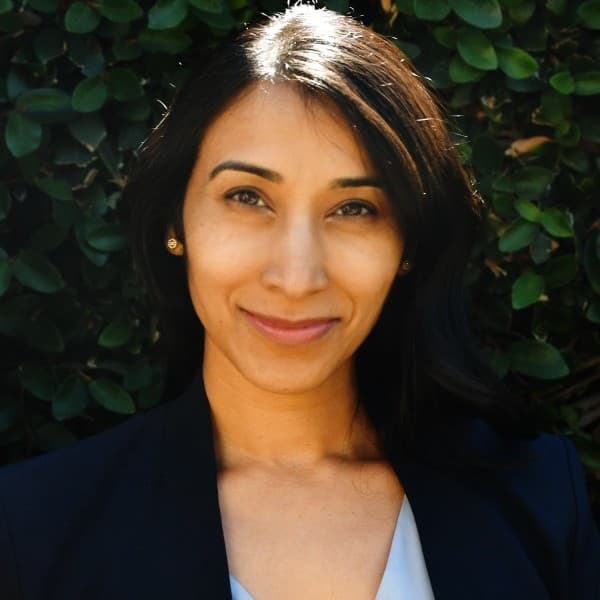
The first Seen Health PACE center sits at 1839 W Valley Blvd in Alhambra, California - smack in the middle of the San Gabriel Valley's Chinese and Vietnamese-American communities. It is a deliberate address. And behind the product vision, the technology stack, and the people operations that make it run is Meena Ramachandran, a Stanford electrical engineer who took a detour through UC Berkeley's School of Public Health and never looked back.
She is not building a senior care product. She is building a world where a Cantonese-speaking grandmother in her 80s can see a doctor who speaks her language, do tai chi with neighbors who share her calendar, and get their medications coordinated by a team that knows the difference between food as medicine in Guangdong versus a pharmacy prescription in Los Angeles. It's harder than it sounds. It's precisely the kind of problem that requires someone who understands both firmware and epidemiology.
"I'm wrapping up a year of fractional product work and joining Seen Health full time."- Meena Ramachandran, LinkedIn, 2024
The Engineer Who Went Public Health
Meena's origin story starts with circuits, not clinics. Stanford electrical engineering - the kind of degree that opens doors to chip design, signal processing, and aerospace. She walked through a different door. Medtronic. Medical devices. The moment where hardware meets human anatomy and every software bug has potential consequences measured in heartbeats rather than error logs.
From there, she made a move that most engineers don't: she enrolled at UC Berkeley simultaneously for an MBA and a Master of Public Health. Not one. Both. In the same program cycle. She graduated with honors, landing in the top 10% of her class. Those two letters - MPH - are not decorative. In healthcare product leadership, an MPH changes how you read data. You're not just asking "does this feature work?" You're asking "does this feature reduce disparities?" Different question. Much harder to answer.
Medtronic
Test engineer to Senior R&D engineer. Learning how hardware fails when the stakes are literally cardiac. The foundation of everything that comes after.
Castlight Health
Senior Director of Product Management, 2013-2017. Health navigation platform. First real exposure to how employers and employees interact with benefits systems.
Myriad Genetics
VP of Product & User Experience, 2017-2020. Genomics meets consumer healthcare. Building product at the edge of what people understand about their own biology.
Brightline
Chief Product Officer, Oct 2020-Jun 2023. Pediatric behavioral health. Scaled the product team from scratch to 20+ PMs, designers, researchers, and analysts.
Fractional & Advisory
A deliberate year of portfolio work: Givers Health, paretoHealth, Brightline strategy, and 81cents (pay equity for women). Reconnaissance before commitment.
Seen Health
CPO & EVP People. The full-time bet. AI-native care planning, culturally-tailored PACE, and a $22M Series A runway to prove the model works at scale.
What Brightline Taught Her
Between 2020 and 2023, Meena ran product at Brightline - a venture-backed startup focused on children's behavioral health care. The market was desperate: pediatric mental health had a years-long waiting list problem before COVID made it catastrophic. Meena's job was not just building features. It was building an organization that could build features - hiring PMs, designers, researchers, analytics leads, and product operations specialists and fusing them into something coherent under pressure.
She left with something valuable: the specific operational knowledge of what it takes to scale a digital health product team from zero, mid-crisis, while the clinical demand is already outpacing capacity. That's not a credential. That's scar tissue. And at a 44-person startup like Seen Health, scar tissue is more useful than a clean slate.
Seen Health's PACE model has existed for 50 years and currently operates in 32 states. Most Americans have never heard of it. Meena's job is partly to change that - by building the technology layer that makes PACE scalable, culturally intelligent, and AI-native.
The PACE Bet
PACE - Program of All-Inclusive Care for the Elderly - is a federal program that lets seniors get comprehensive medical, social, and support services while continuing to live at home, rather than entering nursing facilities. It covers everything: primary care, specialist visits, medications, physical therapy, social activities, transportation. Think of it as a full-service campus model that's delivered without requiring the senior to move.
The problem: PACE centers have historically been culturally generic. A Mandarin-speaking senior in Alhambra doesn't benefit from a program that operates entirely in English, schedules Western meals, and has no tai chi instructor. Seen Health's founders - twin brothers Xing and Yang Su, formerly of Uber and Salesforce - designed the company around this gap. Their first center targets the Asian and Pacific Islander community in Los Angeles's San Gabriel Valley, with native-language providers, culturally informed meal programs, Eastern medicine integration, and staff hired from the community they serve.
Meena's product role sits at the center of this: building the tech infrastructure that makes a culturally intelligent PACE center operationally possible at scale. Care planning, delivery coordination, outcome measurement - the Seen Health team presented their AI-native approach to all of it at the National PACE Association conference in New York, in front of 1,300+ PACE leaders.
Why CPO and EVP People Is One Job
Meena's title at Seen Health is deliberately doubled: Chief Product Officer AND Executive VP of People. At most companies, those are separate organizations with separate reporting lines, separate OKRs, separate leadership cultures. At Seen Health, they're one job, held by one person.
This is not a budget constraint. It's a philosophy. Building a culturally-competent healthcare product requires hiring people who reflect the communities you serve. You cannot outsource culture to a separate HR function while product leadership builds something that doesn't account for it. The team who builds the care planning software and the team who recruits the Cantonese-speaking nurses have to be running toward the same target. Meena holding both roles keeps that alignment non-optional.
The parallel to her 81cents advisory work isn't accidental. She spent time advising a startup whose entire mission was helping women and underrepresented minorities understand whether they were being paid fairly - and giving them the data to negotiate. That's not a side interest. That's a consistent pattern in what she chooses to invest her time in.
The 6 Million Family Number
One data point from the Brightline years that doesn't get enough attention: during her tenure as CPO, Brightline partnered with California's Department of Health Care Services to give 6 million families in the state access to free behavioral health support. Not a feature launch. Not an app update. Six million families. The scale required the state government as a distribution channel, and Brightline's product infrastructure as the delivery mechanism.
That's the kind of number Meena has experience working toward. And with 10 million seniors nationally eligible for PACE programs - many of them in underserved communities where no culturally competent option currently exists - the ambition at Seen Health runs on a similar scale.