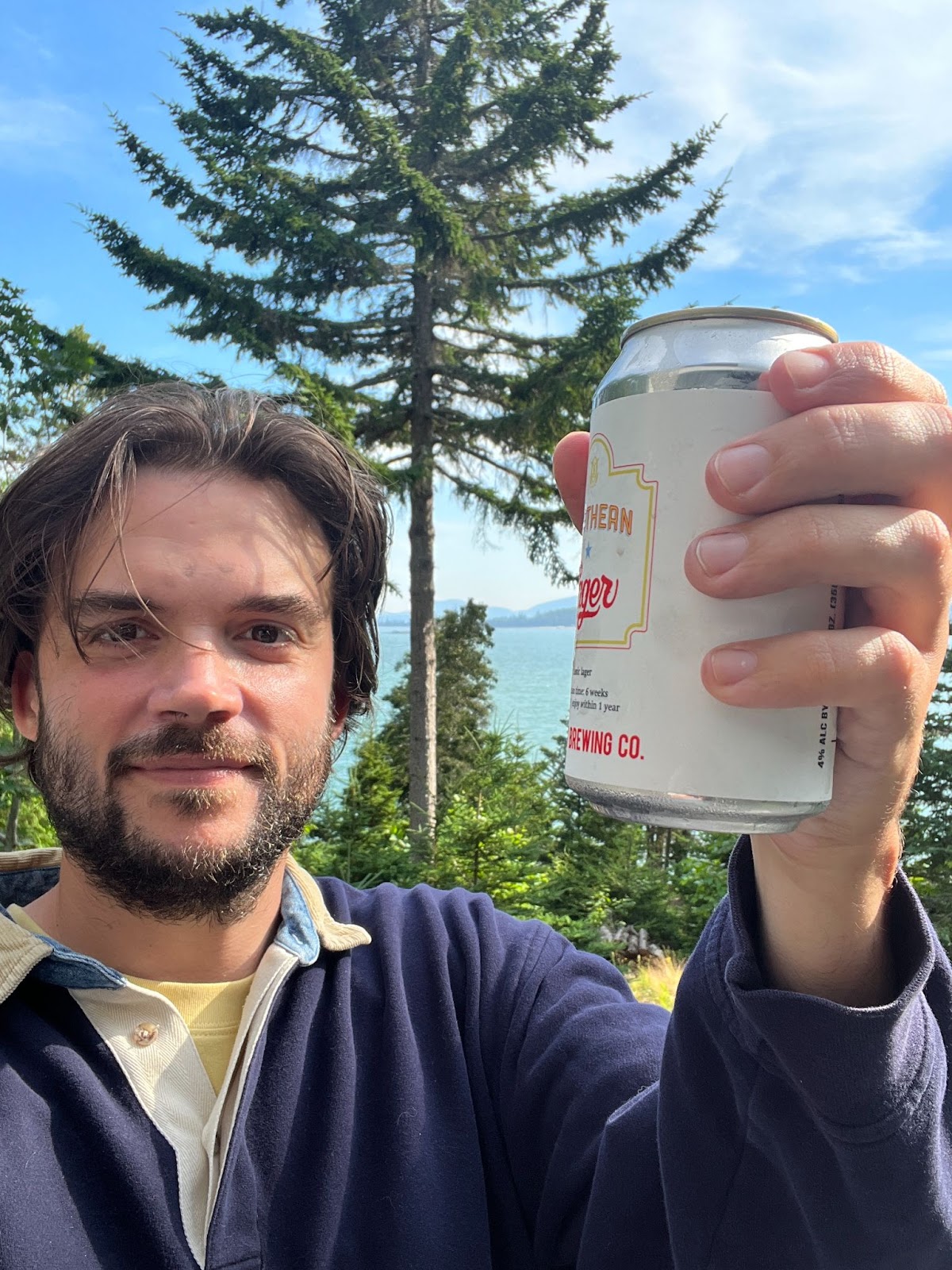
The Guy Who Reads the Internet So You Don't Have To
Here is what you need to understand about Max Read: he has quit Twitter. He has quit Instagram. He gets his news from website homepages - the New York Times, the Financial Times, New York Magazine - like it's still 2009. His favorite app is a weather radar tool. And somehow, this man, this deliberate refuser of the engagement economy, has built a newsletter that 60,000 people read twice a week to understand the internet.
That is not a contradiction. That is the entire point.
Read Max - the newsletter, not the man - is what happens when someone who genuinely understands platform mechanics, content economics, and the weird psychology of online life decides to stop performing those things and start explaining them. Every issue is, as Read himself puts it, "an idiosyncratically curated, highly biased, and intermittently funny guide" to the ideas, trends, and networks shaping tech, politics, culture, and media. Which is to say: it reads like the smartest person at the dinner party finally stopped being polite.
The newsletter launched October 18, 2021 - the day Read stopped writing for other people's publications and started writing for his own audience. In the first year: 13,000 free subscribers, 925 paid. By year two: 26,000 free, 1,875 paid. By 2024: 60,000 total, ranked #24 in Technology on all of Substack. This is what compound interest looks like when the asset is a coherent, uncompromising editorial voice.
"We live in the future. The future sucks, but we live here."- Max Read
Read is also, as credentials go, one of the more unusual figures in tech journalism. He won the Village Voice "Best Personal Tumblr" award in 2011 - a sentence that will mean everything to anyone who remembers what the internet was before the platforms ate it, and nothing to everyone born after 2000. He was Editor-in-Chief of Gawker. He founded Select All, New York Magazine's technology and internet culture vertical. He has a piece in The Best American Essays 2021. He is a WGA member screenwriter. He hosts a bi-weekly Substack Live chat with political writer John Ganz. He is, by his own account, a "homepage guy."
That last credential might be the most revealing. In an era when every media pundit talks about "meeting audiences where they are" - which means TikTok, which means the algorithm, which means whatever the feed decides - Max Read is quietly, stubbornly, opening browser tabs. He trusts curation over optimization. He trusts editors over engagement scores. He is, in this specific sense, deeply old-fashioned in a way that has turned out to be entirely correct.
Did He Kill Gawker? (He Wrote 3,000 Words on This)
In March 2014, Max Read became Editor-in-Chief of Gawker.com. This was not a quiet job. Gawker was, depending on your perspective, the most important media outlet on the internet or a publication that had collectively decided that consequences were for other people. Under Read, the site continued its tradition of being sharp, funny, legally reckless, and occasionally brilliant.
Then came the summer of 2015. Gawker published a story about a Conde Nast executive - written by Jordan Sargent - that the business side of the company then voted to remove without editorial input. Read, along with executive editor Tommy Craggs, resigned in protest on July 20, 2015. The reasoning was clear: the separation of editorial and business interests is not a preference, it is the thing that makes journalism journalism. When that line gets crossed, you leave.
The next year, Gawker was sued into oblivion by Hulk Hogan in a case secretly funded by Peter Thiel. The site shut down in August 2016. Read wrote "Did I Kill Gawker?" for New York Magazine - a searching, clear-eyed autopsy that named multiple suspects: GamerGate (which he called Gawker's "most effective enemy"), Thiel, Nick Denton, the general cultural shift that made Gawker's particular mode of snark feel less like punching up and more like punching around. And yes, himself.
"Online is now the way everything is five years later."- Max Read, on GamerGate's political significance
The Gawker piece is worth reading not just as media history but as a demonstration of what makes Read a good critic: he is willing to be wrong in public, willing to interrogate his own role in outcomes, willing to hold multiple explanations in mind without collapsing them into a simple story. That is a rarer skill than it sounds, especially when you're one of the people being examined.
The Gawker years also produced what may be Read's sharpest early observation: that GamerGate - a 2014 harassment campaign against women in gaming, largely treated at the time as a weird internet niche thing - was a preview of mainstream political movements. "Online is now the way everything is five years later," he noted. He was right.
"I have not yet seen [AI] produce things I would want appearing under my byline."
"Very little good could come of tweeting, and a great deal of bad almost certainly would."
"I hope I'm dead by the time [the metaverse] happens."
"GamerGate was Gawker's most effective enemy." - and a preview of everything that followed online.
Building Select All, Then Going Independent
After Gawker, Read landed at New York Magazine as senior editor. He founded Select All, the magazine's dedicated vertical for technology and internet culture. He wrote a column called "Life in Pixels" - the subtitle was "the internet and other signs of the apocalypse," which is either depressing or accurate depending on how your week is going. He co-wrote "The Year in Memes," an interactive feature that was nominated for a National Magazine Award in 2017. He contributed to the New York Times and the New York Times Magazine.
During this period he also published "Going Postal" in Bookforum - a psychoanalytic reading of social media and the death drive that landed in The Best American Essays 2021, guest edited by Kathryn Schulz. If you want to understand what kind of writer Read is, that sentence is useful: a Bookforum piece, psychoanalytic theory, social media criticism, Best American Essays. He is working in a tradition closer to cultural criticism than to tech reporting, which is probably why his takes have a longer shelf life than most.
He is also a WGA member screenwriter. This is not a hobby or an experiment - WGA membership requires professional writing credits. Read has publicly discussed WGA protections around AI use in writers' rooms, which, given his broader views on AI-generated content, puts him in the interesting position of defending craft in two different industries simultaneously.
Read uses Claude AI personally for brainstorming and transcription. He has not seen it produce work he'd want under his byline. He resists "remainder humanism" - the easy argument that human-created work is inherently superior - while advocating for transparency about AI use. This is a more careful position than most people in either the pro-AI or anti-AI camps manage.
His newsletter Read Max launched in October 2021 and covers, depending on the week: internet culture, AI, 1990s nostalgia, online forum dynamics, action cinema, conspiracy theories, science fiction franchise economics, media criticism, platform politics. The throughline is not a beat but a sensibility: the internet as a cultural and psychological force worth taking seriously, without pretending it's good for us or that we're going to stop using it.
The newsletter is priced at $5 a month or $50 a year. Paid subscribers get weekly media recommendations - books, streaming, articles - plus additional explainers. Free subscribers get two posts a week. The audience has grown entirely without advertising or social media promotion (remember: he quit Twitter), which says something about the value of having a consistent, clear point of view.
The Journey
What Makes Him Tick
The Record
Things You Can Bring Up At Dinner
- His favorite app is RadarScope Pro - a weather radar mapping tool he recommends to anyone who will listen
- Zero paid subscribers in five US states: South Dakota, Mississippi, South Carolina, West Virginia, and Delaware. Surprisingly strong in Germany.
- Coined the term "FYPcore" to describe music optimized for the TikTok For You Page algorithm
- Uses the cry-laughing emoji in ~50% of texts. Attributes this entirely to becoming a father in his late 30s.
- Quit both Twitter and Instagram deliberately - concluded each offered more downside than upside
- Is a WGA member screenwriter with professional TV/film credits alongside his journalism career
- Gets his news by visiting website homepages directly - NYT, FT, New York Magazine
- Hosts a bi-weekly live chat with political writer John Ganz where they discuss politics, tech, and culture
A 60,000-Person Conversation About What the Internet Is Doing to Us
The best way to understand Read Max the newsletter is to look at what it covers. On any given week you might get: a close reading of why a specific AI content flood is qualitatively different from previous internet slop. A retrospective on the 2010s digital media era that is simultaneously funny and genuinely sad. An explainer on Web3 economics that manages to be critical without being smug. A piece on 1990s nostalgia that connects to something you'd actually been thinking about but hadn't articulated.
The throughline is that Read treats internet culture with the same rigor and the same irreverence he'd bring to any cultural object. He is not in the business of either celebrating tech or eulogizing it. He is in the business of explaining it - what it does to attention, to discourse, to the way people form opinions and communities and grievances. His background in cultural criticism rather than pure tech reporting means the analysis tends to stick longer than a news cycle.
He publishes roughly 125 posts a year - around 150,000 to 200,000 words. For paid subscribers there are weekly media recommendations covering books, streaming, and articles. There is a podcast (Apple Podcasts, launched 2023). There is the bi-weekly live chat with John Ganz. The total package is less "newsletter" in the traditional sense and more "a person who thinks carefully about the internet, twice a week, with occasional extras."
"The internet isn't inherently bad for democracy. Specific platforms like Facebook enforce communication patterns that undermine civic discourse."- Max Read's core argument about platforms
His geographical data is also instructive: zero paid subscribers in South Dakota, Mississippi, South Carolina, West Virginia, and Delaware. Strong readership in Germany. This is not a newsletter for everyone. It is a newsletter for the digitally knowledgeable who are still interested in thinking about digital culture - not people who want basic explainers, but people who already understand the landscape and want someone with a clear point of view to help them make sense of it.
The growth from zero to 60,000 without a social media presence is worth sitting with. Every subscriber arrived through recommendation, through someone sharing a piece, through the work itself. In an attention economy built on platform amplification, that's a fairly loud argument that quality compounds even when the algorithm is not involved.