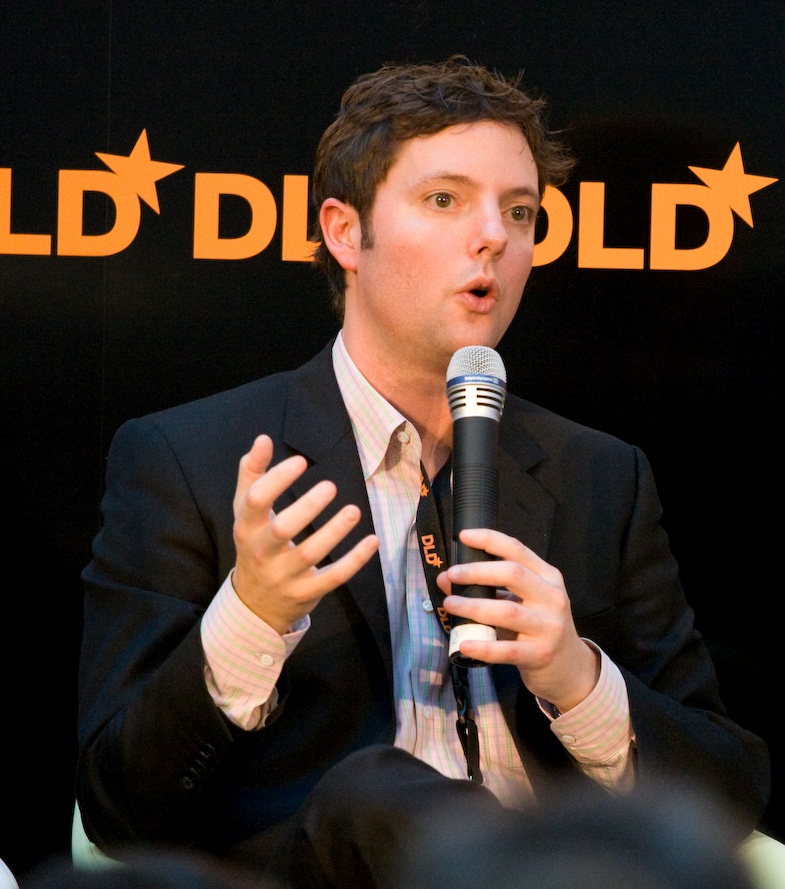
The Quietest Consequential Person in Silicon Valley
February 2011. A 13-person company with no revenue, no business model, and one very good idea about photography. Benchmark Capital wrote a $7 million check. The room valued Instagram at roughly $20 million. Eighteen months later, Facebook paid one billion dollars for it. That is not a story about luck. That is a story about Matt Cohler.
Cohler does not give TED talks. He does not post on LinkedIn. He does not have a personal website or a Substack. For someone who sat in the first five chairs at Facebook, helped build LinkedIn from nothing, and assembled one of the most celebrated consumer internet portfolios in venture capital history, he has an almost preternatural resistance to the spotlight. In a valley that rewards personal branding above almost everything else, this is either eccentricity or wisdom. Probably both.
The Road No VC Takes
Born in New York in 1977, Cohler went to Yale and studied music - not computer science, not economics, not anything that announces itself on a Sand Hill Road resume. He graduated with honors and distinction. Then he went to work for McKinsey in China. Then he came back and became a founding member of LinkedIn. Then Mark Zuckerberg hired him as employee number five at Facebook, where he served as VP of Product Management and personal advisor to the CEO. Then he became the youngest general partner in Benchmark Capital's history at 31.
The pattern here is not an accident. Cohler has a specific gift: he joins things before they are obvious. LinkedIn in 2003, before professional networking was a concept. Facebook in 2004, when it was a college website. Instagram in 2011, when photo filters were considered a parlor trick. The companies he missed would be interesting. The ones he got in on early tell you everything.
"The smartphone is a lot more like a TV than a web browser ever was. One screen the user focuses on, in a device they have a deep emotional connection to." - Matt Cohler, TechCrunch, September 2012
That quote ran in September 2012, when the tech industry was busy panicking about whether mobile advertising could ever work. Cohler thought it would be better than web advertising. He was right. This is the thing about him: his predictions are not flashy. They are structural. He sees how a medium changes behavior, not just how a product gets used.
Benchmark and the Decade of Bets
Benchmark Capital is Silicon Valley's most unusual great venture firm. No managing partner. No hierarchy. No management fees driving partner incentives. Every general partner owns an equal slice and gets paid equally. The flat structure produces a strange thing: partners who are actually peers, not colleagues performing collegiality around a power differential. Cohler joined in 2008 as the youngest GP in the firm's history and spent the next decade making some of the most consequential bets in consumer internet.
Instagram was the marquee. But the portfolio around it deserves equal attention. Tinder, before swiping right was a cultural shorthand. Dropbox, before cloud storage was obvious. Asana, the project management software founded by Dustin Moskovitz and Justin Rosenstein - both ex-Facebook, both from Cohler's orbit. Zendesk, the customer service software that went public in 2014. Quora, the Q&A platform that Reid Hoffman, Cohler's old colleague from LinkedIn days, believed in early.
He did not just back the right companies. He backed the right founders, at the right moment, with the right conviction - when the rest of the room was still asking questions.Profile observation - YesPress
In 2018, Cohler stepped back from active fund management at Benchmark. No dramatic departure. No tell-all interview. No Medium post explaining his "next chapter." He retained his board seats at portfolio companies and began the quieter second act that, in many ways, says more about who he is than the first one did.
After the Spotlight That Never Was
Post-Benchmark, Cohler joined the board of KKR & Co. Inc., the $500 billion private equity titan. He joined the Yale Investments Office Investment Committee. He became Vice Chair of the Environmental Defense Fund's board of trustees. He joined the Chan Zuckerberg Initiative's Endowment Investment Committee. These are not trophies. They are ongoing commitments - governance roles at institutions that actually matter.
His personal investment vehicle is called Oslo Holdings. The name is not random. His wife, Pia Pernille Oien Cohler, is Norwegian. There is something characteristically Cohler about this: a private financial entity named for his wife's home city, invisible to casual Google searches, operating entirely off the radar. The venture capital industry is full of people who want you to know what they are worth. Cohler seems to genuinely prefer that you not.
He co-founded FWD.us in 2013 with Mark Zuckerberg - a bipartisan policy organization focused on immigration reform and criminal justice. The roster of co-founders included several other Silicon Valley figures. FWD.us has worked with legislators on both sides of the aisle, focused on durable policy change rather than tech-sector grandstanding. It is, like most things Cohler does, understated in ambition and substantial in execution.
The Pattern Underneath Everything
If you want to understand Matt Cohler, the music is the key. Not as a fact about him - as a lens. He has served on the San Francisco Symphony Board of Governors since 2007. Not since he made money. Since before Benchmark. Since before his investments had names anyone would recognize. The Symphony board was not a networking move or a philanthropic obligation. It preceded all of it.
He is also a patron of the Freunde der Berliner Philharmoniker - the official friends organization of the Berlin Philharmonic, one of the world's great orchestras. This is an invitation-based honor, not something you sign up for with a credit card. You earn it through demonstrated long-term commitment to classical music at an institutional level.
What does classical music have to do with venture capital? Perhaps everything. Both require the ability to hold complexity in your head simultaneously - multiple voices, multiple themes, multiple time signatures - and identify which ones will resolve into something beautiful. Both reward patience over impulse. Both punish people who only follow the score instead of listening to the room.
Cohler graduated with honors in music from Yale. He then spent the next twenty-five years being early to LinkedIn, early to Facebook, early to Instagram, early to mobile advertising, early to a dozen other things that now look obvious. The music degree is not trivia. It is context. The man has been trained, his entire adult life, to hear things before other people hear them.
What He Leaves Behind
There is no official tally of Matt Cohler's net worth. Forbes put him on their "40 Richest Under 40" list in 2015. The combination of early Facebook equity, a decade of Benchmark carry on a portfolio that includes Instagram, Tinder, Dropbox, and Asana, plus a KKR board seat - the number is almost certainly in the hundreds of millions. He does not appear to care.
What he appears to care about: governance that actually matters (KKR, Yale, EDF), institutions that will outlast him (the Berlin Philharmonic has been performing since 1882), and people he has known for decades (Zuckerberg, Hoffman, Moskovitz). The relationships Cohler has built are not transactional. They are the architecture of a life lived at the intersection of rigor, taste, and early conviction.
Silicon Valley produces a lot of people who are famous for being early to things. Very few of them are also serving on symphony boards, patrons of European orchestras, and vice chairs of environmental organizations simultaneously. Even fewer do all of this without a publicist, without a podcast, without a Twitter presence that requires a paywall to access.
Matt Cohler heard the music. He invested accordingly. He keeps listening.