Breaking
FT chief economics commentator since 1996 "If we want to save democracy, we need to fix capitalism" No PhD - Paul Krugman says that "matters not at all" Joined the World Bank at age 24 CBE for services to financial journalism, 2000 Gerald Loeb Lifetime Achievement Award, 2019 Five books and five summers of writing
The Profile

Martin Wolf

He spent the 1990s selling the world on free markets. Then 2008 happened, and he said so.

Financial Times Economist Author London
Martin Wolf

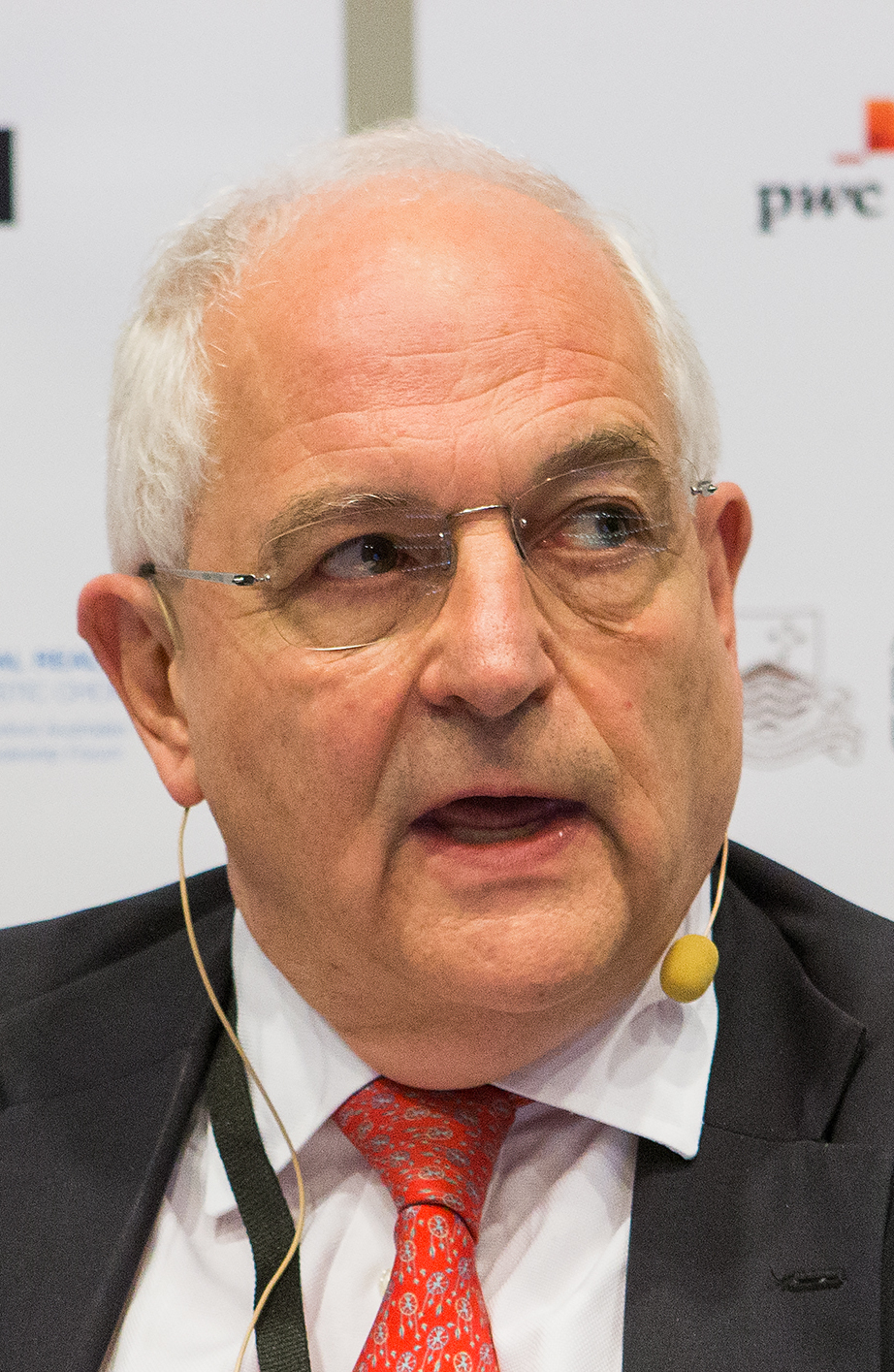
Martin Wolf. The face finance ministers read before breakfast.

Dispatch

The columnist who argues with himself in public.

Every week, a few thousand words leave Martin Wolf's desk at the Financial Times and land on the screens of central bankers, finance ministers, and the people who manage other people's billions. He has done this since 1996. What makes him rare is not the readership. It is that he is willing to be seen changing his mind.

1987
Joined the FT
5
Books written
10+
Years at World Bank
CBE
Awarded 2000
The Argument

A free-market believer who recanted on the record.

For most of his career, Wolf was globalization's most articulate advocate. His 2004 book, Why Globalization Works, was a deliberate piece of persuasion - a case made to win, not a neutral survey. He believed open markets and private capital would lift the world, and he wrote that belief into hundreds of columns read by the people who set policy.

Then the 2008 financial crisis arrived, and the machinery he had championed seized up in front of him. Wolf did not bury the disagreement in footnotes. He reconsidered out loud. His confidence in an economy run by the private sector cracked, and his thinking drifted back toward the Keynesian ideas he had absorbed as a young man at Oxford.

He remains a pragmatist with no permanent loyalty to a single school. That is the point. He follows the evidence where it goes and reports the new coordinates, even when they contradict the old ones. Lawrence Summers calls him "the world's preeminent financial journalist." Paul Krugman noted the more uncomfortable fact: Wolf has no PhD, and it has never slowed him down, because "what he has is keen observation and an open mind."

His latest and, by his own account, hardest book is The Crisis of Democratic Capitalism (2023). It took five summers. The thesis is blunt: the marriage between democracy and the market economy is failing economically, and because it is failing economically, it is failing politically. His prescription is equally blunt. Fix capitalism, or watch authoritarianism move into the space democracy leaves behind.

If we want to save democracy, we need to fix capitalism.
Martin Wolf, on The Crisis of Democratic Capitalism
Where He Comes From

Exile is the family business.

Wolf was born in London in 1946, into a household built by people who had run for their lives. His father, Edmund, was an Austrian Jewish playwright who left Vienna before the Second World War. His mother was a Dutch Jew whose family lost close to thirty relatives in the Holocaust. Wolf has linked that inheritance directly to the urgency he brings to defending liberal democracy. He has seen, at one remove, what happens when it collapses.

He went up to Corpus Christi College, Oxford to read Classics, then switched to Philosophy, Politics and Economics, finishing in 1967. An MPhil in economics at Nuffield College followed in 1971. From there he walked into the World Bank as a Young Professional at twenty-four, became a senior economist in the India Division by 1974, and helped write the institution's very first World Development Report in 1977-78 - before spending the next four decades scrutinizing exactly the kind of global financial architecture he had once helped build.

The Long Way Round

From the World Bank to the front page.

1971
Joins the World Bank's Young Professionals programme.
1974
Becomes Senior Economist in the Bank's India Division.
1977-78
Works on the core team of the first World Development Report.
1981
Leaves the Bank to direct studies at the Trade Policy Research Centre, London.
1987
Joins the Financial Times.
1990
Named Associate Editor.
1996
Becomes Chief Economics Commentator - the seat he still holds.
2000
Awarded the CBE for services to financial journalism.
2010-11
Serves on the UK's Independent Commission on Banking.
2023
Publishes The Crisis of Democratic Capitalism.
On The Shelf

Five books, one running argument.

The Resistible Appeal of Fortress Europe1994
Why Globalization Works2004
Fixing Global Finance2008
The Shifts and the Shocks2014
The Crisis of Democratic Capitalism2023
The Trophy Cabinet

They keep giving him prizes for being early.

2000

CBE

Commander of the Order of the British Empire, for services to financial journalism.

1989 & 1997

Wincott Prize

Joint winner of the senior prize for excellence in financial journalism - twice.

1994

David Watt Memorial Prize

The RTZ award recognizing distinguished commentary.

2012

Ischia & James Cameron

International journalism honors in the same year.

2013

Overseas Press Club

Best commentary on international news, in any medium.

2019

Gerald Loeb Lifetime Award

Business journalism's career honor - plus honorary doctorates from Nottingham, the LSE, and KU Leuven.

Margins & Marginalia

Things that don't fit in a column.

A

He started Oxford reading Classics before switching to Philosophy, Politics and Economics. The Latin came first.

B

He helped write the World Bank's first-ever World Development Report - then spent forty years critiquing institutions like it.

C

His most recent book took five summers. He calls it the most difficult thing he ever wrote.

D

No doctorate, no economics chair - just the title "the world's preeminent financial journalist," courtesy of Lawrence Summers.

Watch & Listen

Wolf, unedited.