Lukas Schulte has considered a career after data. He would open a bakery. The attraction is bread: something that rewards precision, focus, and patience, with enough room for art to prevent the science from becoming tedious. For someone who helped build a SQL compiler, this is a reasonably consistent fantasy. Both occupations involve discovering whether a carefully prepared set of instructions will behave as intended. One offers a more agreeable smell.
The bakery remains a possibility for later. In 2022, Schulte had another invitation to make. He asked his father, Wolfram, whether they should start a company together. Wolfram would become chief technology officer; Lukas would be chief executive. Joining them were Michael Y. Levin and Elias DeFaria. The business was SDF Labs, and its subject was the troublesome distance between what a data developer writes and what a computer understands.
That distance can be expensive. It can also be boring, which makes it easy to underestimate. A query fails, a developer waits, a correction goes back to the warehouse. Repeat until the afternoon has gone missing. Schulte’s company set out to move useful answers closer to the moment someone was writing the code.
A family invitation, and a beer
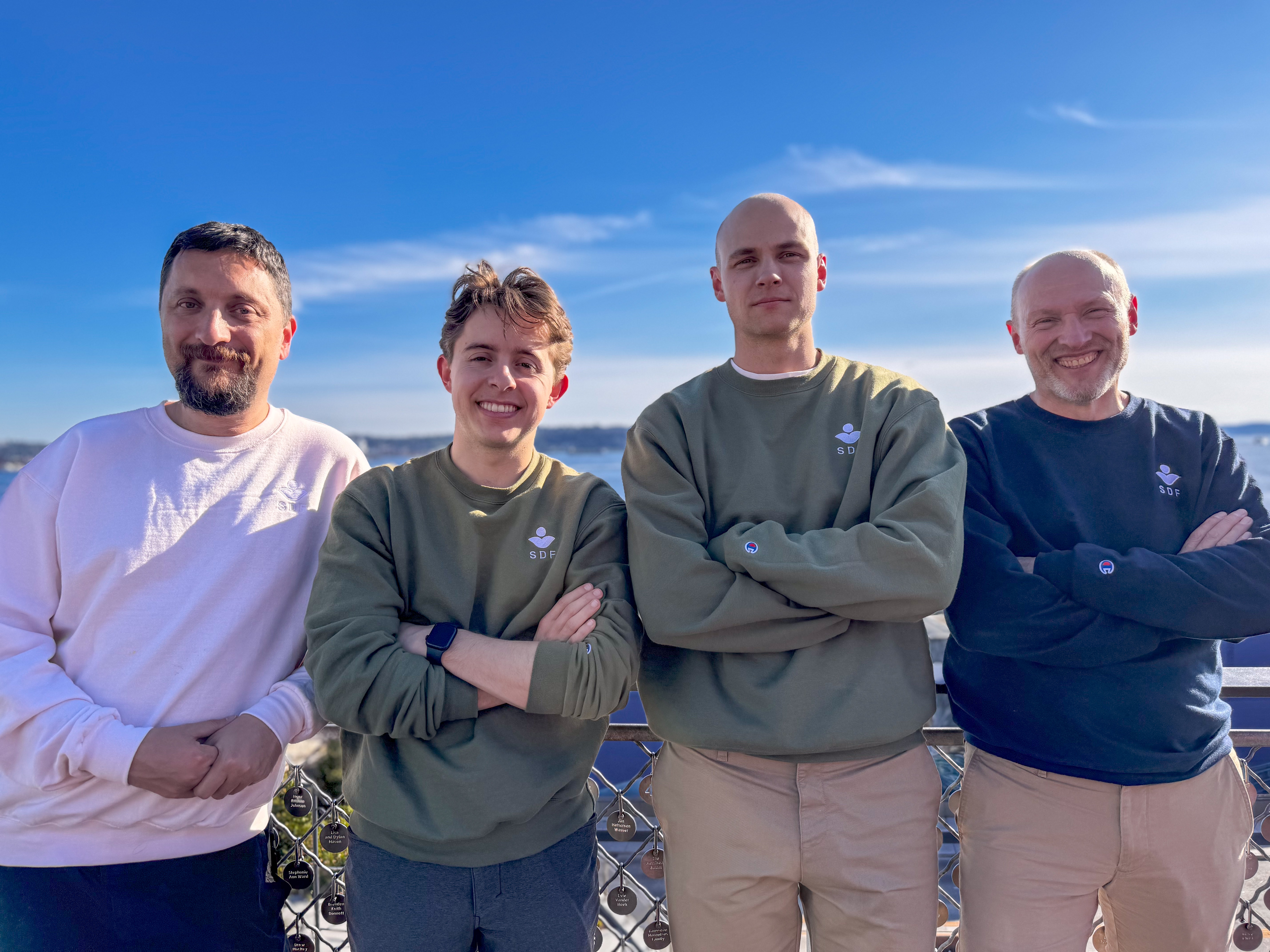
The founding had two particularly human beginnings. There was Lukas’s question to Wolfram: “Do you want to start a company together?” And there was an invitation to DeFaria, his former colleague, to get a beer and discuss an idea. About two months after that conversation, DeFaria found himself helping imagine the company with Lukas, Wolfram, and Levin.
DeFaria was 24. He had worked for Lukas, and credited him with teaching him much of what he knew about building software and engineering teams. The invitation also changed how he understood his own experience. His work across products, engineering, music, and art began to look useful to a single undertaking. Someone he respected was asking him to help shape a product, with a founder’s responsibility for the result.
Wolfram brought a different history. He had spent more than 17 years at Microsoft and had worked on data warehouse infrastructure at Meta. Levin also had Microsoft and Meta experience. Lukas and DeFaria had worked at PiñataFarms, a Los Angeles company making consumer creative video tools. SDF assembled people accustomed to different ends of software: the machinery underneath it, and the person trying to make something with it.
Before the warehouse, the garage
Schulte had tried making a product long before SDF. In high school, he and a friend built carbon fiber shin guards in his garage. They learned about the material by visiting plastic supply and boat repair shops. By summer’s end, their shin guards were stocked in several local stores. The route from garage experiment to shop shelf required learning how to make the thing and finding somewhere it could be sold.
At university, a co-op placement at battery developer A123 helped clarify his interest in algorithms and drawing conclusions from data. He changed his studies to computer engineering and went on to a software development internship at Microsoft. There he met Hitesh Sajnani and Jacek Czerwonka, with whom he would publish research.
Their 2014 paper, Active Files as a Measure of Software Maintainability, examined files that changed unusually often. The research used six large Microsoft software systems to investigate what those patterns could reveal about maintenance. It considered how change histories might help direct code reviews and testing. Before the SQL company, Schulte was already working on a question that would remain useful: where should developers focus their attention?
Schulte studied computer engineering at Northeastern University, attending from 2010 to 2014. His early career included software development at Microsoft, co-founding Quantac, and engineering leadership at OCTI. He subsequently became director of engineering at PiñataFarms and then vice president of engineering. SDF followed in 2022.
The shift from creative video to enterprise data looks abrupt when reduced to a list of industries. Follow the work instead, and a connection emerges: software must give people enough control to do something useful. In a creative product, that means helping a person turn an intention into an edit. In a development tool, it includes helping a programmer understand the consequences of a change. The customers differ. The need for usable feedback survives the move.
SDF was a new undertaking, with different users and technical demands. The more concrete continuity is the team. DeFaria had already experienced Lukas as an engineering leader before becoming his co-founder. That relationship gave the new company something a recruitment process cannot manufacture on demand: experience of working together.
The small indignity of waiting for an error
SDF stood for Semantic Data Fabric. Its premise was that SQL development should come with a richer understanding of the code being written. SQL is used to ask questions of data and describe transformations, but implementations differ across platforms. A statement that works in one warehouse may need changes in another. Even familiar words can conceal different rules.
In his essay on SQL’s history, Schulte treated that fragmentation as a tooling problem with a long past. He argued for better type systems, build systems, contextual assistance, and reuse. Software developers had learned to expect help from their tools. Data developers still had substantial room to demand more.
Consider a simple illustrative mistake: a query refers to a column that has been renamed. Finding that out while typing is preferable to discovering it after sending work elsewhere. More complex problems involve dependencies: changing one piece can affect other models downstream. A tool that understands those relationships can help the developer see a larger part of the consequences before execution.
Conceptual illustration, not a performance benchmark.
SDF built its toolchain in Rust. It combined a compiler with development capabilities including a type system, transformation framework, and linting. The local approach mattered: the laptop could do useful work before the developer needed to turn to the cloud. The product’s ambition was to shorten a familiar conversation between a person and an error message.
Schulte’s writing about linting also concerned the ordinary social life of code. Formatting and consistent rules make it easier for one person to read another’s work. His argument extended beyond speed: engineering teams need to understand what they inherit. A codebase is a place other people have to live.
The introduction before the launch
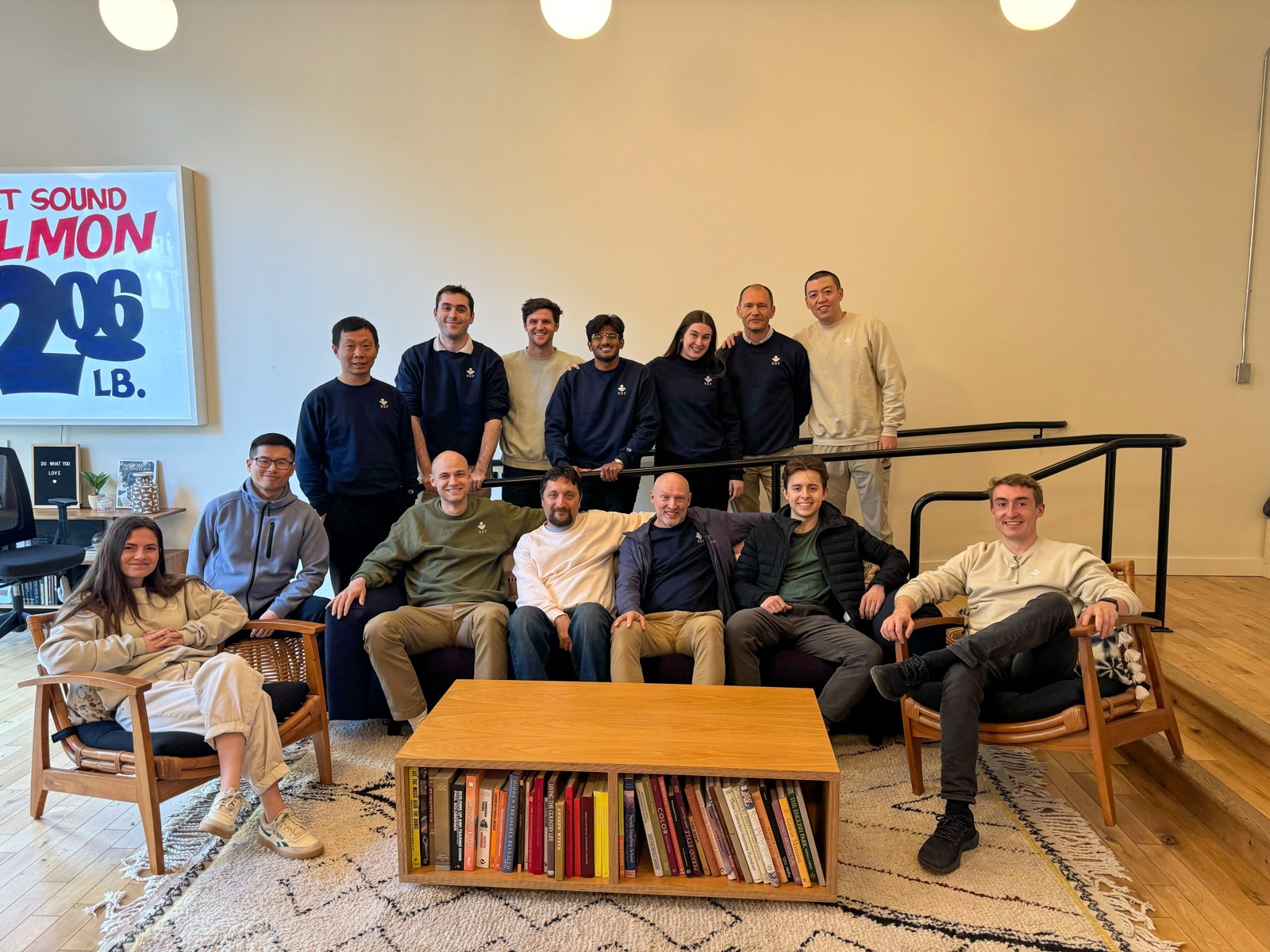
In June 2024, SDF announced public availability and disclosed $9 million in seed funding. RTP Global led the seed round. By then the company had spent roughly two years developing the product. It had paying customers, including ClassDojo, Obie, and Linqto, and a team of 15. About half worked from its downtown Seattle headquarters.
There was another consequential event around the launch. Benn Stancil introduced Schulte to dbt founder Tristan Handy the day before SDF’s public debut. Handy quickly saw a fit between the companies. dbt had established a way for teams to author and manage data transformations; SDF had built technology to understand the SQL within them.
The distinction was practical. A framework can organize SQL without understanding all of its meaning. Understanding names, types, and behavior opens possibilities for more useful assistance inside an editor. SDF’s work addressed an underlying part of the developer experience that dbt wanted to improve.
- 2022Four co-founders start SDF Labs.
- June 2024Public availability and seed funding announced.
- January 2025dbt Labs acquires SDF Labs.
- May 2025dbt Fusion enters public beta.
The acquisition was announced on January 14, 2025. Schulte’s team joined dbt Labs. By May 28, the dbt Fusion engine and the official dbt VS Code extension were in public beta. Fusion was built in Rust with technology from SDF. The company Lukas had helped start was now part of the infrastructure beneath another product.
Good technology needs somewhere to go
Schulte explained the acquisition in terms of distribution. SDF had technology relevant to dbt users, but a comparatively limited way to get it into their hands. Joining dbt offered a larger audience for the work. That reasoning puts a less theatrical question beside the familiar founder’s concern with building: how will the intended users actually encounter what you have made?
The calculation has particular force for developer tools. An organization has existing projects, shared knowledge, libraries, and habits. Switching carries costs beyond installing a binary. Schulte discussed adoption and migration in his 2024 Data Engineering Podcast appearance, when SDF was still an independent business. The acquisition later changed the route by which its technology could reach practitioners.
In May 2025, he appeared with dbt’s Anders Swanson on the Open Source Startup Podcast to discuss the deal and integration. In October, an Insane Data interview described him as director of engineering at dbt Labs. His current public LinkedIn and GitHub profiles place him at Databricks. The professional thread continues through building tools for data developers.
Leave room for a better answer
Asked about leadership, Schulte emphasized surrounding himself with smart colleagues and making their knowledge available across an organization. He favored “strong opinions held loosely.” There is an appealing difficulty in that combination. A team needs enough conviction to build something and enough flexibility to admit that a colleague, a customer, or an uncooperative program has found a better answer.
The founding team offers a concrete version of the idea. Lukas invited people whose experience did not simply duplicate his own. DeFaria’s account of being brought in speaks to the value of recognizing an ability before its owner has settled on a name for it. Wolfram and Levin brought research and infrastructure experience. A shared project gave those different histories somewhere to meet.
Schulte’s longer view of compilers is similarly collective. He has discussed how shared representations and reusable components could help SQL developers build on one another’s work. The appeal reaches beyond any single tool: less time reconstructing familiar logic, more room to make something useful with it. That remains an aspiration for the ecosystem, rather than a finished condition.
“So, when all the data tools are built, maybe I’ll open a bakery.”
Lukas Schulte, February 2025
Which returns us to bread. Schulte likes baking because it asks for concentration and patience, while leaving space for judgment. His hypothetical bakery makes a fitting counterpoint to the compiler business. For now, there are tools still to build, colleagues to learn from, and familiar frustrations worth removing from someone else’s working day. The bread can wait for its turn.
Follow the work
- GitHub
- Schulte’s Substack profile
- SDF at dbt
- A brief history of SQL
- 1000X faster SQL linting
- Why compilers matter - audio interview
- The SDF and dbt acquisition - podcast
- Accelerating dbt with SDF - video webinar
- Rust, Fusion, and the future of dbt - interview
- Schulte’s 2014 student spotlight
- SDF’s public launch
- dbt acquisition announcement