The grammar lesson needed a wrestler. Teaching English in Dakar, Liz Grossman Kitoyi found that the examples mattered as much as the rules. Senegalese pop stars and wrestlers gave her students something familiar to work with. Once the lesson belonged to their world, it became easier to understand. An educator from Philadelphia was discovering a useful limitation: knowing your subject does not mean you know your audience.
Years later, her work would involve presidents, development banks and investors. The rooms grew more formal. The problem remained recognisable. People with knowledge, resources or ambition can still talk past one another, especially when they arrive carrying a ready-made idea of the people across the table. Grossman Kitoyi has built much of her career around the work required before that conversation becomes useful.
Today she is co-founder and CEO of Baobab Consulting, working across African and American institutions. Her professional vocabulary includes policy, partnerships and investment. But the classroom episode offers a less ceremonial introduction. Before you can persuade someone, you need to understand what makes sense to them. Even an excellent presentation can lose to a poorly chosen example.
The research assignment that looked impossible
Another classroom encounter concerned an eight-page paper. Grossman Kitoyi asked students to research a subject they cared about, using recent and varied material. They protested that the necessary library resources were unavailable. She had recently left university, where online research was ordinary academic housekeeping. For her students, the method itself needed teaching.
She worked through how to research online. The papers arrived. The episode helped inspire Cybraries, a proposal for internet training centres in Senegal. The appealing detail is the scale of the original obstacle: a classroom assignment, rather than a grand diagnosis of a continent. Her response began with a skill students could use immediately. The larger idea grew from watching that practical difficulty up close.
Her own education crossed those same boundaries. Research supported by Northwestern University took her to Cameroon to examine technology and youth engagement. Teaching followed in Senegal. Later came Harvard, where she earned her master's in International Education Policy in 2013. Each setting gave her a different view of how information travels, who can use it, and what gets in the way.
“No matter how long I live in Africa, I was not born and educated there.”
Liz Grossman Kitoyi
Snow, ministers and a return ticket
At Harvard, international education acquired some very specific faces. While helping organise the African Development Conference in 2013, she helped bring Senegalese president Macky Sall to campus. Visiting ministers joined her on a snowy walk around Harvard. Diplomacy occasionally requires a good coat.
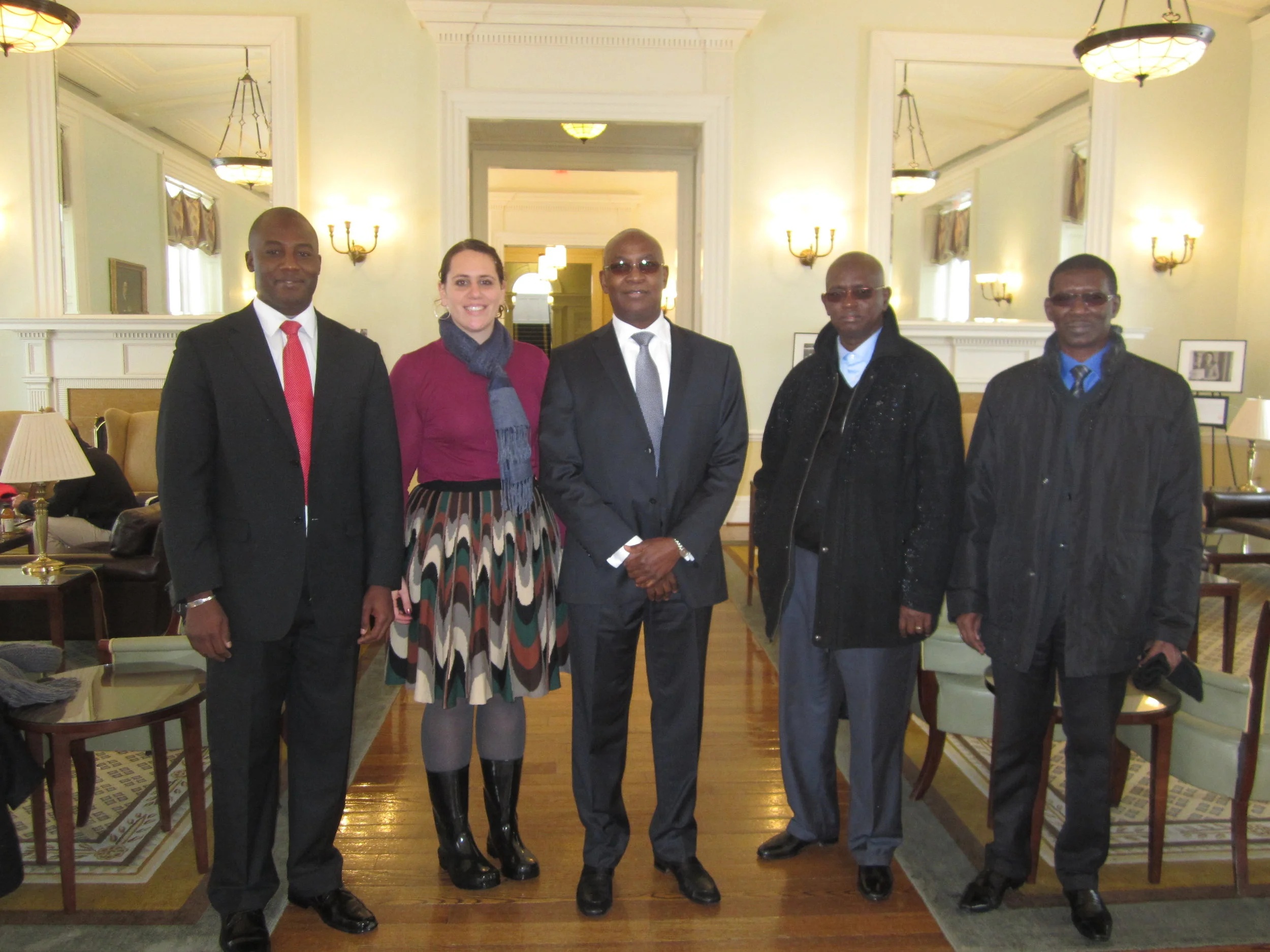
Those conversations encouraged her to pursue Cybraries. A crowdfunding campaign paid for a return ticket, a three-month visa and accommodation in Dakar. She went back to see what she could build. Work on Senegal's online public university and an academic research workshop at Google's GDays followed. These were concrete ways to put an education-policy degree to use, with local institutions involved in the work.
She subsequently joined Tostan, the Senegal-based organisation working in community education. There she gained experience inside an international team and helped develop an income-generating training model. Education, organisation-building and communication were becoming overlapping parts of the same working life. A worthwhile programme needed people who could understand it, sustain it and work together to deliver it.
A firm built across the conversation
In 2016, Grossman Kitoyi co-founded Baobab Consulting with Tayib Fall. The firm took shape between Senegal and the United States, with English and French central to its work. That geography matters. A conversation about Africa conducted entirely in English, or entirely from Washington, begins with some fairly large omissions.
Baobab's work has included communications strategy, partnerships and programmes for organisations operating across those boundaries. Its remote model also predates the period when remote work became a standard corporate talking point. Working across places was part of the business's premise. So was the belief that a relationship between American and African institutions should produce value for both.
The client list in her professional biography ranges from the African Development Bank and USAID to UNESCO, UNICEF and the Food and Agriculture Organization. Her education ties continued through Teach For Senegal and the Resolution Project. Those connections help explain the breadth of her work: schools, international organisations and entrepreneurs all face questions about how to make their aims understood by people whose cooperation they need.
The introduction that changed the work
A personal connection helped the young firm find its footing. In a reflection on the Concordia Summit, Grossman Kitoyi recalled attending to assist her mentor Gwen Young. Young introduced her to Joyce Banda, Malawi's former president. She described that encounter as a turning point for the newly co-founded Baobab.
Her work with the Joyce Banda Foundation included serving as communications director. Supporting a former president places a communicator close to public authority, but also close to a practical task: helping someone make a case to people who can act on it. The introduction became work, and the work became part of the firm's development. Networking sounds rather less vague when the names and consequences are attached.
Her African Women Leaders Network biography also records an interest in learning across generations. She wanted connections with experienced women who could offer guidance, alongside opportunities to support younger women. That reciprocal view of mentorship fits a career repeatedly advanced through introductions and then carried forward through collaboration.
Listed in the Social Entrepreneurs category.
Who gets paid for a good story?
Her communication work has also reached the creative economy. In 2021 she moderated a Lauder Africa Symposium discussion featuring actress Dakore Akande, designer Mariam Braimah, entrepreneur Papi L'Artrepreneur and Blueprint Africa founder Nana Spio Garbrah. The conversation considered how African creative work could become a sustainable livelihood.
That question puts an edge on the pleasant business of telling stories. Visibility can attract attention without delivering a workable business model. The panel discussed negotiating for creative labour, unequal partnerships and the persistent habit of treating Africa chiefly as a collection of problems. A film, design practice or artistic enterprise needs customers and terms it can live with. Applause is encouraging; it is awkward currency.
At the African Development Bank, her work included communications for AFAWA, the initiative focused on women's access to finance. She described finally meeting its female leadership in person after six months of remote work, at a Washington gathering of finance ministers and central bank governors. Here, too, communication sat beside decisions about capital and opportunity.
When the language reaches Washington
She later worked on Prosper Africa, the U.S. initiative focused on trade and investment with African countries. Her 2025 Africa Policy Accelerator biography at CSIS described experience in more than twenty African countries and fluency in French. The classroom teacher's career had reached the institutions where commercial relationships are explained, negotiated and defended.
After her USAID-related work ended, she spoke about the vulnerability of systems dependent on outside political and funding cycles. She argued for African institutions to have greater authority over how their work is described and evaluated. Her phrase for that ambition is “narrative sovereignty”. It connects communication to decision-making: whose definition of progress gets used, and who has to adapt to it?
In May 2026, she and Baobab colleague Evelyn Dan Epelle advanced a related idea in the debate over U.S.-Africa trade: the “Narrative Tax”. Their argument was that stereotypes and weak information impose commercial costs. They advocated treating market intelligence, multilingual trade education and accounts of successful partnerships as part of the machinery that enables trade. The argument gives a practical consequence to an old frustration: misunderstanding can make a market harder to enter.
The invitation, seven years later
There is a small story from 2019 that captures her willingness to make a connection before its outcome is clear. Baobab was hosting a United Nations screening of the Nigerian film The Milkmaid. Grossman Kitoyi invited businessman Tony Elumelu. He could not attend, but his assistant replied and arranged for a representative to come.
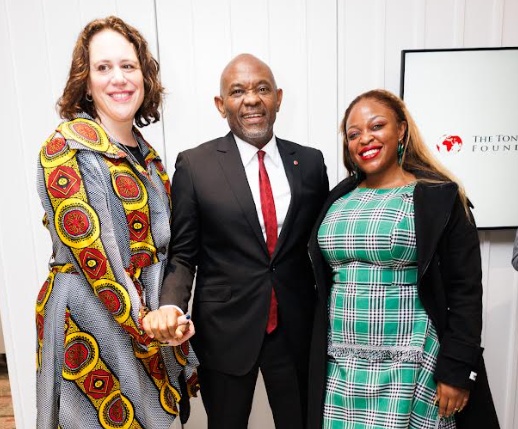
Seven years later, during UN General Assembly week, she watched Elumelu meet with a group she had helped coordinate for Baobab partner ACP Holdings. What interested her was how he brought his team into the conversation and trusted them with the next steps. Her account concentrated on the people around the prominent figure, and on the usefulness of giving them responsibility.
Her current work keeps bringing those interests together. Africa.com appointed her its U.S. contributing editor, covering Africa through Washington's institutions and capital flows. ACTIF lists her as director of investor engagement and partnerships. These roles put her on different sides of a familiar table: explaining what is happening, connecting people who might work together, and considering what follows an introduction.
The grammar lesson still offers a useful place to end. A teacher changed her examples because the people in front of her needed a different way into the subject. Grossman Kitoyi's subsequent work asks institutions to make a comparable effort. Understanding another person's context takes time. Her career gives that patient, sometimes unglamorous work a series of recognisable settings: a classroom, a snowy campus, a consulting firm and a meeting where someone finally gets the floor.