There is a tidy version of an executive career. It advances by promotion, proceeds by plan and never misplaces its boarding pass. Lisa Chen’s career contains all the serious institutions one expects - Cornell, Wharton, Ogilvy, Monitor Group, Disney, Expedia - but its decisive moment was a disappearance. After six years at Disney, she and her husband stepped away from work and spent 13 months moving through 16 countries. They lived in Argentina, China and Taiwan. Chen studied Chinese. They stayed long enough for foreign places to stop behaving like backdrops.
The trip was not designed as a corporate retreat with better weather. Chen has described it as the opposite of a box-ticking tour: learn some language, meet the people who live there, explore places beyond the familiar route. It reset the question she was asking of a career. Brand strategy had taught her how companies create meaning. Travel made her care about how meaning moves between strangers.
The pause that became a hinge
Before the journey, Chen had learned the polished grammar of large organizations. At Ogilvy, she worked with multinational technology companies. At Monitor Group, she advised on marketing, branding and sales-force effectiveness. At Disney, she moved across brand, marketing and consumer strategy for Disney, ESPN and ABC. Six years inside that collection of stories and screens offered an education in emotional architecture: people do not experience a business as an org chart. They experience the promise it keeps.
When the couple returned to the United States, they settled in Austin. Chen, originally from San Diego, joined BedandBreakfast.com as director of global marketing. It was her entrance into travel technology and the unruly elegance of a two-sided marketplace. On one side sat travelers. On the other were thousands of independently run inns, each with its own habits, anxieties and good china. The job was to make the market more professional without ironing out the very character guests had come to find.
That problem suited her. Bed-and-breakfasts were accommodation, certainly, but the memorable part was often the host: a restaurant tip at breakfast, a story about the house, the useful warning that the pretty road becomes mud after rain. A platform could make discovery and payment easier. It could not manufacture the exchange at the breakfast table.
Monitor
journey
Expedia
BedandBreakfast.com became part of HomeAway and then Expedia’s vacation-rental business. Over seven years, Chen became what she calls a “serial GM.” She led the bed-and-breakfast marketplace through its shift to transactional e-commerce, then moved into increasingly technical territory, eventually running lodging connectivity and software work for vacation rentals and hotels. The nouns changed from innkeepers to APIs, but the underlying question remained: how can a platform serve a multitude of independent businesses without treating them as identical?
“Being transparent and empathetic should be core characteristics for any people leader.”Lisa Chen on leadership
A machine in service of an introduction
Chen joined ToursByLocals as president in February 2023 and became CEO and president that October. The company, founded in Vancouver in 2008, had already passed two million travelers served. She did not arrive to invent its premise. She arrived to prepare that premise for a larger stage.
The premise is deceptively intimate. A traveler chooses an independent guide in a place they may never have visited and hands over a scarce piece of a trip. A day in Kyoto or Tangier is not a replaceable unit. Trust must cross borders before the traveler does.
By 2024, ToursByLocals had rebuilt its website, modernized its core platform, changed its interface and refreshed its brand. Chen described the work as a runway for growth. Runways are useful things, though nobody takes a holiday to admire one. Her strategy is most interesting where the infrastructure disappears: better matching, fewer administrative chores, more direct work with guides, partners and travelers.
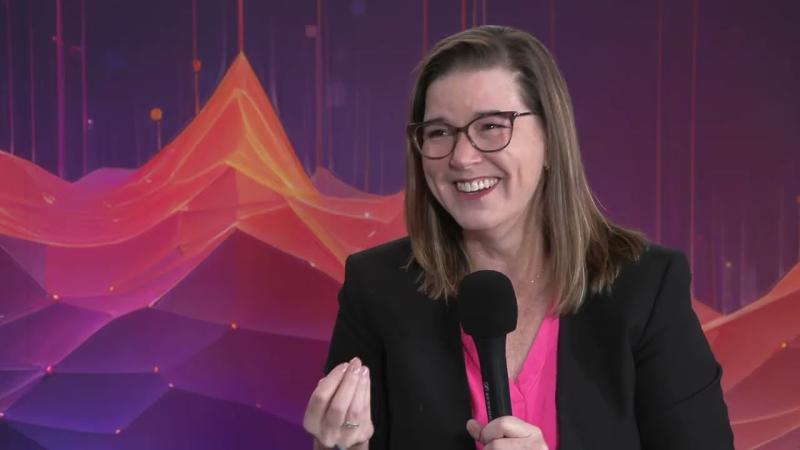
This is also how Chen talks about artificial intelligence. The useful applications are practical: remove repetitive administration, improve productivity, help a traveler find the right guide, make the company’s rich local material legible to new forms of search. Her enthusiasm has a job description. The technology should return attention to the relationship rather than compete for it.
Let the platform handle
- Administrative repetition
- Search and discovery
- Secure transactions
- Traveler-guide matching
Leave people room for
- Judgment and adaptation
- Local context
- Conversation
- The unexpected good hour
The distinction matters because travel has become very good at processing people. We can now arrive in a city, enter a property, order dinner and leave without a conversation. Convenience is a genuine pleasure until it becomes the whole plot. A private guide makes a different proposition: give me a few hours and I will lend you my way of seeing this place.
“We are here to keep travel human. We want to connect the world in more meaningful ways through local experiences.”Lisa Chen on the company’s goal
The guide is the product and the author
Marketplace language can be chilly. Supply. Inventory. Conversion. In a guide marketplace, the “supply” is a person whose wit, knowledge and timing may determine whether a traveler merely sees a monument or understands why anyone cared enough to build it. The platform has standards and screening; guides still shape their tours and set their own prices. Control is distributed because expertise is distributed.
Chen’s experience with independent innkeepers travels well here. Small operators need infrastructure that would be costly to build alone: an audience, secure payment, marketing, customer support and a reputation system. They also need room to remain independent. That creates a useful tension at the heart of the business. Consistency builds confidence; individuality gives the traveler a reason to book.
She has spoken publicly about fairness and trust among guide platforms, including how commissions are used and why independent guides must be treated as entrepreneurs rather than quarry. The industry may be global on a spreadsheet, but its reputations are local and its professional circles surprisingly close. A company asking travelers to trust a stranger must be conspicuously trustworthy with the strangers who power the company.
ToursByLocals now lists more than 5,100 guides across 181 countries and says it has served more than 3.4 million travelers. Those figures describe reach, not sameness. The whole point is that the answer to “show me your city” should change with the person asked.
Travel as management training
When asked what aspiring leaders should do to improve, Chen’s answer was gloriously inconvenient: “Travel. Seriously.” She did not pretend it was cheap or easy. The value lies partly in the inconvenience. Travel strips authority from routine. A confident adult becomes a baffled reader of train diagrams. A familiar gesture acquires an unfamiliar meaning. The correct answer depends on where one is standing.
For a leader of a remote, culturally varied company, that education is not ornamental. Chen emphasizes transparency, empathy and communication through different methods. Listening across cultures requires more than waiting politely for one’s turn to speak. It means noticing who is comfortable disagreeing in public, what silence communicates and whether a universal policy has been designed around one very particular kind of person.
Her formal education makes an apt pair with that approach. Chen studied psychology at Cornell and later earned an MBA in marketing and corporate strategy from Wharton. One discipline asks why people behave as they do; the other asks how an organization should respond. A marketplace needs both languages. The elegant technical solution can still fail if it ignores fear, pride, habit or the small-business owner’s reasonable desire to remain the author of their own work.
Chen’s public conversations since becoming CEO have widened from company operations to the rules of the category. She has discussed overtourism, shifts in Google’s presentation of tours, the arrival of AI-led discovery and the obligations platforms owe independent guides. These subjects sound unrelated until viewed from street level. Each asks who gets seen, who captures value and what happens when large systems reorganize a local place. Chen’s answer is rarely to refuse the system. It is to design incentives and tools that make local expertise harder to erase.
Her own life has supplied abundant practice. She has lived on five continents, is an avid scuba diver and now shares Austin life with her husband, young son and two small fluffy dogs. The dogs may be the only members of the household unimpressed by lodging connectivity.
There is an appealing loop in Chen’s career. She left a powerful storytelling company to see more of the world. The journey led her toward businesses built around hosts, properties and guides. Those businesses taught her how software can coordinate enormous networks. Now she uses that machinery to create the conditions for a smaller event: two people meeting in a place, one of them saying, in effect, look again.
The long way to the corner office gave Chen a suspicion of shortcuts. A checklist can record that you went. A guide can alter what you noticed. The difference is difficult to fit into a transaction field, which is precisely why it is worth building the transaction around.