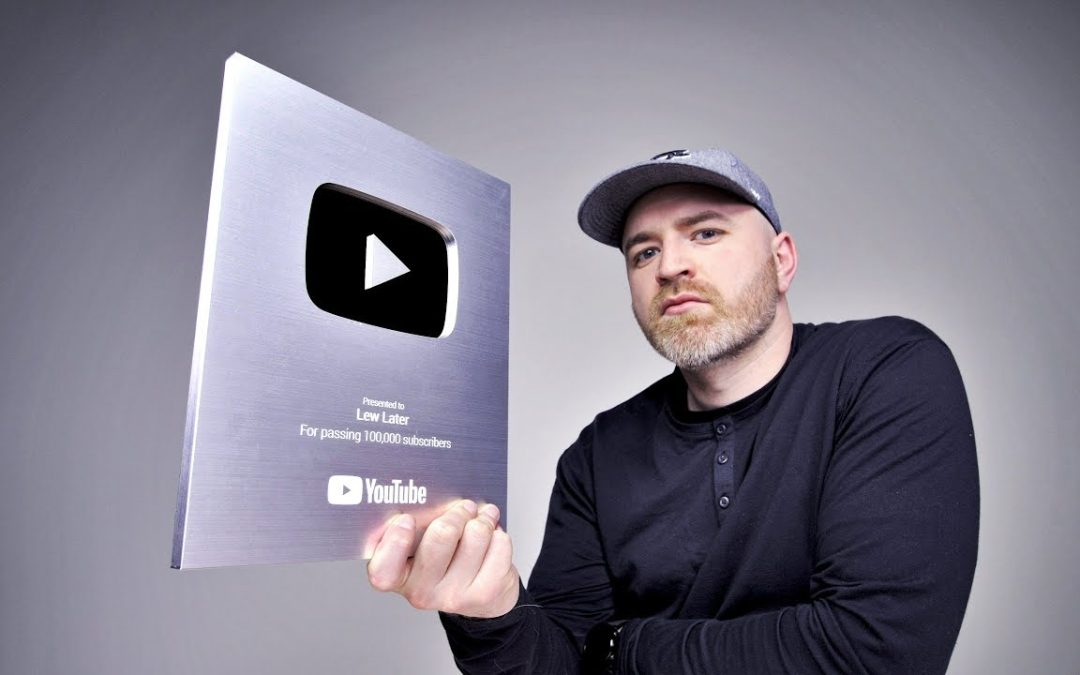
Before the boxes, there was a repair bench
Lewis Hilsenteger did not set out to build a media empire. In 2008, he was running an Apple upgrade and repair shop near Ryerson University in Toronto. Customers kept asking the same questions - how do I fix this? What does this do? He started filming answers. The videos stayed up. People watched them. They watched them again. Something was working.
The shop eventually closed. The channel did not. On December 21, 2010, Unbox Therapy launched with co-creator Jack McCann - a videographer who spent the next seven-plus years operating entirely behind the camera, face never shown. Lewis had made a pledge: Jack's reveal would come at 10 million subscribers. In February 2018, he kept it.
That specific detail - a public promise about a collaborator kept for seven years - says more about how Hilsenteger operates than any subscriber count does.
I really want to get on camera, to deliver in a natural way, to really talk to these people as I would my own friends.
Lewis HilsentegerSeptember 2014. One video. Global chaos.
In September 2014, Apple launched the iPhone 6 Plus. Lewis filmed himself bending it with his bare hands. The phone bent. He reacted. The internet responded at a volume that no one, including Lewis, had anticipated.
The video accumulated 71 million views - still the most-watched content Unbox Therapy has ever produced. Google's Canadian spokesperson Nicole Bell publicly noted it was the only Canadian-made video to trend globally in 2014. Tech journalists, Apple PR teams, and competing YouTubers all weighed in. "Bendgate" became a word people actually used in news broadcasts.
The video was unscripted. One take. A phone, two hands, a camera. Lewis has consistently credited this approach - avoiding heavy pre-research to "protect that conversational way of just experiencing the thing" - as central to why his reactions read as genuine. Because they are.
One video that reshaped tech journalism
The "iPhone 6 Plus Bend Test" didn't just go viral. It triggered a global media cycle, forced Apple into public responses, and demonstrated that independent YouTube creators could set the agenda for conversations that major tech publications were still catching up to. Lewis was 29. He had a camera and a phone.
No notes. No scripts. Just boxes.
Hilsenteger's content philosophy sits somewhat against the grain of modern YouTube production. High-production-value unboxings with pre-written scripts and careful product research are common. His approach is closer to the opposite: he deliberately avoids exhaustive research before filming so his reactions remain unfiltered. He wants to discover the product on camera, the same way a viewer would discover it watching from a couch.
The result is a channel that has run for over 14 years and still feels immediate. There are 2,370+ videos. Many of them are longer than you might expect. People watch anyway.
His stated preference is for products that are "immediately comprehendible" - things where the value is apparent in real-time. This likely explains the channel's bias toward tactile, physical objects: phones, gadgets, novelties, accessories, tech oddities sourced from across the internet.
The Numbers Behind the Channel
Formula 1-grade fiber. For your phone.
In 2020, Hilsenteger launched Latercase - a smartphone case brand built around a single material: aramid fiber, the same aerospace-grade composite used in Formula 1 cars. The pitch is compression into near-nothing: protection without bulk. Cases that feel like they shouldn't exist at the thickness they manage.
The brand was promoted heavily on Unbox Therapy and found an audience among the exact demographic Lewis had spent a decade building. The positioning - technical without being intimidating, premium without being ostentatious - matches the channel's own tone.
In 2020, Latercase faced a design-similarity controversy with competitor PITAKA. Lewis responded directly with a video titled "The Truth About Latercase." The brand continued. The cases continue to sell.
Jack McCann operated as Unbox Therapy's unseen co-creator for over seven years. His name appeared in credits. His face did not. When the channel hit 10 million subscribers, Lewis uploaded a video called simply "Jack." That was the reveal. The comment section lost its mind.
When the unboxer starts unboxing ideas
Lew Later, launched October 17, 2015, is the second channel - a longer-form, podcast-style format where Lewis discusses technology news, internet culture, and broader ideas. It is a different register than Unbox Therapy: more conversational, less product-focused, more likely to wander into what technology means rather than how it performs.
The podcast version is available on Apple Podcasts and Amazon Music, placing it in a format designed for audiences who want the voice without needing the visual. Lewis has used both channels as companion pieces - the main channel for products, the second for everything the product review can't contain.
It's almost like people are amazed to find out that the person they see on camera is the person they're meeting in real-life.
Lewis HilsentegerThe videos people keep coming back to
The accolades between unboxings
What you see is what you get
Hilsenteger has mentioned, in multiple interviews, that people are surprised to find the on-camera person matches the off-camera one. Given that his content is built around unscripted authenticity, this is either a consistency one could expect - or a rarer quality than it seems, depending on how much time you spend watching creators whose personalities are engineered for an audience.
He maintains near-total privacy around his family: married, with a son. Neither spouse nor child is identified publicly. For someone who has spent 14+ years with a camera pointing at himself, this partition is deliberate and apparently sturdy.