Company Profile · Product Visualization
KeyShot
The real-time rendering standard that lets designers see a product before it physically exists.
The real-time rendering standard that lets designers see a product before it physically exists.
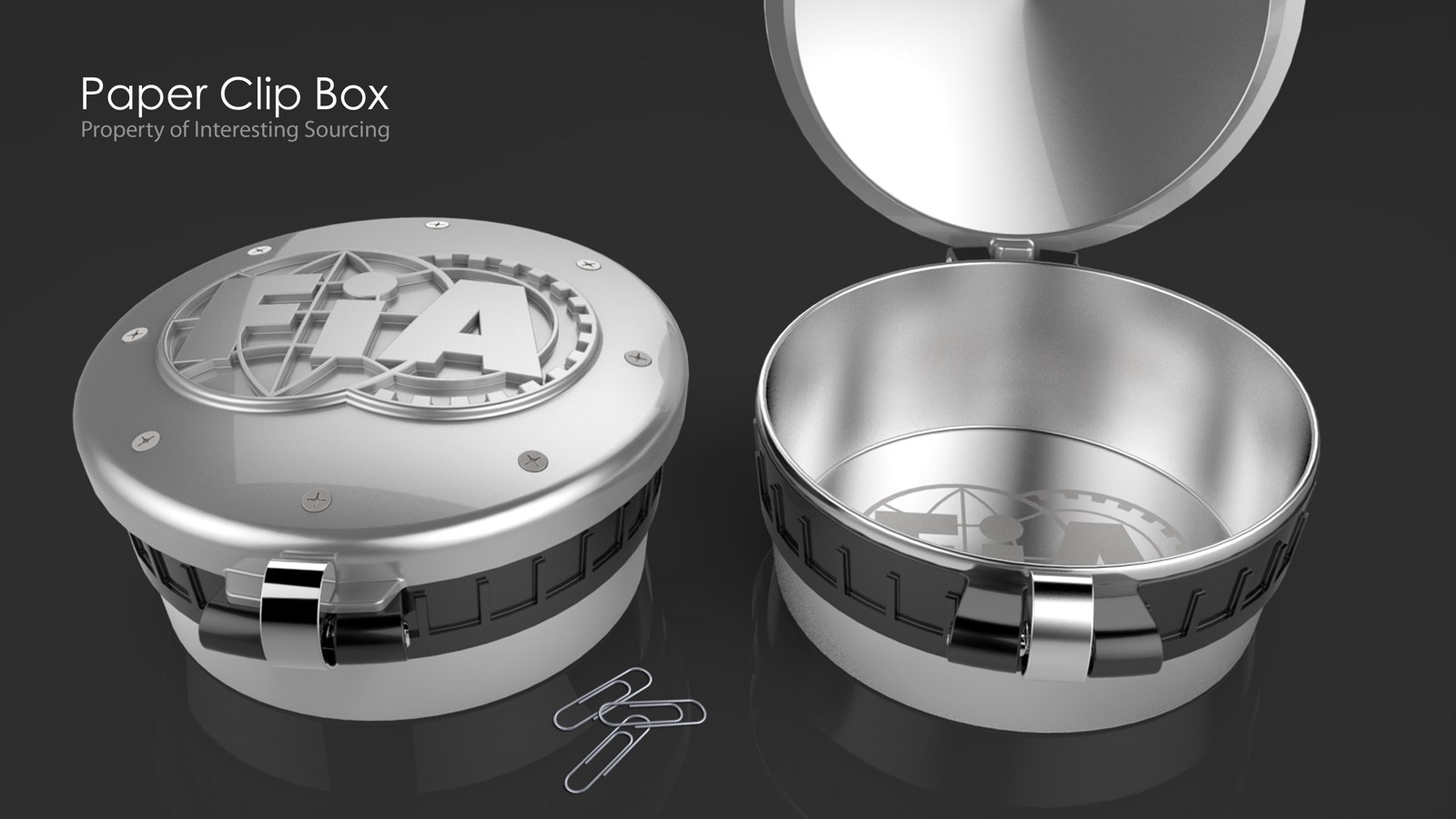
If you have ever scrolled a product page for a pair of headphones, a road bike, or a cordless drill and thought the hero image looked a little too perfect, there is a fair chance you were looking at a KeyShot render. The software, built by the company formerly called Luxion, does one thing with unusual focus: it turns a three-dimensional model - the kind engineers build in CAD - into a believable photograph of an object that may not have been manufactured yet.
That focus is the whole point. Where rival tools try to be complete visual-effects studios, KeyShot narrows its scope to product visualization and, within that lane, optimizes for two things designers actually feel: speed and ease. Drop a model in, drag a material onto it, spin an environment behind it, and the image resolves in real time. The physics of light - reflection, refraction, the soft scatter through translucent plastic - are computed rather than faked.
The company reports the software is active in 184 countries, used by more than 231,000 professionals and 30,000-plus product teams, including 52 of the Fortune 100. Those are large numbers for a category most people outside industrial design have never heard of. But the workflow it replaces is expensive: model a part, machine a prototype, wait, dislike the color, and start again. KeyShot compresses that loop from weeks into an afternoon.
Underneath the approachable interface sits serious science. Co-founder Henrik Wann Jensen is an academic whose research into how light travels through materials earned him a 2004 Academy Award for Technical Achievement. The trick KeyShot pulled off was hiding that depth completely - the customer never has to know the math to get the picture.
"Physically correct, every time." KeyShot's core promise to designers who would rather not fiddle with light settings
The real-time, physically accurate renderer and animation tool at the core of everything - CAD in, photoreal stills and motion out, backed by a large material and lighting library.
Restyle, Background and Imagine (AI Shots) modes that run locally on your machine - generating variations without shipping unreleased designs to a cloud.
Touch-enabled 360° spins, browser configurators and a Web Viewer that lets teams share live scenes with no pre-rendering and no plugin.
The former Digizuite platform, acquired and rebranded - digital asset management to organize and distribute all the visuals a product team produces.
Distributed and cloud rendering that spreads heavy animation and high-resolution jobs across many cores to cut wait times.
Steeply discounted licensing, training resources and ambassador programs that seed the next generation of designers on the tool early.
The rendering world is full of powerful, general-purpose engines. KeyShot competes by refusing to do everything - it owns the specific job of fast, easy, accurate product visualization. This is a positioning read, not a market-share ranking.
Bars illustrate relative positioning on ease-of-use for product visualization as described in public comparisons - not revenue or market share.
Industrial and product designers, engineers and marketing teams reach for KeyShot across consumer electronics, automotive, footwear, jewelry, medical devices, appliances and furniture. Publicly named customers include:
A Peloton designer described evaluating hundreds of design options in a matter of hours - work that once meant weeks of physical prototypes. On the economics KeyShot changes
Brothers Henrik and Claus Wann Jensen start Luxion, built on advanced light-transport rendering research.
Henrik Wann Jensen receives a Technical Achievement Oscar for a practical model of subsurface light transport.
Luxion's rendering engine ships through a partner under the HyperShot name.
Luxion reclaims its own technology and relaunches it independently as KeyShot.
Danish private equity firm GRO Capital takes a majority stake to fund international expansion.
Luxion buys the Danish digital asset management company, adding DAM to its stack.
The company adopts its product's name; the renderer becomes KeyShot Studio, Digizuite becomes KeyShot Dock.
Søren Abildgaard becomes CEO and KeyShot ships locally-run Studio AI tooling.
Søren Abildgaard - CEO (since May 2025), with a background spanning Autodesk, Zendesk and Avaya.
Henrik Wann Jensen - co-founder and Academy Award-winning rendering scientist.
Claus Wann Jensen - co-founder.
Backed by GRO Capital, a Danish private equity firm and majority owner since 2021.
B2B SaaS. KeyShot moved to subscription-only licensing in 2023. Core Studio tiers - Professional (about $1,299/year), Business and Enterprise - are joined by add-ons for VR, Web and Network Rendering, plus the Dock DAM platform for enterprises. Education licenses run about $95/year.
Revenue figures (~$32M) and employee counts (~180) are approximate and not officially confirmed.
Co-founder Henrik Wann Jensen holds the same kind of statuette handed out for scientific and technical achievement in film - for making digital skin look like skin.
The engine briefly shipped under another brand as "HyperShot." When the licensing arrangement soured, Luxion took its technology back and launched KeyShot itself.
By 2024 KeyShot was more famous than Luxion, so Luxion simply renamed itself KeyShot.
Engineering is split between Costa Mesa, California and Aarhus and Odense in Denmark.
The company dates to 2003, but KeyShot 1.0 didn't ship until 2010 - seven years of research first.
When KeyShot added generative AI in 2025, it made it run locally - so unreleased product designs never leave the building.
It creates photorealistic, physically accurate 3D renderings, animations and interactive visuals from CAD and 3D model data - mostly for product and industrial design, marketing and engineering.
The company formerly known as Luxion, which rebranded to KeyShot in 2024. It's headquartered in Costa Mesa, California, with offices in Aarhus and Odense, Denmark.
No. It's subscription-based - KeyShot Studio Professional is around $1,299/year, with Business and Enterprise tiers above that. Discounted education licenses (about $95/year) are available for eligible students and faculty.
It focuses specifically on fast, easy, physically accurate product visualization rather than being a full 3D content-creation or VFX suite - trading breadth for a simpler, real-time workflow.
Yes. KeyShot Studio AI, introduced in 2025, adds Restyle, Background and Imagine (AI Shots) modes and runs locally on the user's machine to keep design data private.
Sources include keyshot.com, GRO Capital, CG Channel, PR Newswire, Wikipedia and the Academy of Motion Picture Arts and Sciences. Figures marked approximate are not officially disclosed.