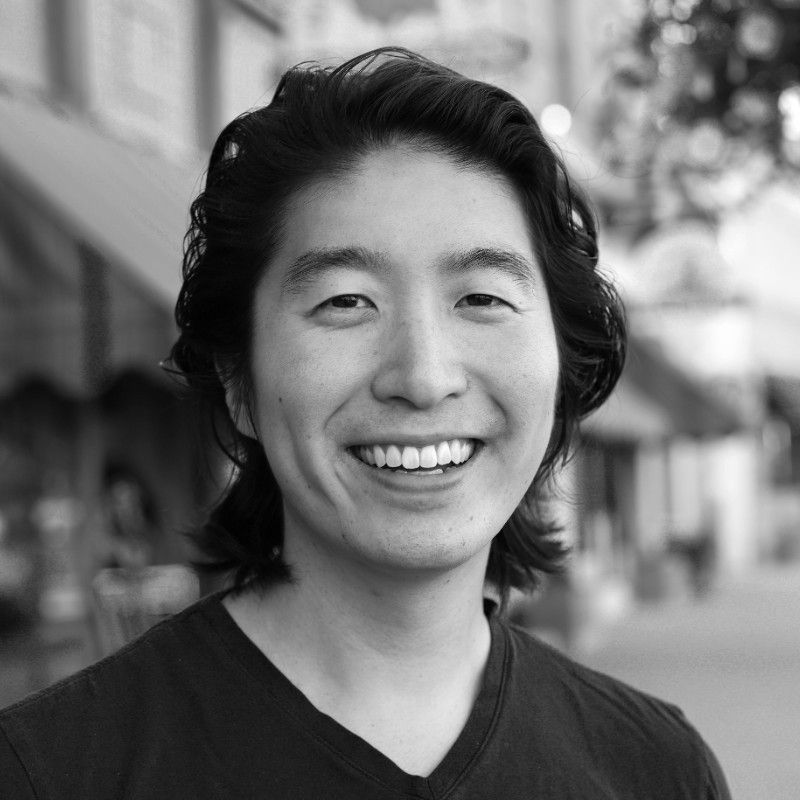
Walk into a corner restaurant that has been on the same block for fifteen years. The owner knows your order, the neighbors, the mail carrier. The one thing the owner does not know is whether the building will still be theirs to rent next year. Kevin Song spends his days on that exact gap, and he has built a company, withco, around closing it.
withco buys the building a small business already occupies, becomes its landlord, then signs a five-year lease engineered to do something unusual. A slice of every rent payment is set aside into a fund. At the end of the term, that money comes back to the tenant as a down payment, and they buy the building from withco at a price agreed on day one. The renter walks in a tenant and walks out an owner.
It sounds like financial engineering because it is. But for Song the math is personal before it is clever. His parents are the reason the model exists.
The store on the corner, and the weeks it took to lose it
Song's parents landed at JFK with the standard-issue version of the American dream and bought a grocery store in Brooklyn. They ran it for two decades. They were current on every payment. Then a developer bought the building, and the rent moved in a direction the family could not follow. The doubling did the rest. After twenty years, the keys went back in a matter of weeks.
My parents created so much value for their neighborhood but didn't get to keep their business. It felt like an illogical indecency.
- Kevin Song
That phrase, "illogical indecency," is the closest thing withco has to a founding document. The store did everything a business is supposed to do. It served a neighborhood, it lasted, it mattered. And success was precisely what priced it out. The better the block did, the more valuable the building became, and the more the family had to lose.
From a $1B deal sheet to a single sentence
Song did not arrive at this idea as an outsider to capital. He studied applied economics at Cornell's Dyson School, graduating in 2012, then started his career as an investment banking analyst at J.P. Morgan. Over the following years he invested in, managed, and advised more than fifty companies and had a hand in deploying over a billion dollars of equity capital. He knows what a down payment is, what a mortgage does, and who tends to get left out of both.
All of that experience collapses into one line he keeps returning to:
The only thing that separates most renters from becoming owners is actually a down payment.
- Kevin Song
It is a deceptively small observation with a large consequence. The wealth that real estate creates flows to whoever holds the deed. A business can pour years of foot traffic and goodwill into a block, and when the building sells or the rent jumps, that value flows out the door to a landlord who never made a sandwich. withco's premise is that the people generating the value should be allowed to capture some of it.
There is a quieter detail in the family story that explains the urgency. When the grocery store went, the home went with it. Many immigrant small business families tie their housing and their livelihood to the same thread, so when one frays both unravel. Song does not describe withco as a real estate fund that happens to do good. He describes it the other way around: a way to keep families from losing two things at once, with the financing built to make that possible rather than incidental.
Why a lease and a mortgage stopped fitting
Song's critique is not that landlords are villains or that banks are broken. It is narrower and harder to argue with. The two instruments most small businesses are offered, a commercial lease or a conventional mortgage, were not designed around how a corner business actually grows. A lease gives you a place to operate and no claim on the upside you create. A mortgage demands a down payment most operators cannot assemble while also making payroll. Between those two options sits a wide gap, and most small businesses spend their entire life inside it, renting indefinitely and building equity for someone else.
withco's structure is an attempt to bridge that gap without asking the operator to choose between running the business and saving for the building. The savings happen automatically, folded into rent the business is already paying, which is the part Song seems proudest of. Nobody has to be a disciplined saver or a sophisticated buyer. The mechanism does the discipline for them, and the purchase price is fixed at the start so a rising market cannot move the goalposts the way it did on his parents.