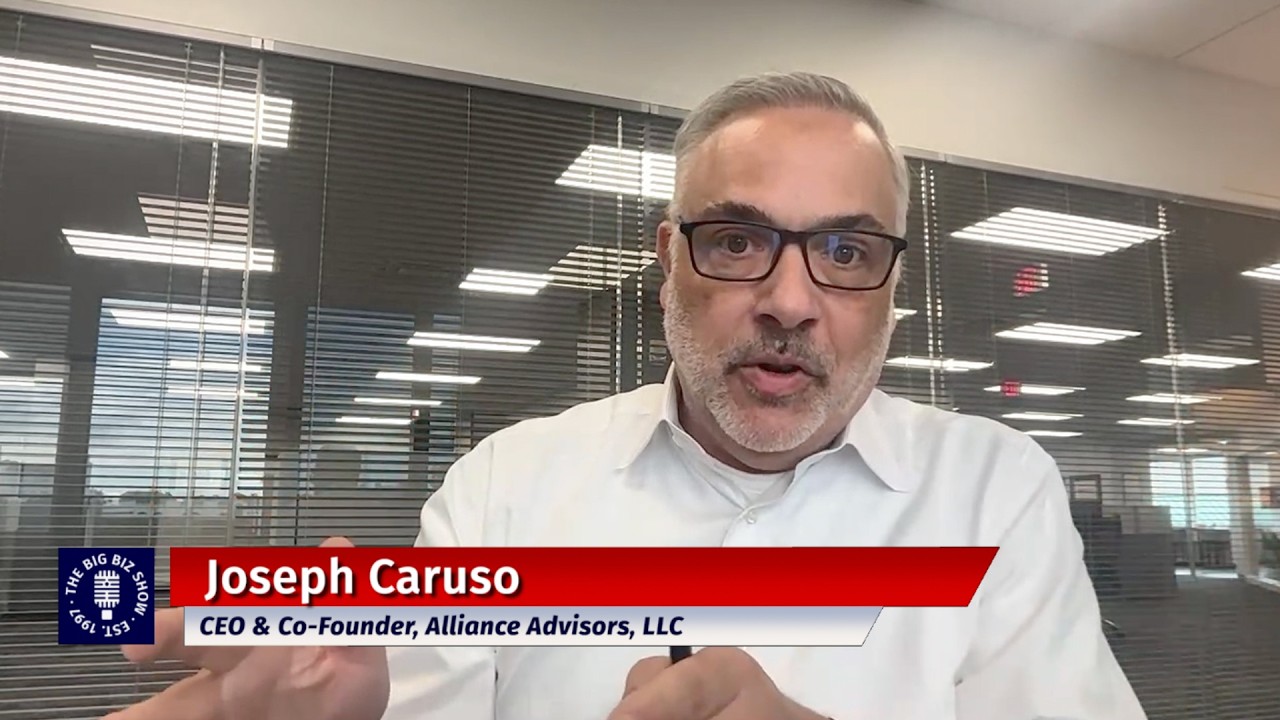
Joseph Caruso’s first encounter with the proxy business came wrapped in mild confusion. During his senior year at university, an older friend had landed at a law firm and complained about proofreading proxy statements. Caruso did not know what a proxy statement was. A year later, he was working at a proxy firm himself. The law-school plan, strongly encouraged by his father, had acquired a delay: just one year, Caruso had argued. The delay became a profession.
“I ended up getting a job at a proxy firm, and I never left,” he recalled in a 2023 live interview. He had discovered a backstage pass to public companies - the ballots, ownership records and corporate rituals that most investors glimpse only when a thick envelope lands in the mail. The work felt dynamic. Each assignment had its own peculiar obstacles. There was always a route to plot from point A to point B, frequently with millions of shares and a boardroom decision hanging somewhere between them.
Caruso’s career began in 1995 at Corporate Investor Communications. He moved to Georgeson in 1999, then co-founded The Altman Group in 2002 and served as its chief operating officer. By 2010 he was chief operating officer at Alliance Advisors. He became its chief executive in 2021 and is now identified by the firm as both CEO and co-founder, responsible for the executive team, operations and the continuing expansion of its services.
The business hidden inside the envelope
Proxy solicitation can sound like corporate paperwork with a telephone attached. In Caruso’s telling, it is closer to applied strategy under a deadline. When he entered the field, the emphasis was on gathering votes and reaching a quorum. Then institutional investors accumulated more influence. Proxy advisers such as ISS became central interpreters. Executive pay attracted sharper attention, and the accounting scandals of the early 2000s brought governance practices under a harsher light.
Companies began asking different questions. How would a large fund interpret a proposal? What would its voting guidelines mean in this particular case? Could a problem be softened before proxy materials were mailed? Solicitation widened into analysis, prediction and counsel. The arithmetic remained, but someone now had to explain the voters.
Alliance Advisors grew along that same arc. The firm now works across shareholder meetings, governance, executive compensation, stock surveillance, activism, proxy logistics, retail outreach and investor relations. Its 2025 capabilities document reported more than 1,200 corporate clients, 727-plus shareholder-meeting advisory assignments in 2024 and work representing $6.6 trillion in market value. The figures describe scale. Caruso prefers a plainer account of the job: “Ultimately, we are in the problem-solving business.”
The silent majority discovers its voice
One of Caruso’s recurring arguments is that companies pay too little attention to individual investors until they need something. A vote approaches; shareholder lists are pulled; the corporate voice suddenly grows warm and urgent. For the recipient, this can feel rather like hearing from a cousin who has remembered your birthday because he needs help moving a sofa.
Caruso favors year-round communication, especially as retail trading has expanded. Alliance said it reached more than four million retail investors during one twelve-month period through phone calls, text messages, social media and direct mail. The mechanics are labor-intensive: choose the right part of a shareholder file, the right channel and the right moment. The strategic point is simpler. Many proposals fail to attract support not because shareholders oppose them, but because shareholders do not vote.
He has argued that companies should stop fearing direct conversation with retail owners and begin treating them as distinct groups with different priorities. A long-term holder does not necessarily respond like an options trader. An employee shareholder may care about another set of issues altogether. One drab message delivered to everybody is expensive, difficult to measure and easy to ignore.
The bars illustrate the range of channels Caruso discusses, not their relative volume. His point is orchestration: different holders, moments and messages call for different routes.
The owner a company is not allowed to meet
The most pointed campaign of Caruso’s public career concerns a three-letter classification: OBO, or objecting beneficial owner. Americans who hold shares through a broker can object to having their name, address and position disclosed to the company. The broker knows the investor. The company whose shares the investor owns may not. Caruso regards that arrangement as a relic of the mid-1980s that makes communication needlessly circuitous and costly.
His favorite example is practical. Imagine an unidentified holder with 100,000 shares. If management cannot speak directly to that person, it may need to contact hundreds of visible owners with smaller positions to assemble the same voting weight. Alliance says it manages more than 750 shareholder meetings annually, so the nuisance is not theoretical. It arrives repeatedly as extra mail, more phone calls and a bill ultimately borne by the company and its owners.
In late 2024, Alliance launched the Shareholder Ownership Transparency Alliance, or SOTA, to press Congress and the Securities and Exchange Commission to eliminate the OBO classification. Caruso frames the issue as reciprocity. Public companies face extensive disclosure requirements; in his view, meaningful owners should not enjoy one-way opacity when they are voting on the company’s direction. He also argues that smaller issuers suffer more because they have fewer resources to spend working through intermediaries.
The proposal has an obvious tension: direct corporate access on one side, investor privacy on the other. Caruso’s answer is that companies want communication, not a license to sell personal information. His broader thesis is consistent with the career that preceded it. Ownership works better when it becomes a relationship before the emergency meeting, activist campaign or contested vote.
An operator enlarges the map
Caruso’s background is conspicuously operational. Even his job titles tell the story: senior vice president of operations, director of operations, chief operating officer. As CEO, his expansion strategy has added pieces that make Alliance look less like a seasonal vote shop and more like a continuous communications system.
The 2023 acquisition of New York-based LHA Advisors moved the company further into investor relations. In 2024, Alliance acquired the Canadian agency irlabs, bringing cross-border investor communications, public relations and capital-markets work into the group. Caruso described the aim as a fuller view of the shareholder, linking buy-side portfolio managers with the stewardship teams focused on governance and voting. Alliance also introduced Invictus, a digital platform offering ownership analysis, meeting management, real-time vote reporting and historical voting records.
These moves share one preoccupation: visibility. Who owns the stock? What matters to them? How are they likely to vote? What has happened before? The industry Caruso entered with paper, telephones and quorum counts is becoming a data business, though he has not mistaken data for judgment. A dashboard can show movement. Somebody still has to understand what the movement means.
His interest in the meeting itself has extended beyond Alliance’s own assignments. In 2020, Caruso served on the steering committee of a multi-stakeholder working group on virtual shareholder meetings. The group gathered corporate secretaries, investors, service providers, lawyers and governance professionals to set practical expectations for a format that had abruptly moved from optional experiment to necessity. Its principles covered access, participation, questions and reliable technology. The assignment suited an operator: corporate democracy may be lofty in theory, but on meeting day it depends on whether a shareholder can log in, hear the discussion and cast a ballot.
Caruso has also collected board-focused credentials from the National Association of Corporate Directors. His public profile lists programs in cyber-risk oversight, introduction to directorship, financial oversight and ESG oversight, earned between 2018 and 2024. They map neatly onto Alliance’s widening brief. A proxy adviser cannot live only at the end of the process, when the vote tally appears. To advise a board on the questions investors will ask, Caruso’s work increasingly begins with how the board understands risk, pay, sustainability and its own accountability.
His public manner offers a useful counterweight to the seriousness. When a live host teased him about his “boyish good looks,” Caruso blamed the host for his gray hair. Asked to explain what Alliance did, he began, “I have no idea,” paused for the laugh, then gave the answer. The humor is dry and quick. The work, he says, remains interesting because the challenges refuse to repeat themselves.
That may be the cleanest explanation for why the one-year detour endured. Law school offered a known path. Proxy work supplied a succession of puzzles taking place behind the polished language of public companies. Caruso found the hidden room and stayed long enough to watch it fill with institutions, advisers, activists, retail traders, data platforms and new rules. “It’s never boring,” he has said. For a profession built around forms, that is a surprisingly persuasive recruitment line.
Keep reading and watching