In February 2020, Joe Purzycki and his future Puck partners took a room beneath the Crosby Hotel in Manhattan and invited journalists to hear a proposition. A new media company was taking shape. Its founders wanted reporters whose readers already knew their names. The meeting had the discreet arrangements of a startup recruiting session, although discretion has a short shelf life when journalists are involved: another media reporter watched the comings and goings from a nearby apartment.
At the end of the day, one visitor stayed on Purzycki’s mind. Jon Kelly later recalled how strongly his future CEO wanted to hire Tara Palmeri. She eventually joined Puck in May 2022. Between the pitch and the arrival lay more than two years, a reminder that recruiting a particular voice can take rather longer than booking a conference room.
The episode offers a useful entrance into Purzycki’s working life. He was interested in a person who could make people pay attention. He and his partners were also working out what sort of company might deserve that person’s commitment. Talent, audience, money: three familiar items, with the difficult business of arranging them so they stay together.
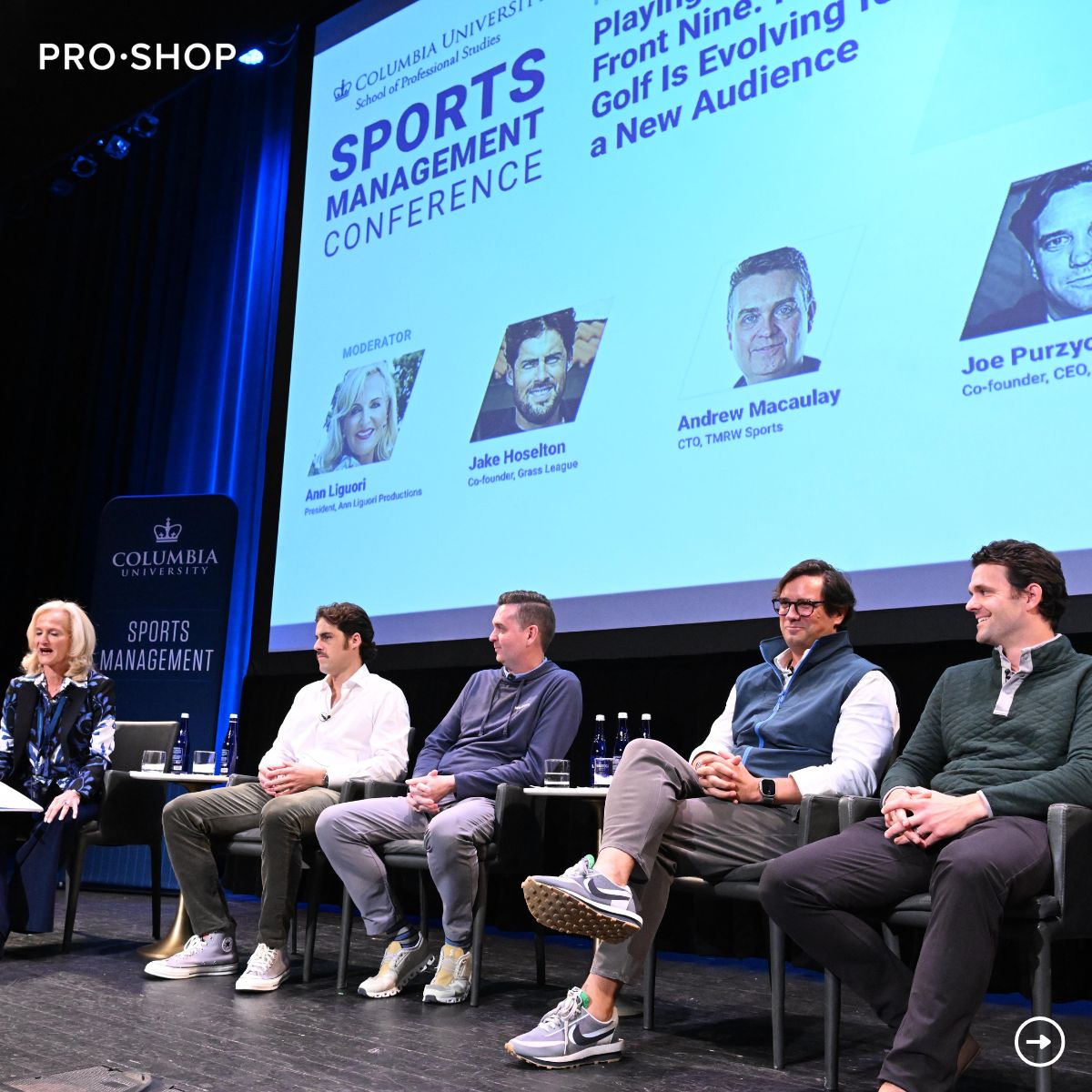
Purzycki would become Puck’s co-founder and first CEO. Today he runs Pro Shop, a company combining golf media, entertainment and commerce. The subject has changed from the conversations of Washington and Hollywood to a sport with its own passionate public. The recurring question is how a company supports the people and interests that bring its audience back.
A taxi meter for attention
Before there were subscription ventures, there were advertising clients. Purzycki spent four years at Myspace, working on sponsorships across its main platform and music business. By 2011, he was director of sales at SB Nation, dealing with client and agency relationships that included Comcast, Procter & Gamble and Mars. The work put him close to a practical question: what, precisely, is an advertiser buying?
At Medium, where he became head of partnerships, the answer acquired a clock. The platform’s sponsored-content program charged on total time read. An appearance on a screen was one thing; active time with a piece of writing was another. Purzycki described the mechanism as a “taxi meter.” One can almost hear an agency spreadsheet requesting a quiet word.
The underlying argument was straightforward. A consumer has a limited amount of time. A publisher that earns some of it has supplied something worth measuring. Purzycki was working on revenue for both Medium and its publishing partners, with an emphasis on engagement and the experience of the reader.
His older Medium biography supplies a more playful annotation to that period: “former #1 acronym user.” Anyone who has survived a meeting about digital advertising will recognize a confession when they see one. He also described himself as a father of two and gave his wife the credit for being cool. The public biography is brief, but it makes room for someone other than the executive in the room.
An editorial reading of his work across Medium, Puck and Pro Shop.
Writers inside the ownership circle
Luminary brought another approach to paying for media. Purzycki co-founded the podcast business with Matt Sacks; the service launched in April 2019. The idea asked listeners to subscribe for premium programming in a medium where free listening was well established.
Its launch was difficult. Licensing and permission disputes accompanied the debut, and subsequent reporting described a struggle to retain paying listeners. A subscription offer has to clear a demanding hurdle: enjoying something and agreeing to pay for it are separate decisions. Luminary made that distinction painfully concrete. The episode belongs in a career built around commercial experiments, alongside the ventures that enjoyed a smoother reception.
At Puck, the offer centered on writers with established followings and access to particular worlds. Kelly, Purzycki, Max Tcheyan, Liz Gough and Julia Ioffe helped create a publication covering the intersections of Hollywood, Washington, Wall Street and Silicon Valley. Its 2021 launch joined the intimacy of an email newsletter to the support of a newsroom.
The financial arrangement mattered. Founding writer-partners received ownership and incentives connected to the business they generated. Purzycki’s explanation was compact: “This is their company.” A familiar byline could help bring in a subscriber; the company gave that writer a reason to care about what happened after the first email arrived.
“This is their company.”
Joe Purzycki, on Puck’s writer economics, 2021
A small detail from Puck’s early operations makes the enterprise less abstract. Kelly described an 11 a.m. business catch-up with Purzycki, Tcheyan and Gough. They preferred to gather in a Greenwich Village parlor apartment near the Waverly Inn. Even a publication covering powerful people needed an ordinary recurring meeting. Somewhere, presumably, there was a calendar invitation.
Purzycki’s departure as CEO was announced in May 2023. His next venture would bring the same interest in audiences and business arrangements into golf.
The next round had fairways
Pro Shop’s public introduction came in March 2024, with a funding round announced as $20 million. Powerhouse Capital led it, with participation from the PGA TOUR and EP Golf Ventures. The proposed company would connect golf with a broader cultural audience through media, entertainment and commerce.
Purzycki was working again with Chad Mumm, whose background included Vox Media Studios and executive-producing Netflix’s Full Swing. David Miller brought experience as the PGA TOUR’s lead media lawyer. Mark Olsen, another Vox Media Studios veteran, is also identified by the company as a founder and heads its studio work.
The division of labor is telling. Purzycki’s responsibilities include strategy, board and investor relations, sales and ecommerce. Mumm serves as president, Miller as chief operating officer, and Olsen leads creative and studio projects. A company producing entertainment while selling goods needs several kinds of expertise. A good golf story does not automatically solve inventory, contracts or the next investor meeting.
The PGA TOUR relationship supplied something especially useful: access. Pro Shop’s founding announcement described access to highlights, archives and on-site production. It also brought Skratch, the tour’s digital media brand, into the company. Those arrangements gave the venture material to work with and an existing audience to serve.
What happens after the audience arrives
The next purchase put merchandise beside the media. In June 2024, Pro Shop added Sugarloaf Social Club, an apparel and accessories brand. Purzycki described access as a limit on the growth of smaller golf companies. His aim was to expand what Sugarloaf had built while preserving its community.
That balance is easy to promise and harder to manage. People often like a small brand partly because of its particular taste. More distribution can give it room to grow, while also asking its founders and customers to accept a larger business around it. The community has its own opinions about what should be on the shirt.
GolfWRX joined the portfolio in July 2025. Its appeal included the established community around its equipment coverage and forums. Purzycki called Pro Shop “stewards of that community.” The arrangement preserved GolfWRX’s editorial independence and community focus while adding production support and access through the larger company.
Each acquisition added a different reason for a golfer to visit. Skratch supplied stories and video. GolfWRX offered equipment coverage and discussion. Sugarloaf supplied products. The studio took golf into film and television, including a co-production role on Happy Gilmore 2. A viewer, a forum regular and an apparel customer might be the same person on different afternoons.
Golf culture and storytelling
Equipment and community
Apparel and accessories
Film, television and live golf
By February 2026, Purzycki was explaining the commercial logic in terms of several revenue streams. Advertising remained part of the business, alongside merchandise and live events. The revived Skins Game offered a concrete example: competition, ticketing, concessions and a Sugarloaf collection could gather around one occasion. A fan’s interest created several possible transactions, provided the occasion itself was worth attending.
Paige Co., announced that month with Paige Spiranac, added a creator partnership. Pro Shop would supply production, distribution, sales, merchandising and marketing for a venture developing shows and branded products. Here, the audience relationship came with the creator, and the company brought the machinery needed to build around it.
A company with somewhere to meet
In October 2026, Pro Shop announced a $24 million Series B. AMB Sports and Entertainment led the round, joined by new and returning investors. For Purzycki, the next work included expanding programming and talent, with more live experiences for fans.
Announced round sizes, shown on the same scale. Company financing, in US dollars.
The direction brings his career back to a room full of people. At the Crosby Hotel, the purpose was to persuade journalists to help build something. At Pro Shop, the planned gatherings would ask golf fans to take part in the franchises they already follow. The circumstances differ, but both put a human relationship underneath the business proposal.
That is what makes Purzycki an interesting operator to watch. His career has passed through social advertising, attention measurement, paid audio, writer ownership and golf commerce. The connecting thread is the work behind the content: incentives, access, partnerships and the infrastructure that lets an audience do more than arrive once.
A golf fan can spend an evening watching, a lunch break discussing equipment and a Saturday playing. Purzycki’s company is trying to find a useful place in each part of that life. The test will come in those ordinary choices. People have plenty to watch and quite enough shirts. A company earns its place when they decide to come back.