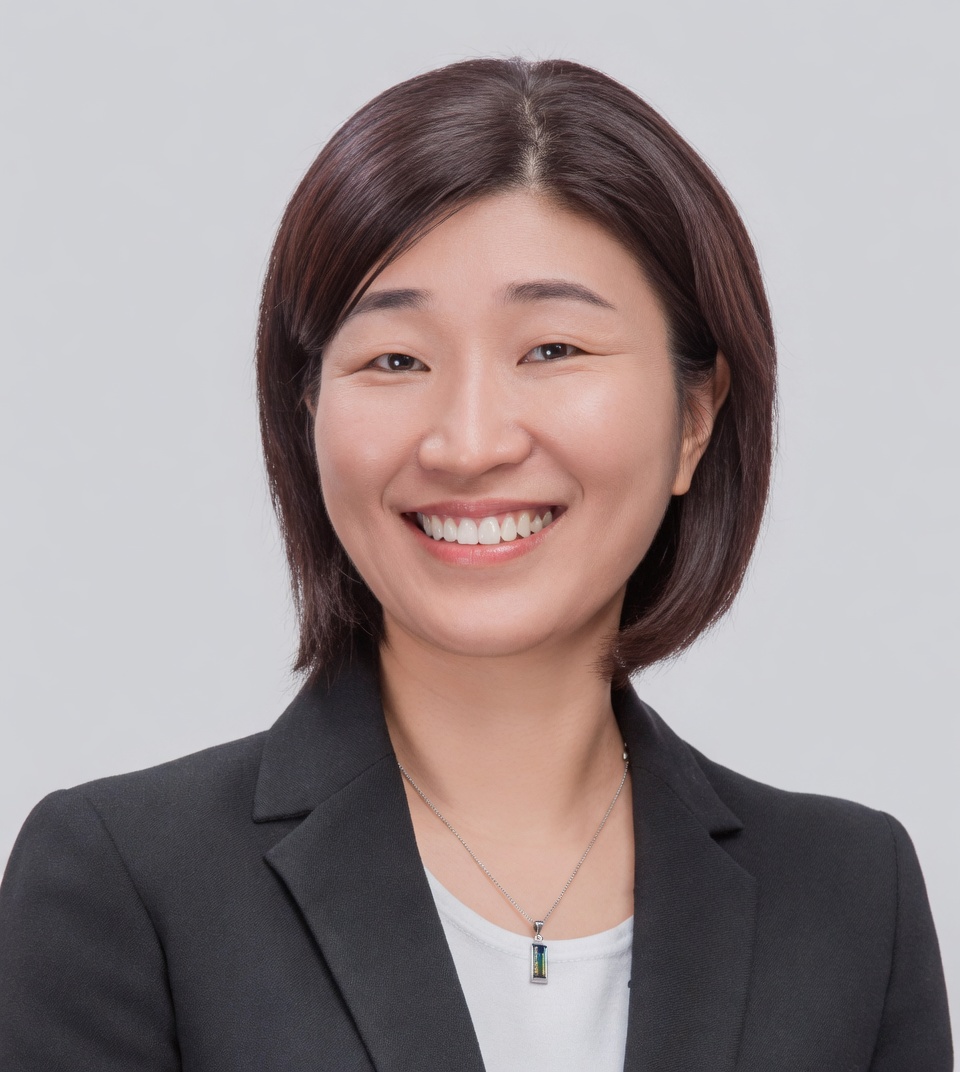
The Woman Who
Rewired Asia's Tech
In 2001, most venture capitalists were fleeing China. The dotcom bust had torched portfolios from San Francisco to Singapore, and China's internet scene looked like a graveyard of overcapitalized dreams. Jenny Lee flew toward it.
That contrarian instinct - arriving when others exit - would become her signature. Over the next two decades at GGV Capital, she backed Alibaba, Xiaomi, Didi, and Grab before the world assigned any of those names a comma-separated valuation. She didn't predict the future so much as she went looking for the people who were building it, in places others weren't watching.
Today she runs Granite Asia, the $5 billion multi-asset platform she co-founded with Jixun Foo after GGV Capital split along geopolitical fault lines in 2023. The name is not accidental - it's a deliberate callback to GGV's original moniker, Granite Global Ventures. A statement that roots matter. That Asian capital, anchored in Asia, understanding Asia, is a fundamentally different thing from Western capital with an Asian-facing lens.
Before any of this, she was an engineer. A Cornell-trained electrical engineer who graduated on a Singapore government scholarship and spent her early career working on fighter planes and military drones for ST Aerospace. Then she looked at that job - secure, prestigious, mapped out - and decided it was exactly wrong for her. She paid S$300,000 to buy out the scholarship bond. She repaid the entire sum within a year of working in finance. That fact tells you almost everything about how she operates.
Lee describes herself as a geek. She reads science fiction and cross-pollinates ideas from biology, physics, and manufacturing into her investment thesis. When she sits across from a founder, she speaks their language - not as performance, but because she genuinely understands what it takes to move something from concept to delivery. The engineering background, she says, gives her a "common language" with technical founders. It also taught her how complex systems actually behave, which is different from how they're supposed to.
Her "brain and heart" test for investment decisions has been widely cited. The brain half is what you'd expect: market size, technology assessment, return projections. The heart half is harder to quantify - founder chemistry, passion, a gut-level question about whether this is the person she can work alongside for the next decade. She notes, without defensiveness, that being emotionally attuned is a competitive advantage in a business that is, underneath all the spreadsheets, fundamentally about people.
She was the sole female managing partner at GGV Capital for most of her tenure. She's been on the Forbes Midas List every year since 2012. In 2015 she became the first woman to crack the top 10 in the list's fourteen-year history. She sits on the board of Temasek Holdings - Singapore's sovereign wealth fund - and advises bodies that report to Singapore's prime minister and deputy prime minister. None of this is mentioned as proof of arrival. It's mentioned because the gaps it describes still exist, and she talks about them directly.
"Sometimes female investors are more emotional and sensitive than male investors. I consider that a strength because VC deal making is fundamentally a people business."- Jenny Lee
The miss she talks about most candidly is ByteDance. GGV passed on Jinri Toutiao - the news aggregator that would become TikTok's parent - because they concluded advertising-driven businesses had limited growth potential in China. That conclusion was wrong, spectacularly so, and Lee has spoken about it publicly. In a business that runs on projecting confidence, admitting a multi-hundred-billion-dollar error takes something.
She also backed Tangdou - an app that teaches elderly Chinese citizens dance moves. Not every bet needs to be a trillion-dollar infrastructure play. Sometimes it's about seeing a product genuinely solving a problem for an overlooked audience, and backing it because the founder gets it right.
Granite Asia's current thesis runs across four pillars: geopolitical navigation (investing with the actual map, not the wished-for one), healthcare (Asian drug discovery independent of Western pharmaceutical assumptions), supply chain diversification (Singapore, Middle East, Indonesia, Vietnam, India), and private credit. In early 2025 she announced a joint venture with Japan's Integral Corporation - $100 million targeting high-growth companies moving in and out of Japan. She keeps adding to the map.
Outside of work she camps in Kamchatka with bears. She was a high school flat-water kayaking champion. She kickboxes and rides horses. She has loved science fiction since childhood and reads it the way some people read industry reports - as a method for getting places where the present hasn't arrived yet. If there is a coherent thread through her career, it might be this: she consistently chose the harder thing when the easier path was available, and then paid the harder thing off fast.