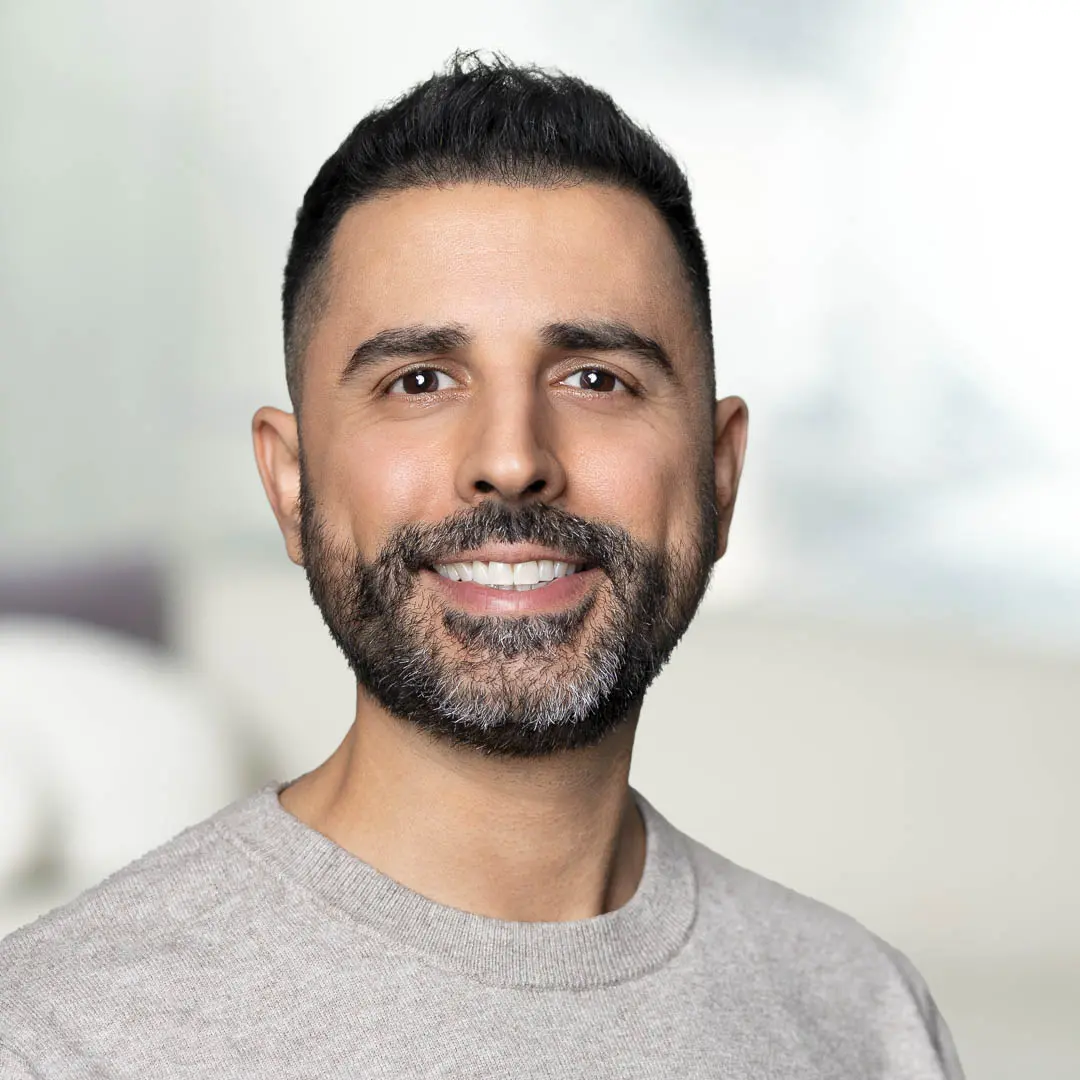
Jaimal Soni runs a company whose main rival is a piece of 1960s office equipment. The fax machine still moves most documents between American primary care offices and the specialists their patients need to see, and Insight Health AI - the Austin startup Soni co-founded and leads as CEO - is built to route around it.
Insight Health makes AI agents that do the clinical busywork nobody trained to be a doctor to do: reading inbound referrals, calling patients to collect their history, scheduling routine procedures, and drafting the notes that pile up after every visit. The pitch is not that software replaces clinicians. It is that software clears the desk in front of them. At partner clinics, Soni says the company's agent has shaved 15 to 20 minutes off each patient visit - time that used to disappear into intake forms and phone tag.
The company crossed a real threshold in April 2026 when it raised an $11 million Series A led by Standard Capital, the firm run by former Y Combinator managing partner Dalton Caldwell. Pear VC, Kindred Ventures, Eudemian, the AI voice company ElevenLabs, and the fund known as 43 all joined. Fortune wrote it up under a headline about healthcare's fax-machine problem, and Soni leaned into the absurdity of it. "Yes, in 2026, fax is still probably the most common way of sending documents between primary care and specialty clinics," he told the magazine.
The through-line
Soni is an engineer by training, with undergraduate and master's degrees in electrical and computer engineering from the University of Waterloo. His career reads less like a series of jumps and more like a single argument compounding over time: that the value in software sits in how data actually moves through an organization, and that most of that plumbing is broken.
He was a Y Combinator founder back in 2015, then spent time at Boomtrain, an AI-driven personalization platform later acquired by Zeta. The formative stretch was the roughly six and a half years he spent at Segment, the customer data platform. There he led the global sales engineering team in the run-up to Segment's $3.2 billion acquisition by Twilio, and afterward co-led research and development on Twilio's CustomerAI. Along the way he partnered with Saran Siva to launch Segment for Healthcare - the first time Soni's data instincts and the mess of clinical workflows collided in the same job.
That collision became the company. Siva, who had run cloud infrastructure engineering at Twilio and grown a team from nine to sixty people in a year, is Insight Health's co-founder and CTO. The two engineers then did something most technical founders skip: they recruited doctors as equal partners rather than advisors.
Physician-built, engineer-led
Insight Health's founding table includes Dr. Pankaj Gore, director of brain tumor and skull base surgery at the Providence Brain and Spine Institute in Oregon and a board member of the 200-physician Oregon Clinic, and Dr. Eric Stecker, a cardiologist and professor at Oregon Health and Science University who chairs the American College of Cardiology's Science and Quality Committee. Both carry the title of co-chief medical officer. It is an unusual configuration - a startup where a neurosurgeon and a cardiologist have as much claim to the product roadmap as the people writing the code.
That mix shows up in how the product is described. The agents are specialty-specific rather than one-size-fits-all, tuned separately for neurosurgery, oncology, gastroenterology, and primary care. The company's earlier work in neurosurgery intake is a good example of the problem it chases: a first visit can run 30 to 40 minutes, with roughly half spent capturing a patient's history. "The screening or intake process is a real pain point," Soni told Forbes in 2025. When the AI spots a contradiction - a medication that does not square with a stated condition - it does not silently decide. "We highlight this in a note for the clinician," he said. The human stays in the loop.
What the numbers look like
By 2025 the company had run more than 100,000 autonomous clinical conversations, its agent - named Lumi - working across mid-sized private practices and community hospitals. The clearest anecdote of what that buys a clinic came from gastroenterology: one GI practice had built up a six-month backlog with roughly 4,000 scheduled procedures on the books, worth millions of dollars in revenue that was simply stuck. Insight Health's agents helped work through it, calling patients, confirming histories, and getting people onto the calendar. The bottleneck was never medical judgment. It was the phone.
The company operates under HIPAA and SOC 2 Type II compliance and runs an internal "Safe AI" framework for quality control - table stakes for anyone asking clinicians to trust software with patient contact. It integrates with electronic health record systems and reaches patients across several channels, then hands the clinician a clean summary rather than a raw transcript.
The bet
Soni's wager is that the highest-leverage problems in healthcare are also the most boring ones. Not diagnosis. Not imaging. The referral that sits in a fax inbox, the intake call that never gets returned, the note that a physician writes at 9 p.m. after the last patient goes home. Insight Health raised a $4.6 million seed before the Series A, and the through-line from Boomtrain to Segment to now is consistent: build the unglamorous infrastructure that makes the visible part work.
He frames the mission as giving clinicians their time back, with agents that operate alongside them rather than instead of them. It is a deliberately modest claim for an AI company in 2026 - and in a field crowded with grander promises, the modesty may be the point.