He spent 17 years filing tech stories from Korea. Then he moved to Silicon Valley, because the reporting should live where the news does.
FOUNDER & CEO - THE MIILK (더밀크) - SAN FRANCISCO BAY AREA
Every January, JaeKwon Son walks the floor of CES in Las Vegas and reads the future of technology out loud for an audience back home. In 2026 he sat at the Media Partner Roundtable, trading notes with editors from the world's biggest outlets on where AI takes the global economy next. It is the kind of seat a reporter spends a career trying to earn. He earned it, then built his own table.
Son runs The Miilk, a Silicon Valley subscription media and tech-intelligence platform he founded in 2019. The premise is deceptively plain: deliver the trends of technology, economy, and investment from the heart of the Valley, in Korean, as fresh as a morning bottle of milk. The company now runs what it calls a virtual newsroom spread across the US, Korea, and Ireland, publishes three newsletters a week, produces B2B tech-sensing reports for executives, and pipes investment analysis to readers who would otherwise be stuck quoting yesterday's foreign headlines.
The thing that separates The Miilk from a portal feed is the thing Son keeps insisting on: perspective. Basic news, he says, is already free everywhere. What a subscriber pays $25 a month for is interpretation - a Korean reader's vantage on American innovation, reported to American journalistic standards, without an advertiser whispering in the editor's ear. The Miilk takes no ads on purpose. The only people Son answers to are the ones who pay to read him.
That conviction has a track record. In August 2021 The Miilk reported that Tesla was entering the humanoid robotics business before Tesla said so officially. The scoop landed because the newsroom physically sits in Silicon Valley, close enough to the sources that a Korea-based desk could never reach. Son points to it as proof of his founding thesis: you cannot cover the hub from across an ocean. The hub is here, so the reporting is here too.
None of this was the obvious second act. Son had a 17-year newspaper career - Electronic Times, Munhwa Ilbo, and finally Maeil Business Newspaper, where he became the paper's Silicon Valley correspondent in 2016 and spent a year as a visiting scholar at Stanford. In 2017 the analytics firm Richtopia named him one of the world's top business journalists. He had the byline, the beat, and the institution. He left all of it to start over as a first-time founder in a foreign country, at an age when most reporters are settling into seniority rather than incorporating a company.
He has been pouring The Miilk every day since. The brand is built to be a bridge - the logo is an upward-trending "M" shaped like a span across the Pacific, green for growth, blue for the ocean between Korea and America. In 2022 the company raised roughly 4.8 billion KRW, about $3.8 million, in a Series A backed by institutions and individual investors including a former co-CEO of Kakao. Son framed the moment around deglobalization: as the world fragments, he argued, borderless information platforms matter more, not less. He wants The Miilk to be the bridge Korean companies cross to go global, and the one American firms cross to reach Korea.
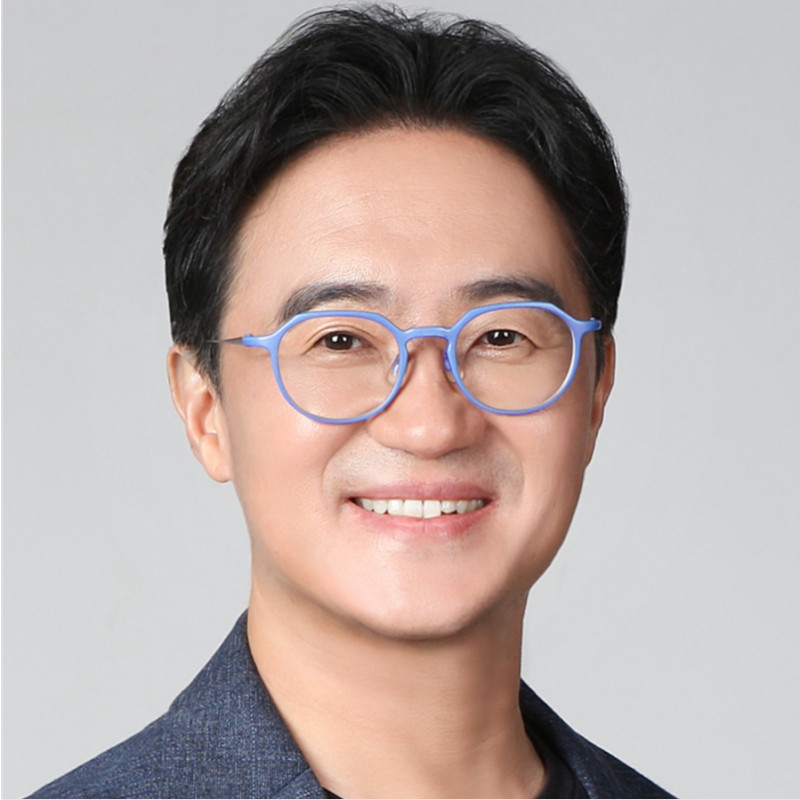
Most founders pitch a problem they noticed from the outside. Son had been inside the thing he wanted to fix. For close to two decades he watched Korean coverage of American technology arrive secondhand, translated and a day late, assembled from wire copy and other people's quotes. He could see the gap because he had spent years standing on the wrong side of it - reading about the Valley instead of walking it.
When Maeil Business Newspaper sent him to Silicon Valley in 2016, the gap closed and something clicked. He has described the realization plainly: this was the calling he had been circling the whole time. Being a correspondent gave him proximity, but it still meant filing into someone else's institution, under someone else's mandate. The next logical step was the riskiest one. He stopped reporting for a newspaper and started building his own.
The Miilk launched in 2019 with a thesis that sounds simple and is brutally hard to execute: deliver global journalism through a Korean lens, held to American standards, paid for by readers rather than advertisers. Every word of that sentence is a constraint. American standards mean original, on-the-ground reporting, not aggregation. A Korean lens means the analysis has to translate context, not just language. And a reader-funded model means the product has to be good enough that people will pay for it when so much is free.
The model shows up in the catalogue. A premium subscription site for industry and investment coverage. A free newsletter, ViewsLetter, three times a week to keep the top of the funnel wide. A YouTube channel for the people who would rather watch than read. Corporate tech-sensing reports that put the newsroom's pattern-recognition to work for executives trying to read the same tea leaves. Field seminars that bring subscribers physically into the Valley. It is one reporter's instinct, fanned out across formats.
The Tesla humanoid scoop in 2021 is the clearest argument for why the whole structure exists. A robotics story that big, reported ahead of the official announcement, is the product of being close - close to sources, close to the rumors, close enough to ask the right person the right question on a Tuesday. A desk in Seoul could not have run it. Son treats it less as a trophy than as proof of concept: the entire company is built so that moments like that are repeatable rather than lucky.
By 2022 the bet had enough traction to attract capital. The roughly $3.8 million Series A came from a mix of venture institutions and notable individuals, including a former co-CEO of Kakao - the kind of backer who understands both media and the Korean market. Son pointed the money at the obvious growth edges: more people in content, data, and research; a sharper financial-information product; and an expansion of English-language reporting so the bridge could carry traffic in both directions. His framing was contrarian for the moment. As headlines filled with talk of deglobalization and walls going up, he argued the case for information that crosses them - that a fragmenting world needs translators more, not less.
What he is really building is harder to put in a deck than a subscription business. It is a habit of trust, renewed every week, in an industry where trust is the scarcest resource. No ads to compromise it. A perspective worth paying for. And a name that promises freshness on the label and has to deliver it by morning. The story is still being written, three newsletters a week, one CES floor at a time.
Milk shows up at your door before the day starts, and it spoils if it sits. That is the whole product thesis in one word: Silicon Valley insight delivered fresh, daily, with a short shelf life.
The logo carries the rest of the idea. An upward "M" shaped like a bridge. Green for growth. Blue for the Pacific Ocean that sits between the two markets Son spends his days connecting.
You cannot cover Silicon Valley from across an ocean. So he moved. The Tesla scoop is the receipt.
Raw headlines are free on every portal. The Miilk charges for the lens that makes them useful.
Advertising means answering to advertisers. He answers only to readers who pay to be there.
Korean firms going global, American firms entering Korea - The Miilk wants to be the span both cross.
The more the world deglobalizes, he argues, the more a cross-border information platform matters.
Like milk. Delivered before the day starts. Worthless if it sits too long.
The hub is here.
Basic news is everywhere on the portals.
It was important to deliver the movements of Silicon Valley in the Korean language.
The importance of borderless information platforms has grown more than ever in the era of deglobalization.
He spent a year as a visiting scholar at Stanford before founding the company.
The Miilk runs a "virtual newsroom" spanning the US, Korea, and Ireland.
Beyond newsletters, the platform produces B2B tech-sensing reports built for executives.
His Series A drew in a former co-CEO of Kakao as an individual investor.
He left a 17-year newspaper career to become a first-time founder in a foreign country.
Every January you can find him reading the future of tech on the CES floor.