A movie advertisement has two deadlines. There is the one inside the picture: the opening date, the invitation to spend Friday night somewhere else. Then there is the deadline outside it, belonging to the newspaper that has to print the thing. Graphic Orb worked in the space between those two dates. For a glimpse of that space, consider an art director’s unusually candid résumé.
John McCloy worked at Graphic Orb from 1994 to 1997. His account describes coordinating production and graphic artists on Columbia-TriStar’s national theatrical advertising, preparing digital ads and getting them to major newspapers. The films included Jerry Maguire, The Cable Guy and The American President. He adds a small assessment of his management performance: “I did it without strangling anyone.”
It is a joke with a useful subject. The task involved people, files, distribution and a clock. The familiar image of graphic design - a person having a beautiful idea - leaves quite a lot of this work outside the frame.
The folder before the file
Another former Graphic Orb designer, Patty Berns, preserves a different view of the business. Her portfolio describes making movie ad slicks and theatrical print materials for Universal, Paramount and Sony Pictures. Beside her discussion of entertainment press kits sits a photograph of a Tootsie folder. It is almost aggressively plain: a film title, an expanse of pale paper, a little wear around the edges.
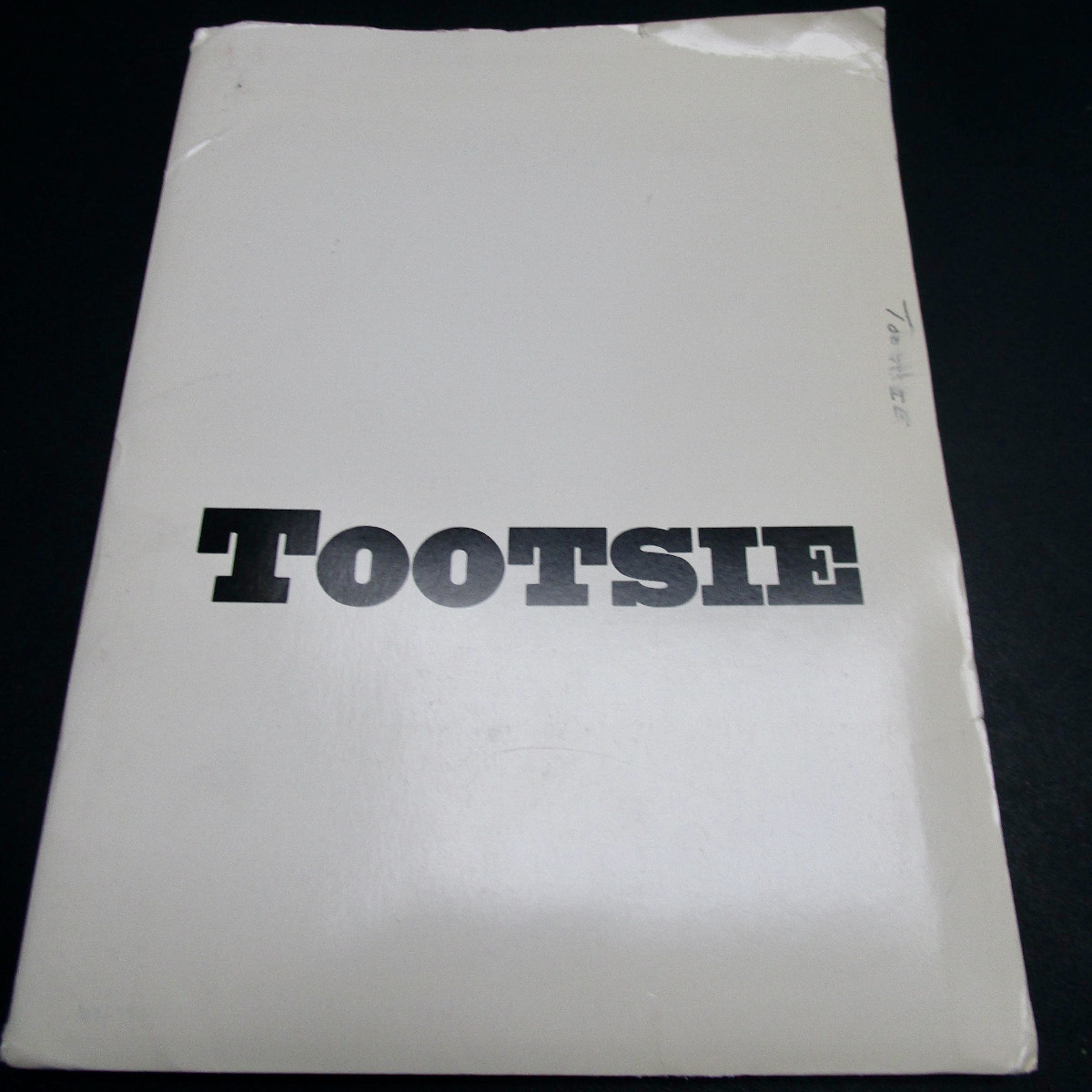
Berns describes kits containing photographs, advertising and a story synopsis. Think about the recipient rather than the designer for a moment. Someone preparing a publication needed material that could be found, understood and used. A handsome object was welcome. An intelligible package was necessary.
That gives us a practical way to read Graphic Orb’s work. Its output helped another organization do something: assemble publicity, place an advertisement, publish a campaign. The deliverable had a destination and a user long before anyone opened a design application.
The lesson travels well. A marketing folder with six ambiguously named exports is asking its recipient to finish the producer’s job. A clear package with an approved version and explicit uses removes that work. This is an editorial inference from the press-kit example, but a useful one: judge a handoff by what the next person can do with it.
Somebody has to finish the artwork
Graphic Orb’s stated services joined graphic design, premedia execution, digital development and print production. That combination placed the facility across creative development and the work required to deliver it. For a business buyer, the appeal was continuity: people who could help shape the material and stay involved as it became a usable asset.
Curt Fast’s public work history supplies some of the texture behind the word “production.” He lists an art-finishing and senior-retouching role at Graphic Orb from 1990 to 2003, describing preflight checks, color management, press checks and digital proofing equipment. These are tasks with a particular relationship to success. When they go well, the audience may never notice them.
Consider the distinction between choosing a color and checking its reproduction. Both require judgment. The first establishes an intention; the second asks whether the physical result honors it. A portfolio image can show the intention beautifully while saying very little about the checking.
An explanatory sequence, not a reconstruction of Graphic Orb’s internal workflow.
This helps explain the company’s place in the market. An entertainment advertiser could use a specialist studio, a production supplier or its own internal department. Graphic Orb’s proposition combined several kinds of labor in one facility. Its attraction would depend on the assignment: how many deliverables needed finishing, how much coordination they required and how costly a missed handoff would be.
A price promise with a clock attached
The company’s public pitch contained a more revealing line than its award claims: “We don’t believe in rush fees.” It also advertised 24/7 availability and the option to work onsite at a client’s location. These were promises about how the relationship would feel when time became scarce.
“We don’t believe in rush fees.”
Graphic Orb’s public company description
In business-model terms, this was a service operation selling creative and production expertise. The rush-fee statement described one part of its pricing posture. It should be read as a historical marketing promise, rather than a project quote.
For anyone buying comparable work, the useful question is what a proposal actually covers. Put delivery dates, revision rounds, formats, approval responsibilities and out-of-hours requests into the brief. A supplier can price the assignment more meaningfully when those details are visible. So can the person comparing proposals.
There is a condition attached to this model. Availability is valuable when a client has a real need for it. If a small, predictable assignment requires one asset and one approval, coordinating a broader production relationship may add work. And even an available team needs someone on the client side who can approve the result. A fast response cannot settle an unresolved brief.
The small print gets a close-up
Graphic Orb’s Laura Noble described clients requesting legible ratings information in 2001. The detail points to another production problem: deciding what must remain readable.
A movie advertisement is a finite surface. The image, title, endorsement and practical information compete for attention. Shrinking a line of text creates space, but it also changes what the reader can use. The production decision is therefore part of the communication decision.
For a modern buyer, the transferable check is straightforward: review the smallest actual output. A large presentation slide makes almost everything look comfortable. The delivered size is where hierarchy has to earn its keep. Ask which information a reader must find and whether that remains possible after the artwork leaves the meeting.
A specialist inside a much larger business
Graphic Orb’s corporate history adds another scale to the picture. A December 1999 FTC notice names Interpublic as the acquiring party in a transaction involving William and Suzanne Gordon and Graphic Orb. An Interpublic subsidiary exhibit dated March 15, 2002 records full ownership of the California company. It also lists Creative Color as wholly owned by Graphic Orb.
Those records establish an ownership trail, rather than an explanation of anyone’s motives. They show a specialist production company fitting inside a larger advertising organization. Graphic Orb’s later public description presented a related advantage: access to international support through Momentum Worldwide.
The interesting thing about this business remains the work at the desk. A production artist checking an image. An art director coordinating newspaper files. A folder assembled so the next person could get on with the job. Look at those objects and tasks together, and the creative brief grows a little more demanding. It must say what to make, who needs it and what has to happen before that person can use it.
The work, in their own words
Explore Graphic Orb’s company profile, Patty Berns’s visual archive, John McCloy’s campaign history and Curt Fast’s production experience.